Open visa policy – key to winning global tourism race

Vietnam’s e-visa system is now seen as one of the most efficient, convenient, and transparent in the region. Fully online registration, no paperwork or interviews, and fast and flexible processing time have improved foreigners’ entry experience, creating a competitive advantage over countries clinging to complicated and costly visa procedures.

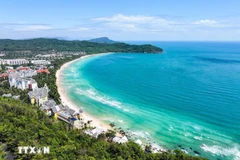
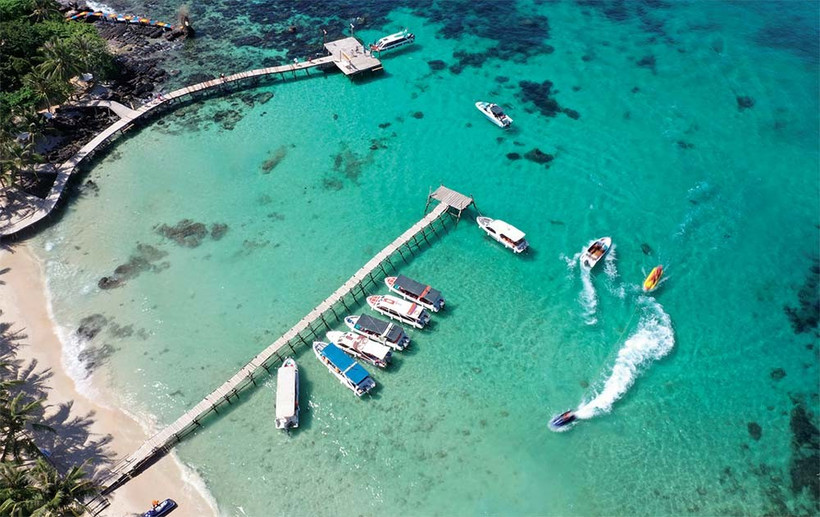
Phu Quoc island is a favourite destination of both domestic and international visitors. (Photo: baodautu.vn)

Hanoi (VNA) - With an open visa policy, Vietnam will be able to enhance its appeal to international visitors, helping boost competitive edge and driving economic growth, according to insiders.

Cornerstone of tourism recovery

Vietnam's visa policy has made remarkable strides in recent years, with one of the most significant milestones being the approval of the law on amending and supplementing several articles to the Law on entry, exit, transit and residence of foreigners in Vietnam that took effect on August 15, 2023. Under this legislation, electronic visas (e-visas) now allow stays of up to 90 days, available for single or multiple entries, and apply to citizens of all countries and territories worldwide. This represents an unprecedented development in Vietnam's visa policy history.

Deputy Director of the Vietnam National Authority of Tourism Pham Van Thuy affirmed that the visa policy is one of the most critical tools in destination competitiveness, especially as countries are intensifying efforts to attract international tourists in the post-COVID era.

Vietnam’s e-visa system is now seen as one of the most efficient, convenient, and transparent in the region. Fully online registration, no paperwork or interviews, and fast and flexible processing time have improved foreigners’ entry experience, creating a competitive advantage over countries clinging to complicated and costly visa procedures.

Tourism visas serve not merely as administrative tools, but as a key that opens pathways for cultural exchange, investment growth, economic connectivity, and sustainable foreign currency revenue generation.

Additionally, bilateral visa exemptions are being put in place for 15 countries with stay periods ranging from 14 to 90 days, and unilateral visa exemptions for 12 developed nations including the UK, France, Germany, Italy, Spain, Nordic countries, Japan, the Republic of Korea, and Russia until March 14, 2028, with stays of up to 45 days.

Earlier this year, the Government issued a resolution on piloting conditional short-term visa exemptions for citizens of Poland, the Czech Republic, and Switzerland from March 1 to December 31, 2025. This forward-thinking move not only opens potential European markets but also directly links with tourism stimulus programmes, enabling Vietnamese travel firms to be more proactive in organising high-quality inbound tours. This model is expected to expand to other markets soon.
ninh-binh.jpg
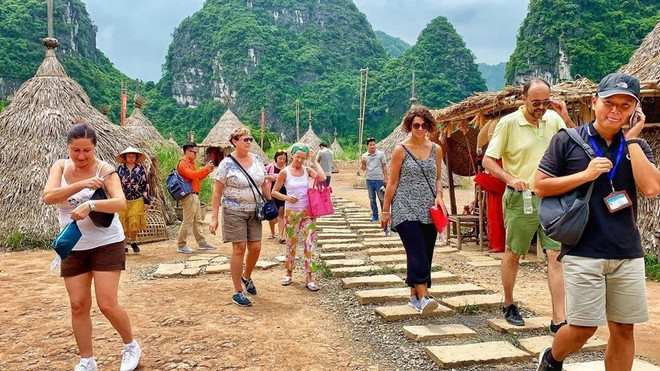
An open visa policy will boost Vietnam's tourism industry. (Photo: VNA)

Closing gaps with regional competitors

Despite significant progress, Vietnam still lags behind regional countries. Currently, Malaysia offers visa-free access to citizens of 166 countries, Indonesia to 169, Singapore to 158, the Philippines to 157, and Thailand to 93.

Some countries also offer group visas at entry points, visas on arrival, or special exemptions for MICE (Meetings, Incentives, Conferences, and Exhibitions) travellers and air or sea transit passengers. Against the backdrop, Vietnam must accelerate reforms or risk losing ground in the global tourism race.

Visa policy only proves effective when it is integrated with well-organised promotion and marketing ecosystems. Recognising this, Vietnam's tourism industry is advancing a national brand positioning strategy called "Vietnam - Timeless Charm" and new initiatives like green experiences, profound culture, unique cuisine, and friendly people.

The Ministry of Culture, Sports and Tourism proposed establishing Vietnam tourism promotion offices in strategic markets. Simultaneously, it is developing a national digital tourism promotion ecosystem incorporating AI and big data while boosting tourism images through such digital platforms as Google, Facebook, and TikTok.

Additionally, the 2025 tourism stimulus programme will include a harmonious communications campaign at home and abroad under the message of “Vietnam – Travel to Love” message”, said Thuy.

Along with traditional markets like Japan, the Republic of Korea, and China, Vietnam is targeting emerging destinations like India, the Middle East, and South America, which boast a fast-growing middle class, rising demand for overseas travel, and higher average spending.

According to insiders, simplifying entry procedures, expanding visa exemptions, and diversifying visa types are seen as “institutional vaccines” that will create a more attractive environment, creating a domino effect on related industries such as aviation, hospitality, retail, gastronomy, and culture.

While Vietnam has made promising steps, it should increase the number of visa-exempt countries, reduce visa fees, expand group visas, and link visa policy more closely with trade, investment, and education promotion.

In the long run, it is essential to create a coordination mechanism among the State, businesses, and diplomatic agencies to establish an innovative visa policy, insiders said./.
VNA

See more

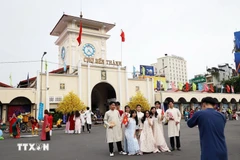
Overseas Vietnamese in traditional ao dai explore Nguyen Hue flower street. (Photo: qdnd.vn)

Overseas Vietnamese amplify Ho Chi Minh City’s tourism appeal

With their understanding of both local traditions and international contexts, OVs are proving to be an effective “soft bridge” in promoting the city globally, contributing to rising international arrivals and reinforcing Ho Chi Minh City’s position as a creative, globally integrated and culturally rich urban tourism destination

Smoke rises following US and Israeli airstrikes on Tehran, Iran, on March 1. (Photo: XINHUA/VNA)

Hanoi urges suspension of tours to Middle East conflict zones

Vietnamese citizens have been advised not to travel to Iran, Israel, and other countries in the Middle East at present due to ongoing conflicts and complicated security developments, according to an official dispatch sent by the department to the above-mentioned units on March 3.

A representative of a Vietnamese enterprise shows it products at ITB Berlin 2026. (Photo: VNA)

Vietnamese firms promote tourism at ITB Berlin 2026

Vietnam’s exhibition area stands out with spacious and visually striking booths featuring businesses' most outstanding products as well as Vietnam's cultural icons such as cyclo models and traditional ao dai attire while a Vietnamese cuisine counter has drawn long queues of visitors.

International tourists are increasingly choosing Phu Quoc over giants like Bali and Phuket, driven by the freshness that Phu Quoc offers (Photo: Sun Group)

US media explains why Phu Quoc is becoming a tourism phenomenon

In 2025, international arrivals to Phu Quoc surged by nearly 60%, marking a new breakthrough cycle. As 2026 begins, during the Lunar New Year alone, the island welcomed nearly 366,000 visitors (a 30% increase year-on-year), with international guests accounting for nearly 93,000 (up 24.3%).

The crystal-clear waters and powdery white sands of Kem Beach are especially appealing to visitors (Photo: Fabl Belek)

Australian magazine hails Phu Quoc as a worthy alternative to Bali

In its list of “the best Bali alternatives worth exploring,” published by Australia’s leading travel site Escape, Phu Quoc is highlighted as a standout Southeast Asian destination, thanks to its appealing blend of reasonable costs, striking scenery, and diverse experiences.

Young locals explore Co Loa Citadel in digital space (Photo: nhandan.vn)

Hanoi festivals embrace digital tools to modernise management

During spring festival season 2026, Hanoi's major celebrations have aggressively adopted digital technologies across management, organisation, communications and promotion, presenting a more orderly and civilised image for traditional events.

The international cruise ship Adora Mediterranea arrives at Chan May Port, carrying 2,613 passengers and 732 crew members from Guangzhou, China, to Hue city. (Photo: VNA)

Unified promotion strategy sets stage for tourism expansion

Vietnam’s tourism brand is demonstrating strong momentum and robust recovery amid record-breaking international arrivals, driven not only by market demand but also by renewed thinking and innovative approaches to destination promotion and marketing.

Five-coloured sticky rice encapsulates the essence of the land and skies of Muong Lo in Lao Cai province. (Photo: VNA)

Vietnam positions cuisine as core national tourism product

To build a national culinary brand, Vietnam must align heritage, the food and beverage industry, and artisan standardisation—laying the groundwork for greater global presence and the elevation of Vietnamese cuisine as a tourism icon.

Hanoi offers free admission to 17 scenic and historical relic sites and cultural landmarks from February 20 to 22, 2026, triggering a surge in visitor numbers. (Photo: VNA)

Hanoi welcomes over 3.18 million visitors in February

International arrivals to Hanoi in February reached approximately 680,800 in February, marking a 16.2% increase compared to the same month in 2025, while domestic visitors totaled around 2.5 million, up 32.3%. Total tourism revenue was estimated at 12.39 trillion VND (476 million USD), a rise of 24.8%.

International tourists take a cyclo tour around Hoan Kiem Lake in Hanoi. (Photo: VNA)

Hanoi prepares new tourism products

A highlight is the continued preparation of dossiers seeking national tourism site recognition for three areas, namely Ba Vi National Park tourism area, Huong Son landscape complex, and the Hoan Kiem Lake and Old Quarter vicinity.

Spectacular fireworks over Kiss Bridge in Phu Quoc Special Zone of An Giang province. (Photo: VNA)

Tourism development strategy to be shaped for new era

As Vietnam enters a new phase of development, tourism is poised for a breakthrough that can reaffirm its role as a key engine of economic growth. In this context, refining the policy framework and fostering an open, modern development environment have become essential prerequisites for accelerating momentum and unlocking the sector’s full potential.