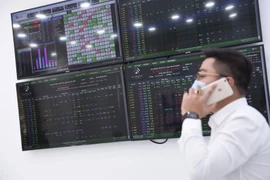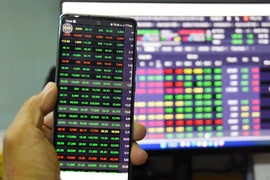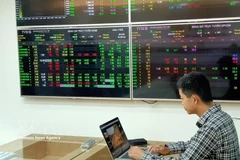
Hanoi (VNS/VNA) - Foreign capital is expected to gradually return to the stock market in 2026 as exchange-rate stability improves, valuations remain attractive and market upgrade prospects become more tangible, according to global brokerage and macro-investment advisory firm EBC Financial Group.
“Last year’s scale of foreign net selling needs to be viewed in the context of global portfolio restructuring,” said Samuel Hertz, Asia–Pacific Director at EBC Financial Group.
“Investors were avoiding a dual risk – equity valuation risk compounded by currency conversion losses from VND to USD in a strong dollar and high interest rate environment. That dynamic is now starting to reverse.”
Despite nearly 5 billion USD in net foreign outflows in 2025, the VN-Index rose by more than 40%, supported by domestic liquidity and strong corporate earnings. Trading value frequently exceeded 50 trillion VND (1.9 billion USD) per session, making Vietnam one of the most active markets in Southeast Asia.
EBC forecasts USD/VND volatility will narrow to around 1.5–2.0% in 2026, significantly reducing currency uncertainty – often the first risk filter for global funds. At the same time, projected earnings growth of 16–20% and deposit rates of 6.0–6.5% are helping to restore Vietnam’s appeal on a risk-adjusted return basis.
“Even under conservative exchange-rate assumptions, Vietnam is offering one of the most attractive risk-adjusted return profiles in the region when combined with double-digit earnings growth,” Hertz said.
Structural drivers are also aligning. SSI Research noted that Vietnam is entering 2026 with its most favourable conditions yet for MSCI reclassification, with a high likelihood of being placed on the watchlist in June 2026.
A key step came on February 3 when the Ministry of Finance issued Circular 08/2026/TT-BTC, easing market access for foreign investors while tightening settlement discipline and operational standards.
The circular allows foreign investors to place orders through global brokerage firms without opening accounts at domestic securities companies, while still settling through the Vietnam Securities Depository and Clearing Corporation (VSDC). It also removes restrictions on which stocks can be traded under the non-pre-funding (NPF) mechanism – a major benefit for index-tracking funds.
While designed mainly to meet FTSE Russell’s criteria for upgrading Vietnam to Secondary Emerging Market status in September 2026, the reforms also directly address MSCI’s long-standing concerns over accessibility, settlement reliability and transparency.
Foreign ownership limits have improved markedly since 2025 as more large-cap firms opened 100% foreign room, expanding the investable universe and improving market depth, particularly on the Ho Chi Minh Stock Exchange (HOSE).
According to EBC Financial Group, valuations add to the appeal. The market is trading at a forward 2026 P/E of around 12.7 times, well below the five-year average of 14.5 times and lower than regional peers such as Thailand and Indonesia.
Meanwhile, SSI also pointed to Vietnam’s relatively healthy and transparent free-float structure as a comparative advantage, especially after MSCI’s recent review of Indonesia’s free-float methodology raised reclassification concerns there.
Further support is expected from Vietnam’s third IPO wave, expected to span retail, logistics, healthcare, manufacturing and digital infrastructure, with companies such as Bach Hoa Xanh, Long Chau and Viettel IDC attracting investor attention. Institutional reforms under Decree 245 are also streamlining listing procedures and reducing execution risks for foreign funds.
With the KRX trading system in place and a central counterparty clearing (CCP) model under development, analysts say Vietnam’s market story is shifting from expectation to measurable institutional progress.
If FTSE Russell’s upgrade proceeds in September and MSCI places Vietnam on its watchlist in June, foreign capital could begin returning as early as the first half of 2026, ahead of formal reclassification timelines./.

Stock market forecast to be positive after Lunar New Year holiday
Over the past decade from 2016 to 2025, the VN-Index rose in eight out of ten instances within five to ten trading sessions following Tet, except in 2023 and the COVID-19 pandemic-affected year of 2020.