Vietnam intensifies efforts to have EC’s “yellow card” on seafood exports lifted

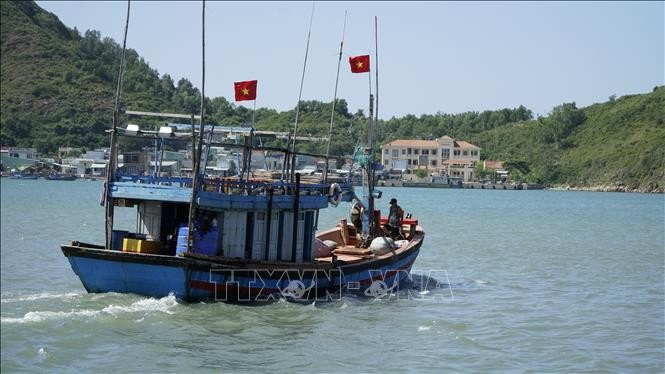
The EC's inspection delegation is expected to visit Vietnam for the fifth time in early March. The outcome will be decisive in whether the “yellow card” is lifted or escalated to a “red card.”

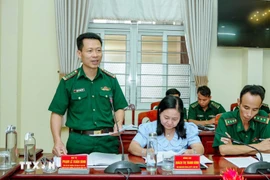
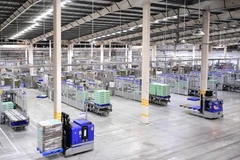
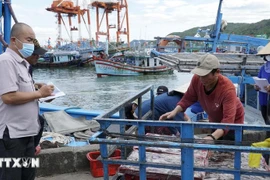
 Illustrative photo (Photo: VNA)
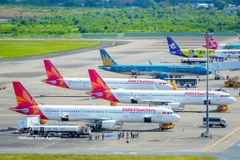
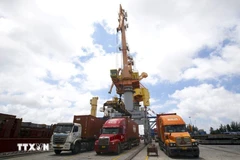
Illustrative photo (Photo: VNA)

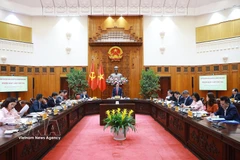
Hanoi (VNA) – Deputy Prime Minister Tran Hong Ha on February 25 signed an official dispatch, ordering urgent preparations for the fifth inspection by the European Commission (EC) and reaffirming Vietnam’s determination to have the “yellow card” warning on its seafood exports removed.

The official dispatch, sent to relevant ministries and coastal localities, noted that over the past nearly eight years and four previous inspections, Vietnam has yet to have the warning related to illegal, unreported and unregulated (IUU) fishing lifted. The EC's inspection delegation is expected to visit Vietnam for the fifth time in early March. The outcome will be decisive in whether the “yellow card” is lifted or escalated to a “red card.”

The Prime Minister requested ministers, heads of sectors and leaders of coastal provinces to regard the fight against IUU fishing as a top priority, directly overseeing the implementation of 123 assigned tasks. These focus on five key areas in line with the EC's recommendations: improving the legal framework; managing the fishing fleet; monitoring, inspection and surveillance; ensuring seafood traceability; and strengthening law enforcement and sanctions.

From now until March 9, ministries and key coastal localities will conduct peak inspections under Decision No. 515/QD-BNNMT to address outstanding issues. The Ministry of Agriculture and Environment will coordinate with the Ministry of Foreign Affairs and Vietnam’s mission to the EU to prepare comprehensive working agendas, documentation and evidence for the EC delegation at all levels.

The Ministry of Public Security was tasked with expediting investigations and prosecutions of criminal IUU fishing cases, strictly managing vessels and fishermen at their places of residence, and integrating vessel and crew monitoring with the national population database. It will soon deploy a system to manage vessel entry and exit via the VNeID platform to supervise fishing activities.

The Ministry of National Defence will direct the border guard force to tighten control over vessel departures and arrivals, prevent unqualified vessels from operating and intensify patrols in overlapping maritime areas to avoid new violations.

Meanwhile, the Ministry of Science and Technology must urgently finalise and synchronise fisheries databases and software systems, including the national fisheries database, the vessel monitoring system (VMS), e-logbooks and violation records, ensuring accurate, unified and verifiable data before March 6.

Provincial authorities are requested to prepare complete and consistent reports, taking full responsibility for any shortcomings that could affect the country’s efforts to have the EC's warning removed./.
VNA

See more

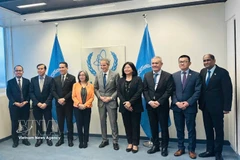
Director General of the International Atomic Energy Agency (IAEA) Rafael Grossi (centre) poses for a group photo with ambassadors and heads of missions of ASEAN countries in Vienna. (Photo: VNA)

ASEAN, IAEA strengthen cooperation in peaceful use of nuclear energy

Director General of the International Atomic Energy Agency (IAEA) Rafael Grossi commended the effective, substantive and steadily expanding cooperation between the IAEA and ASEAN, particularly in technical cooperation, the peaceful use of nuclear energy, and support for the development priorities of each member state.

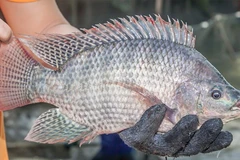
Vietnam’s tilapia export turnover to the US surges 173% year-on-year in 2025 (Source: VASEP)

Vietnamese tilapia eye opportunities to make breakthrough

To sustain growth in 2026 across major markets such as the US, the Middle East and the European Union (EU), Vietnamese tilapia products must meet stringent requirements, ranging from flesh quality and food safety to certifications for sustainable farming and production, including GlobalGAP, BAP and ASC. This calls for a fully standardised production chain, from broodstock and farming to processing.

A Vinamilk factory (Photo: Vinamilk)

Strategy promotes sustainable growth of dairy processing industry

The strategy aims to build a sustainably developed dairy processing industry with a complete value chain, from dairy herd development and increased raw milk output to high value-added processed products. The industry is expected to largely meet rising domestic demand while integrating more deeply into regional and global dairy value and supply chains.

Trucks carrying export goods at Tan Vu Port in Hai Phong city (Photo: VNA)

Vietnam among France’s five most promising export markets: Bpifrance

The strongest prospects for French firms lie in higher value-added products and solutions, including processed food, equipment for hi-tech agriculture, corporate digital solutions and healthcare. Vietnam is also considered an important link in the Southeast Asian value chain, opening broader access to the ASEAN market.

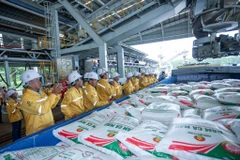
Workers load fertiliser onto a vessel for export by Petrovietnam Ca Mau Fertiliser Corporation (PVCFC). (Photo: Petrovietnam)

Vietnamese firm successfully exports first 40,000 tonnes of fertiliser to US

Beyond opening access to a market with substantial consumption capacity, the presence of Ca Mau fertiliser in the US – known for its stringent technical, environmental and traceability standards – is seen as an affirmation of the credibility and quality of Vietnamese products amid increasingly rigorous global requirements.

A motorcyclist has his vehicle refilled at a Petrolimex station. (Photo: VNA)

Vietnam ready for nationwide E10 biofuel rollout from June 1

Industry representatives noted that alongside infrastructure readiness, continued investment, stable raw material supply and an appropriate pricing policy in the initial phase will be essential to ensure a smooth nationwide transition to E10 from June 1.