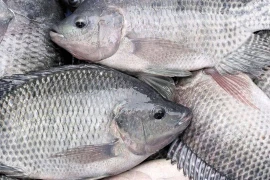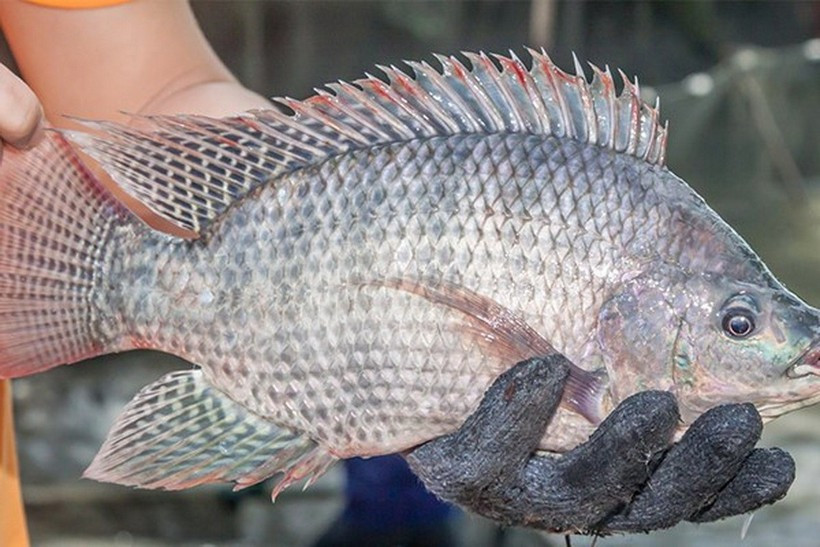
Hanoi (VNA) – Amid ongoing volatility in global aquatic product export markets, tilapia has risen as a strategic product enabling Vietnam to diversify its export portfolio and enhance sustainable value creation.
Recently, the Ministry of Agriculture and Environment, together with a delegation from the US Embassy, held discussions to roll out the US – Vietnam aquaculture value chain partnership project.
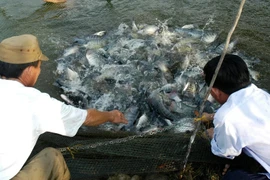
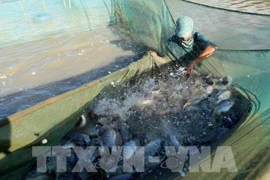
Under the plan, the US side will invest more than 15.2 million USD over five years. The project aims to raise cumulative tilapia output to 1.21 million tonnes, generating total sales of 1.25 billion USD. From March 2026, it will be implemented in the Red River Delta and the Mekong Delta, and is expected to deliver direct benefits to more than 24,000 people, including farming households, farms and processing facilities.
Assessing the project’s significance, Deputy Minister of Agriculture and Environment Phung Duc Tien said it is a “timely and well-targeted” move, creating an important resource base for implementing Vietnam’s tilapia development plan to 2030. The project is expected to help upgrade the value chain while further expanding tilapia trade to the US, European markets and the domestic market.
According to market expert Phuong Linh from the Vietnam Association of Seafood Exporters and Producers (VASEP), Vietnam’s tilapia export turnover to the US surged 173% year-on-year in 2025, exceeding 53 million USD and making the US the largest importer of Vietnamese tilapia. With total tilapia export earnings reaching 99 million USD in 2025, up more than 140% from 2024, Vietnam has emerged as a new bright spot on the global tilapia map.
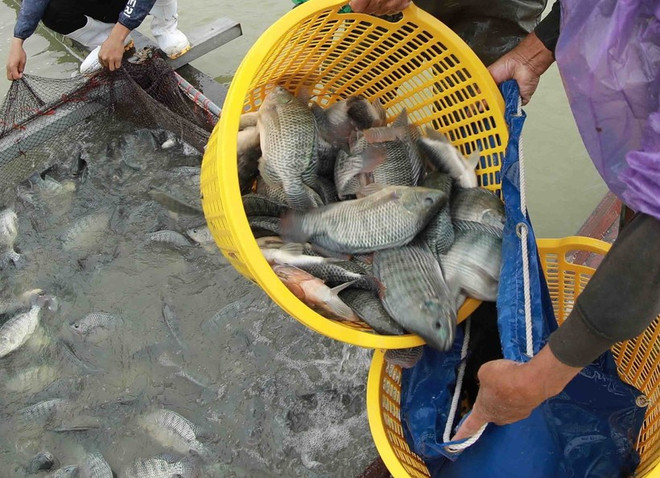
Notably, beyond traditional markets, Vietnamese enterprises are stepping up tilapia exports to other destinations, including the Middle East and Brazil. In the Middle East, tilapia exports in 2025 reached nearly 9 million USD, up about 400% year-on-year, with Saudi Arabia alone accounting for 8 million USD, a rise of up to 670%. The successful penetration of the Brazilian market – one of the world’s leading tilapia exporters – generating 11 million USD in 2025, is seen as a positive signal, reflecting the growing competitiveness of Vietnamese tilapia amid the restructuring of global markets.
To sustain growth in 2026 across major markets such as the US, the Middle East and the European Union (EU), Vietnamese tilapia products must meet stringent requirements, ranging from flesh quality and food safety to certifications for sustainable farming and production, including GlobalGAP, BAP and ASC. This calls for a fully standardised production chain, from broodstock and farming to processing.
Tilapia is entering a favourable development phase as global demand increasingly favours white-flesh fish that are high in protein, easy to process and reasonably priced.
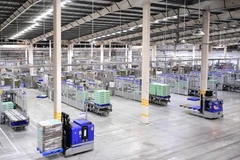
According to Nguyen Dang Ngoc, Deputy General Director of the Viet Nhat Group, to fully capitalise on market opportunities, Vietnam needs to accelerate the development of closed-linkage chains covering broodstock, farming areas, processing and distribution. This should go hand in hand with investment in cold storage and modern logistics, standardisation of production processes and upgrades to quality standards across the entire chain. Once high-end international standards are met, Vietnamese tilapia will be well positioned to reach new heights in the coming period.
With the global shift towards green and sustainable consumption, tilapia exports are standing before a major opportunity to break through, becoming a new key product of Vietnam’s seafood industry alongside shrimp and pangasius, and helping create a more balanced and resilient industry structure in the future./.