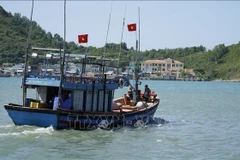
Ho Chi Minh City (VNA) - Since the beginning of 2024, Ho Chi Minh City has removed the registration of 1,662 fishing vessels that were damaged, no longer operational, or ineligible under regulations.
The city has also fully updated the monitoring system to promptly identify and prevent any deregistered vessels from engaging in illegal fishing activities.
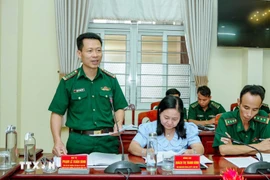
The information was presented at a working session between the Ho Chi Minh City People’s Committee and a delegation from the Ministry of Agriculture and Environment led by Deputy Minister Phung Duc Tien to review the implementation of measures against illegal, unreported, and unregulated (IUU) fishing in the city on February 25.
At the meeting, Pham Thi Na, Deputy Director of the municipal Department of Agriculture and Environment, reported that as of February 24, the city had 4,455 registered fishing vessels. All of them have been updated in the national fisheries database (VNFishbase) and synchronised with the national population database (VNeID).
The city has issued fishing licenses to 4,305 eligible vessels. Vessel inspections and marking have been regularly reviewed to ensure that all operating vessels are properly painted and numbered in accordance with regulations.
Regarding offshore monitoring, 2,204 out of 2,227 vessels measuring 15 meters or longer have installed voyage monitoring systems (VMS), reaching a rate of 98.97%. The remaining 23 vessels without VMS are currently docked and strictly monitored, and are not allowed to set sail. Authorities have maintained 24/7 monitoring to promptly detect vessels losing connection, contact owners to request position reports, verify causes, and minimise the risk of violations in foreign waters.
Notably, the city still has 490 vessels that are ineligible for fishing operations (including those lacking licenses, with expired inspection certificates, without VMS installation, or with expired food safety certificates). All have been listed and assigned to local authorities and relevant forces for monitoring, including vessels sold or docked outside the city, to ensure no IUU violations occur.
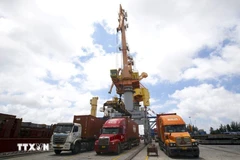
Regarding traceability, the city has nine officially designated fishing ports, four of which are equipped with systems to certify the origin of harvested seafood. Since early 2024, fishing ports have strictly monitored vessels entering and leaving ports and issued confirmations and certificates to support seafood exports. The electronic catch documentation and traceability system (eCDT), along with electronic fishing logbooks, has been implemented synchronously. Human resources and equipment at ports have been strengthened to control landed volumes and meet market requirements, particularly those of the EU market.
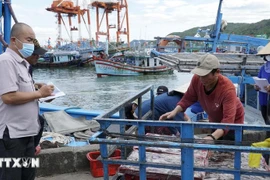
Since the beginning of 2026, local authorities have not detected any fishing vessels crossing maritime boundaries or losing connection for more than 10 days. However, during an on-site inspection at Tan Phuoc fishing port, the delegation identified several shortcomings that the city must promptly address.
Deputy Minister Tien stated that a delegation from the European Commission (EC) is expected to inspect the implementation of anti-IUU fishing measures in Ho Chi Minh City in March 2026. In response, city authorities must take stronger action and strictly handle violating vessels to ensure deterrence. The management of active fishing vessels at sea must be firmly controlled and tightened, while all documentation should be urgently finalised to ensure thorough preparation for the EC delegation in March.
According to the Deputy Minister, the period leading up to March 10 is a “sprint phase,” requiring strong and coordinated efforts from the entire political system to contribute to the nationwide effort to remove the “yellow card” warning, build a sustainable, responsible and internationally integrated fisheries sector./.

EC’s yellow card countdown: Deputy PM directs complete anti-IUU fishing readiness check
Local authorities were directed to deliver complete, precise reporting on their assigned responsibilities, placing particular focus on correcting every deficiency identified in previous inspections and audits. Evasive answers or attempts to sidestep accountability will not be accepted.