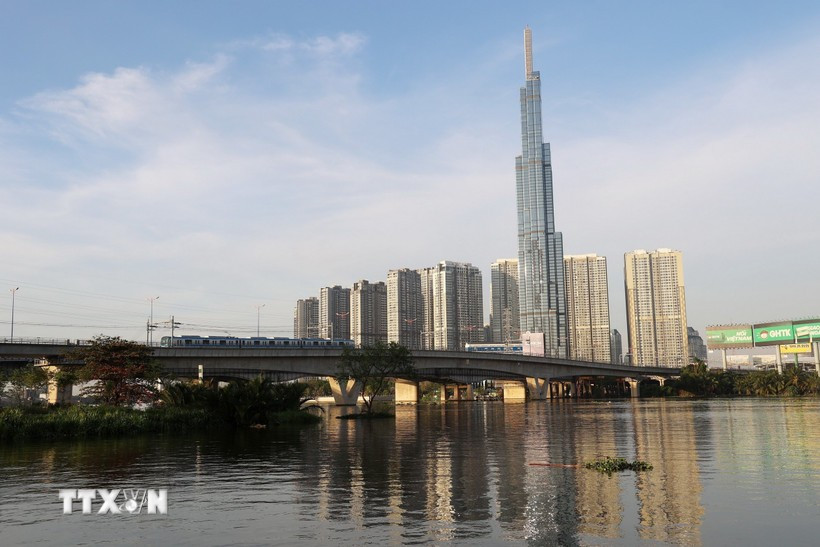
Hanoi (VNA) – In the early days of the new year, construction sites across Ho Chi Minh City are buzzing with activity, as infrastructure projects are expected to boost connectivity and drive fresh momentum for the southern city's next phase of growth once completed.
Strategic infrastructure push
The year 2026 marks the first year the city operates under a new tenure following administrative consolidation and the implementation of the two-tier local government model, in tandem with the Resolution of the 14th National Party Congress. The city has set a target of over 10% growth this year and aims to sustain double-digit expansion during 2026–2030 despite global economic uncertainties.
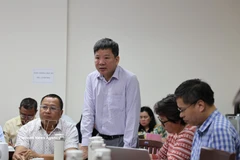
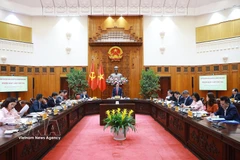
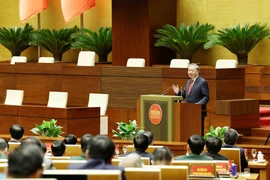
At a conference reviewing socio-economic tasks for 2026, Chairman of the municipal People’s Committee Nguyen Van Duoc said the city will focus on three strategic breakthroughs – institutions, infrastructure and human resources – with public investment playing a leading role. Authorities are determined to fully disburse the allocated public investment capital.
Priority will be given to strategic infrastructure projects, including ring roads, inter-regional expressways, metro lines, connectivity to Long Thanh International Airport and the development of an international financial centre.
The city is also accelerating efforts to address persistent bottlenecks such as flooding, traffic congestion and environmental pollution.
Residents and businesses are expecting the early launch of major projects such as Ring Road 4, the Ho Chi Minh City–Moc Bai Expressway, the Can Gio–Vung Tau sea-crossing bridge and Thu Thiem 4 Bridge. At the same time, key works including Ring Road 3, An Phu and My Thuy interchanges and the Tham Luong–Ben Cat–Nuoc Len canal upgrade are scheduled for completion and operation.
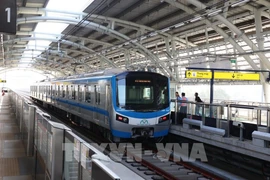
Together with recently commenced projects such as Metro Line No. 2 (Ben Thanh–Tham Luong), the Ben Thanh–Can Gio urban railway, Phu My 2 Bridge and the Rach Chiec Sports Complex, the city is effectively becoming a vast construction site in 2026.
At packages under Ring Road 3 – a 76km route with total investment exceeding 75.3 trillion VND (over 2.87 billion USD), thousands of engineers and workers are working around the clock to ensure the entire route is completed and opened to traffic by June 30. The project is expected to ease inner-city congestion and expand development space for Ho Chi Minh City and neighbouring provinces.
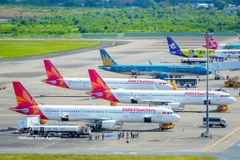
Regarding regional connectivity, particularly links to Long Thanh International Airport, city leaders have decided to prioritise investment in the Thu Thiem–Long Thanh railway in the 2026–2030 period. The 48km line, with total estimated investment of nearly 3.5 billion USD, will form a high-capacity transport axis, providing direct, stable and faster access to the country’s largest airport compared to road travel.
Promoting economic locomotive
Early-year directives by Party General Secretary To Lam have reinforced a spirit of bold thinking, decisive action and accountability for the city’s development. Meanwhile, the amended Resolution 98 of the National Assembly is seen as providing greater institutional autonomy, especially in infrastructure development.
City leaders are shifting from a management mindset to governance, with clearer assignment of responsibilities, timelines and deliverables, creating visible momentum for modern, multi-centre and regionally connected infrastructure development.
According to Director of the municipal Department of Construction Tran Quang Lam, the city will effectively implement central policies and major orientations, including the 2020–2030 transport infrastructure development scheme and the urban railway system plan. Thirty-seven project management boards have been established at ward and commune levels following the consolidation of construction investment management units and site clearance bodies, a move expected to shorten project procedures, especially compensation and land clearance.
The Department of Construction is also accelerating digital transformation, promoting the application of information technology and artificial intelligence in project management.
Meanwhile, the municipal Department of Planning and Architecture considers the formulation and implementation of a new master plan for the expanded city a particularly important political task. The planning approach will accelerate zoning coverage and underground space planning, with the transport network forming the backbone. Development orientation will follow a multi-centre, integrated and connected model, associated with transit-oriented development (TOD), social housing and new functional zones.
As the country’s economic locomotive, Ho Chi Minh City is intensifying measures to remove obstacles for investment projects, particularly large-scale and long-delayed ones, following administrative reorganisation. As of January, around 90% of backlogged projects have had their difficulties addressed, improving the investment climate, expanding fiscal space and enhancing the city’s ability to attract both domestic and foreign capital.
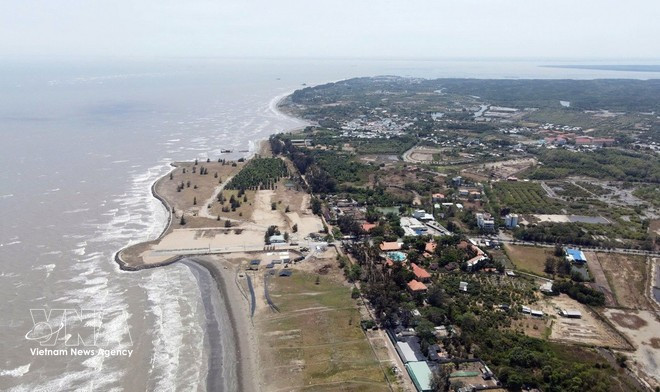
With unprecedented opportunities for growth, the city’s infrastructure drive – stretching from the eastern gateway to coastal areas – is reshaping urban space, strengthening competitiveness and reinforcing its role as Vietnam’s leading economic hub, moving steadily toward a prosperous, civilised and modern future./.