Hanoi (VNA) – Economists have underscored the necessity of tax and fee reductions to support business recovery and sustain growth in the current context which, however, are placing increasing short-term pressure on the state budget balance.
The Ministry of Finance reported that state budget revenue in the first two months of 2026 was estimated at nearly 604 trillion VND (22.9 billion USD), equivalent to 23.9% of the annual target and up 13.5% year-on-year. This performance was achieved in amid the continued implementation of tax and fee exemption and reduction measures worth over 30 trillion VND, indicating that the fiscal foundation remains relatively stable and enables flexible policy governance.
Nevertheless, underlying pressures on budget balance are becoming more evident. While fiscal support policies that lead to revenue reduction is necessary in the short term, it narrows the fiscal space as expenditure needs for development, social security, and other priorities continue to rise. This requires tighter and more efficient fiscal governance.
Domestic revenue remains the primary driver, reaching approximately 561.5 trillion VND in the two-month period, up 15.7% year-on-year. The result reflects spillover effects from last year’s economic growth and a clearer recovery in the business sector, particularly among non-state and foreign-invested firms. This is helping sustain revenue growth despite ongoing support policies.
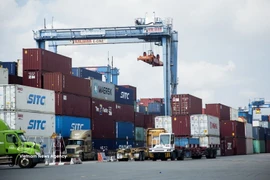
However, other revenue sources have shown a downward trend. Collections from crude oil and import – export activities continue to be affected by global price and trade fluctuations. This highlights the need to restructure revenue sources toward greater sustainability and reduced dependence on cyclical and externally sensitive streams.
Minister of Finance Nguyen Van Thang noted that macroeconomic stability in 2026 continues to face external uncertainties while the growth targets for both the first quarter and the full year remain challenging. Pressures in the monetary and foreign exchange markets persist, and interest rates show an upward trend. At the same time, volatile prices of oil, gas, and production inputs are affecting both business costs and state budget revenue.
Facing that fact, tax and fee reductions are seen as an important solution to stimulate aggregate demand, reduce costs, and support cash flow for businesses. Measures such as extending value-added tax reductions, adjusting import duties on production inputs, and cutting some administrative fees have contributed to improving business conditions and laying the groundwork for future growth.
However, economists caution that an expansionary fiscal policy must be applied prudently as prolonged or broad tax and fee cuts could increase budget deficits and public debt risks. Therefore, support measures should be targeted at sectors with strong spillover effects and high contributions to economic growth.

Alongside these policies, the financial sector is strengthening revenue management, combating tax losses, and broadening the tax base. The application of digital technology in tax administration, particularly in managing e-commerce and the digital economy, is expected to ensure adequate revenue collection, enhance transparency and foster a level playing field for businesses.
On the expenditure side, improving the efficiency of public spending is critical. Strengthening fiscal discipline, reducing recurrent expenditure, and prioritising development investment are key solutions. Accelerating the disbursement of public investment, particularly for major infrastructure projects, is hoped to generate strong spillover effects, stimulate growth, and create sustainable revenue in the long term.
According to experts, achieving high growth in the coming period will require close coordination between fiscal, monetary, and other macroeconomic policies. The mobilisation of resources through Government bonds, combined with institutional reforms and business climate improvement, will support both fiscal space expansion and public debt safety.
In the longer term, budget balance pressures can only be fundamentally addressed by fostering new growth drivers, enhancing productivity, and expanding the revenue base, particularly through sectors such as the digital economy, green economy, innovation, and high technology./.