Fuel security takes centre stage as global energy risks mount

The MoIT has repeatedly instructed petroleum distributors nationwide to maintain uninterrupted retail operations, ensuring supply continuity under all circumstances. Regulators have also reviewed and refined policy mechanisms to enable businesses to diversify import sources, helping reinforce supply for both production and consumption needs.

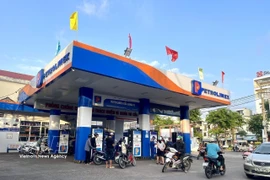
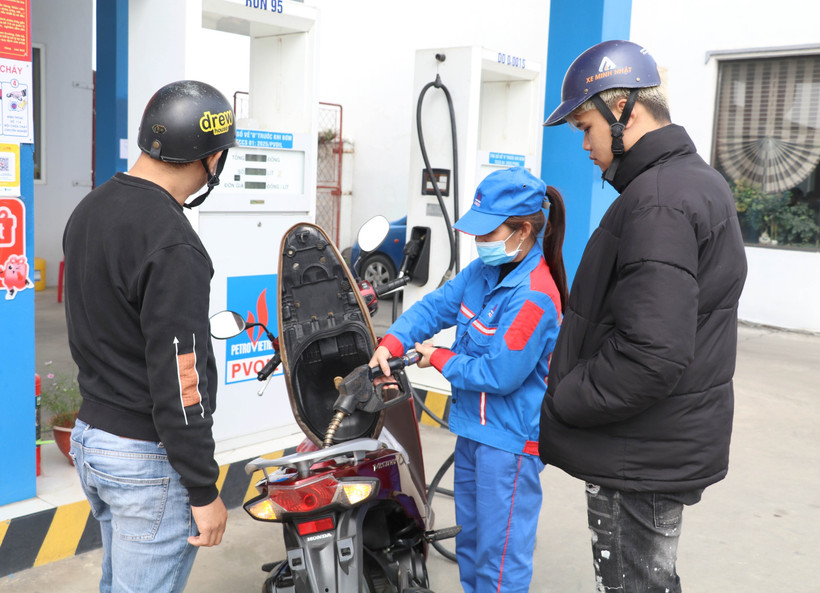
Residents purchase fuel at a petrol station in Ninh Binh province. (Photo: VNA)

Hanoi (VNA) – As volatility intensifies across global energy markets, Vietnam has proactively rolled out coordinated measures to safeguard fuel supplies and support macroeconomic stability, according to the Domestic Markets Department under the Ministry of Industry and Trade (MoIT).

Given its status as a net importer of petroleum products, Vietnam remains highly exposed to global price fluctuations, which quickly ripple through the domestic economy. Despite these pressures, fuel market management has been conducted in a timely and effective manner.

The MoIT has repeatedly instructed petroleum distributors nationwide to maintain uninterrupted retail operations, ensuring supply continuity under all circumstances. Regulators have also reviewed and refined policy mechanisms to enable businesses to diversify import sources, helping reinforce supply for both production and consumption needs.

Domestic fuel prices have been managed in close alignment with global market trends, with authorities tapping the price stabilisation fund alongside tax and fee tools to limit sharp price swings. These efforts have helped contain inflationary pressures and preserve macroeconomic stability. At the same time, coordinated measures to strengthen reserves and maintain smooth distribution flows have enhanced the country’s resilience to external shocks.

On March 22, the International Energy Agency (IEA) warned that disruptions at the Strait of Hormuz, a key route for about 20% of global oil and gas supplies, have created what it described as the “largest supply disruption in the history of the global oil market,” with the passage nearly paralysed since late February. The agency estimated that roughly 11 million barrels of oil per day and 140 billion cbm of gas have been affected, pushing crude prices above 100 USD per barrel and triggering a sharp surge in global energy costs.

According to the IEA, the crisis is extending beyond fuel prices, weighing on inflation, import costs and economic growth worldwide. Its scale is surpassing both the oil shocks of the 1970s and the energy crisis associated with the Russia–Ukraine conflict.

With global supply chains yet to fully recover and inflation still elevated, the current disruption is widely regarded as one of the most severe energy shocks in decades, affecting production, trade and household expenses.

On March 11, IEA member countries unanimously agreed to take emergency collective action to respond to the major disruptions in oil markets, making 400 million barrels of emergency oil stocks available – the largest-ever release coordinated by the agency. However, the agency emphasised that such actions mainly ease economic pressures, with a lasting solution dependent on restoring normal operations in the Strait of Hormuz.

Supply disruptions have already forced several Asian refineries to scale back operations, while gas prices in Europe have surged by more than 60%, driving up both industrial and living costs.

As fuel and gas supply uncertainties grow, governments worldwide have moved quickly to cushion the impact of rising prices. In the Republic of Korea (RoK), President Lee Jae Myung ordered fuel price caps and preventive measures to stabilise both prices and foreign exchange markets. Hungary has introduced retail price ceilings of 595 forints (1.77 USD) nper litre for gasoline and 615 forints per litre for diesel, alongside releases from national oil reserves.

Across Asia, heavily reliant on energy shipments passing through the Strait of Hormuz, countries have prioritised demand management and supply security. Sri Lanka has implemented fuel rationing, the Philippines has adopted a four-day workweek in the public sector, and Thailand is considering price caps and vehicle restrictions. The RoK and Japan have also tightened price oversight and expanded strategic reserves.

The situation underscores the vulnerability of energy-importing economies to geopolitical disruptions. In the near term, priorities focus on securing supply, maintaining flexible pricing policies and strengthening market supervision. Over the longer term, expanding strategic reserves, improving energy efficiency, accelerating renewable energy development and deepening regional cooperation are seen as key to mitigating risks linked to critical chokepoints such as the Strait of Hormuz./.

VNA
See more

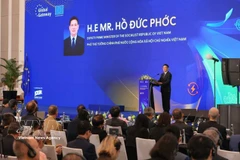
Deputy Prime Minister Ho Duc Phoc speaks at the EU–Vietnam Global Gateway Business and Investment Forum (Photo: VNA)

EU remains Vietnam’s leading economic partner: Deputy PM

Deputy Prime Minister Ho Duc Phoc affirmed that Vietnam–EU relations have developed robustly over the past three decades, supported by an increasingly comprehensive cooperation framework. He highlighted the EU–Vietnam Free Trade Agreement (EVFTA) as a key driver of bilateral trade and investment.

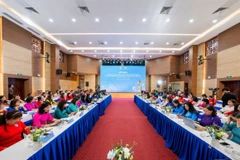
Delegates at the event (Photo: VNA)

Vietnam pledges best possible conditions for US investors

Vietnam is committed to accompanying and providing the most favourable conditions for foreign investors in general and US enterprises in particular to invest and operate successfully at the Vietnam International Financial Centre.

Vietnamese Ambassador to France Trinh Duc Hai (L) meets with Diego Diaz, President of SNCF International under the French National Railway Company (Photo: VNA)

Vietnam, France seek railway cooperation

Diego Diaz, President of SNCF International under the French National Railway Company (SNCF), affirmed the company’s readiness to support Vietnam through strategic consultancy, human resources training and technology transfer, while sharing practical lessons in planning, operation and management of modern railway systems.

Vietnam, India step up cooperation in electronics, IT

Vietnam, India step up cooperation in electronics, IT

Opening the forum, Vietnamese Ambassador to India Nguyen Thanh Hai said both Vietnam and India are entering new development phases driven by innovation, digital transformation, and deeper integration into global value chains. He highlighted Vietnam’s goal of becoming a developed, high-income country by 2045 and India’s Viksit Bharat 2047 vision, noting strong alignment between the two countries’ strategies.

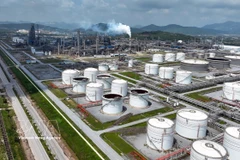
The fuel storage area of the Nghi Son Refinery in Thanh Hoa province (Photo: VNA)

Vietnam diversifies supply sources to meet domestic fuel demand

Since the Middle East conflict disrupted crude and refined fuel supply chains, Petrovietnam has swiftly activated a range of response measures while moving decisively to implement the Government’s Resolution 36/NQ-CP dated March 6, 2026 to secure energy supply for the market.

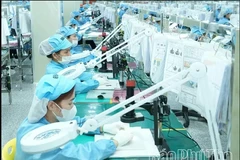
Bhflex Vina Co., Ltd., a Republic of Korea -invested company based in Khai Quang Industrial Park, Phu Tho province, currently operates five electronic component manufacturing plants, creating jobs for more than 4,100 workers (Photo: baophutho.vn)

Foreign investment in Phu Tho surges more than sevenfold in Q1

Phu Tho has renewed its investment promotion approach, expanding activities both at home and abroad to diversify partners and markets. It has also strengthened on-the-spot promotion, providing comprehensive support for investors from project preparation to implementation to ensure early and efficient operation.

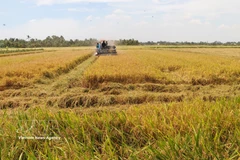
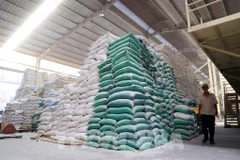
Producing high-quality rice in An Giang province (Photo: VNA)

Logistics pressures drive urgent restructuring of agricultural value chains

In an official dispatch on measures to boost exports in 2026 issued recently, Prime Minister Pham Minh Chinh stressed the requirement to develop and upgrade transport infrastructure, warehousing systems, deep-water seaports, and logistics centres to meet the demand of goods import-export. He also called for strengthening the capacity and market share of Vietnamese shipping firms in international cargo transport.

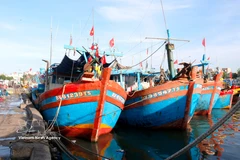
A fishing vessel bearing Ho Chi Minh City registration docks at Phan Thiet Port in Lam Dong province. (Photo: VNA)

Digital tools power Vietnam’s shift toward smarter fisheries

The Ministry of Agriculture and Environment has coordinated with relevant ministries, agencies and localities to finalise integrated fisheries data systems, including licensing and registration through the national fisheries database (Vnfishbase), electronic fishing logbooks (elogbook), eCDT, VMS, and digital platforms for handling administrative violations in the fisheries sector.

Illustrative image (Photo: VNA)

Can Tho to host 2026 rice export promotion conference on March 24

The the 2026 rice export promotion conference in Can Tho city is conceived as a key platform where management agencies, industry associations, overseas trade offices, and the business community can speak plainly about the state of the market, confront on-the-ground challenges, and sketch remedies for obstacles that impede smoother, more profitable exports.

At the conference between VWU and Unilever Vietnam (Photo: VNA)

Vietnam Women’s Union, Unilever Vietnam benefit over 100,000 women

In the 2022-2025 period, the collaboration between the Vietnam Women's Union and Unilever Vietnam established itself as a flagship public - private partnership empowering more than 100,000 Vietnamese women, particularly those in rural and underserved areas, by enhancing economic opportunities, improving health, and raising overall quality of life.

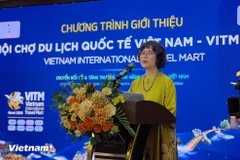
Nguyen Thi Hoa Mai, Deputy Director of the Vietnam National Authority of Tourism, speaks at a briefing in Hanoi (Photo: VietnamPlus)

Vietnam Int’l Travel Mart 2026 to feature 450 booths

VITM 2026 is expected to attract participants from 15 countries and territories and 34 localities nationwide to promote destinations, introduce products and seek cooperation opportunities. The fair is projected to draw about 80,000 visitors, creating a vibrant platform for promotion and market stimulation.

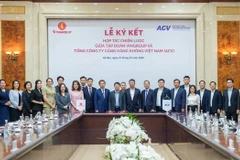
Delegates at the ceremony (Photo: tienphong.vn)

Vingroup, ACV partner to promote green transition at airports

Vingroup and ACV plan to roll out clean energy solutions and advanced power supply models tailored to airport operations and affiliated units. Priority will also be given to developing infrastructure for electric vehicles, including charging networks and related support services.