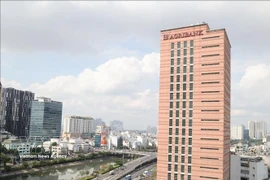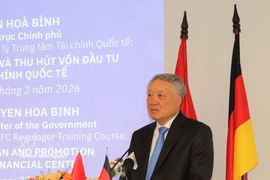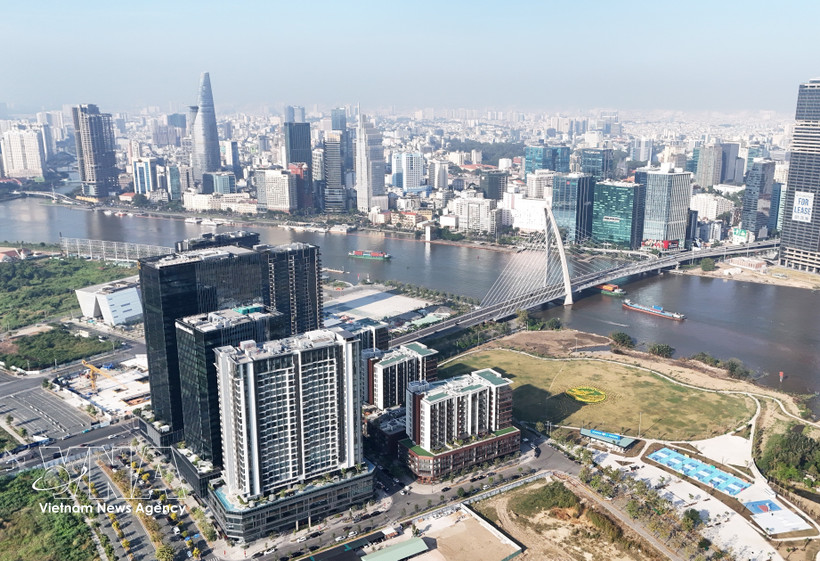
Ho Chi Minh City (VNA) – A growing number of commercial banks are moving to establish their presence at the Vietnam International Financial Centre (VIFC), seeking to capitalise on preferential mechanisms, expand operations, attract foreign capital, and enhance competitiveness amid intensive global integration.
The trend has become increasingly evident as banks roll out plans to join the centre. At its 2026 annual general meeting, Nam A Commercial Joint Stock Bank (Nam A Bank) secured shareholder approval to establish a wholly Vietnamese-owned one-member limited liability commercial bank operating at the VIFC.
The proposed entity is expected to support Nam A Bank’s long-term strategy to expand international financial operations, while leveraging incentives in taxation, legal frameworks, and operating conditions at the centre to improve efficiency and competitiveness. The bank also aims to improve access to international capital and diversify products and services to meet growing cross-border transaction demand from both businesses and individuals.
Earlier, on February 11, the VIFC in Ho Chi Minh City (VIFC-HCMC) was officially launched, with Nam A Bank recognised as one of its strategic members.
Interest in the VIFC is spreading across the banking system. Several other commercial banks are preparing participation plans for shareholder approval during this year’s annual meeting season.
The Joint Stock Commercial Bank for Foreign Trade of Vietnam (Vietcombank) plans to seek approval to establish a subsidiary at the VIFC. The new entity is expected to help expand operations while aligning the bank with higher international standards in governance, products, and risk management. Vietcombank also plans to increase charter capital to strengthen its financial capacity, particularly as it ventures into complex areas such as cross-border finance, investment banking, and digital asset services.
Similarly, the Vietnam Joint Stock Commercial Bank for Industry and Trade (VietinBank) is studying options to establish a subsidiary or appropriate legal entity to operate at the VIFC. Its strategy includes expansion into fintech and digital assets, with plans to collaborate with startups within the ecosystem of its strategic shareholder, Japan’s MUFG Financial Group, to develop payment, lending, and insurance services in 2026–2027. The bank also aims to position itself as a payment intermediary in the digital asset sector when regulatory approval is granted.
Meanwhile, Ho Chi Minh City Development Joint Stock Commercial Bank (HDBank) has consulted shareholders on relocating its headquarters to the Saigon Marina International Financial Centre Tower, aligning with its expansion strategy and the new development phase.
Beyond individual banks, the VIFC is attracting broad attention across Vietnam’s financial system. In Da Nang, 11 institutions, including five banks, have been approved to participate, while the list of founding members of VIFC-HCMC includes several banks such as MB, TPBank, SHB, HDBank, and Nam A Bank.
Under current regulations, eligible domestic commercial banks may join the VIFC as members under a wholly Vietnamese-owned one-member limited liability model.
Nguyen Duc Lenh, Deputy Director of the State Bank of Vietnam’s Region 2 branch, said participation in the VIFC will enable banks to expand services, enhance reputation and branding, and contribute to the development of the international financial centre.
He noted that the VIFC is oriented towards sustainable finance and specialised sectors, creating new growth space for banks. Priority areas include green finance, carbon credit markets, issuance and trading of green debt and equity instruments, and financial services supporting tourism and sustainable infrastructure. Insurance, reinsurance, international brokerage, maritime finance, commodity derivatives, and advisory services in legal, asset management, and investment funds are also encouraged.
Financial expert Dr Nguyen Tri Hieu said banks operating at the centre should adopt a “one-stop shop” model, offering integrated financial services to diverse client groups, from domestic and international investors to retail and corporate customers. This requires strong expertise in services such as payments, remittances, trade finance, and international instruments like letters of credit, alongside a deep understanding of global financial institutions.
Experts view the VIFC as a major capital hub where banks act as modern financial intermediaries, facilitating efficient capital flows and improving resource allocation. In the long term, with synchronised development in institutions, infrastructure, and human resources, the VIFC is expected to become both a destination for global capital and a launchpad for Vietnam’s banking system to integrate more deeply into regional and international financial value chains./.