Human capital central to Vietnam’s international financial centre drive

Training programmes for the IFC workforce should be upgraded and expanded into priority areas such as artificial intelligence, big data, financial technology, energy and semiconductors, with the longer-term goal of developing a high-quality finance and STEM training hub in Vietnam aligned with German standards, said Permanent Deputy Prime Minister Nguyen Hoa Binh, who also serves as Chairman of the Executive Board of the Vietnam International Financial Centre.

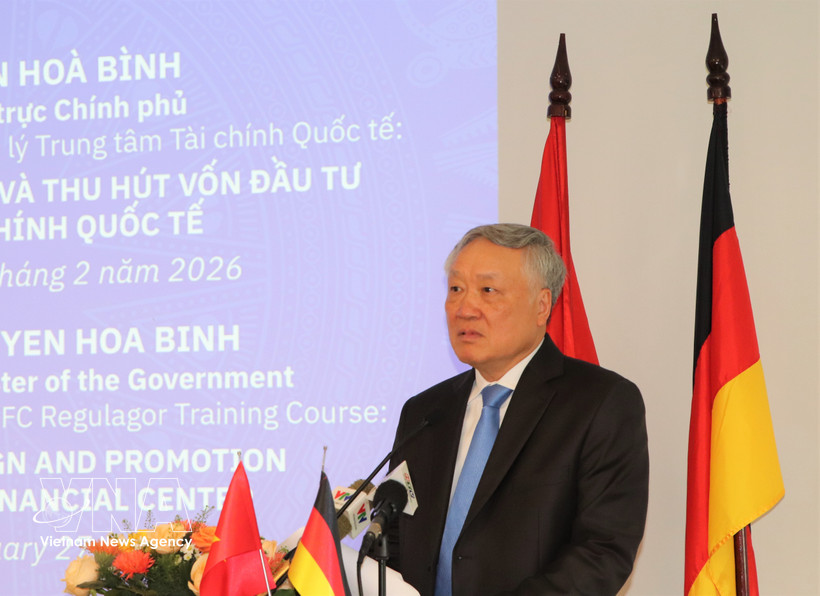
Permanent Deputy Prime Minister Nguyen Hoa Binh, Chairman of the Executive Board of the Vietnam International Financial Centre, delivers opening remarks at the ceremony. (Photo: VNA)

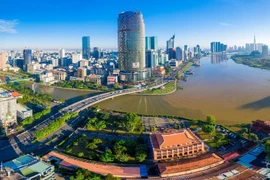
Ho Chi Minh City (VNA) – A modern financial centre will help upgrade capital markets, connect directly with global capital flows, diversify financial products, advance green and digital finance, and channel funding into infrastructure, technology and clean energy projects – all key pillars for sustainable development, Permanent Deputy Prime Minister Nguyen Hoa Binh has stressed.

Speaking at the opening ceremony of the International Financial Centre Regulator Executive Training Programme - Training Course No.3 (IFCR03) held in Ho Chi Minh City on February 27, Deputy PM Binh, who also serves as Chairman of the Executive Board of the Vietnam International Financial Centre, described the successful establishment and operation of the IFC as a strategic component of the country’s growth model transformation.

He noted that the IFC’s development must be built on five core pillars, namely strong global connectivity; a stable and transparent legal framework; high-quality human resources; robust governance and management capacity; and a supportive development ecosystem. Among these, human capital plays a decisive role in ensuring the safe, efficient and competitive functioning of the system.

Training programmes for the IFC workforce, he said, should be upgraded and expanded into priority areas such as artificial intelligence, big data, financial technology, energy and semiconductors, with the longer-term goal of developing a high-quality finance and STEM training hub in Vietnam aligned with German standards.

The IFCR03 course, themed “Financial product design and promotion in an International Financial Centre”, is organised by Vietnamese-German University (VGU) and runs from February 27 to March 1. The programme centres on specialised financial product design and capital mobilisation strategies, regarded as essential to strengthening the IFC’s global competitiveness.

The IFC programme at the VGU forms a key component of the national project on developing high-quality human resources for the centre. It is structured around three pillars: training management personnel; providing advanced professional updates; and delivering internationally accredited bachelor’s and master’s programmes in finance, economics and management.

Designed by VGU experts in collaboration with German professors and specialists, the curriculum aims to equip financial managers with in-depth expertise and practical skills to meet the demands of deeper international integration and development.

IFCR03 is the third course in the IFC training series, which has previously laid foundations in institutional models, operational mechanisms of financial centres, financial market structures and macroeconomic stability. Following this series, the VGU plans to introduce 12-week micro-credential programmes focusing on advanced quantitative analytical skills in finance and economics to meet the practical requirements of building Vietnam’s IFC.

Beyond training, the VGU is expected to spearhead a closer university–business–Government linkage model, ensuring that education and research align with market demand and effectively support policymaking./.
VNA

See more

Illustrative image (Photo: VNA)

PM orders enhanced management, effective use of public assets

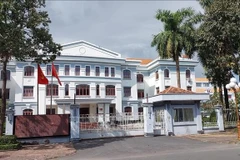
PM Pham Minh Chinh urged ministries and ministry-level and Government agencies to promptly complete the handling and put into use surplus offices and land assets arising from apparatus reorganisation, ensuring they are not left idle or degraded. Surplus properties must be swiftly transferred to local authorities for management or otherwise handled in accordance with the law.

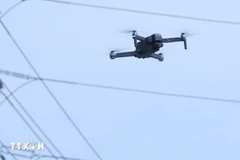
Da Nang authorities detect and handle a foreign national operating UAV illegally. (Photo: laodong.vn)

Da Nang: foreigner caught operating drone illegally

At about 1pm on February 26, a patrol unit from the An Hai ward Military Command spotted a man operating a drone near Ong Temple at the junction of Vo Van Kiet and Vo Nguyen Giap streets. The operator had not secured approval from relevant authorities.

The Ministry of Construction has issued an urgent directive to prevent UAVs and similar devices from endangering aviation security and safety at airports nationwide (Illustrative image: VNA)

Ministry requests urgent measures to counter UAVs threatening aviation safety

The ministry requested the Ministry of National Defence, the Ministry of Public Security and provincial and municipal steering committees for counter-terrorism to strengthen the management, inspection and supervision of UAVs and other aerial devices, ensuring strict compliance with Decree No. 288/2025/ND-CP and relevant legal regulations.

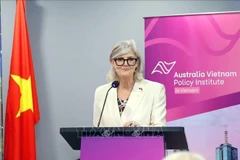
Australian Governor-General Sam Mostyn (Photo: VNA)

Australian Governor-General hails Vietnamese contributions at Sydney Tet

Governor-General Sam Mostyn highlighted that the over 320,000 Vietnamese people in Australia form an integral part of the country’s success, noting that Tet celebrations help preserve culture while strengthening solidarity, mutual understanding and strength of Australia’s multicultural society.

Display of the book titled “Radiant Vietnam – Milestones of achievements during the 13th National Party Congress term” (Photo: baochinhphu.vn)

New book chronicles achievements during 13th Party Congress term

According to him, the successes recorded during the 13th Congress term vividly illustrate Vietnam’s resilience and brainpower. These accomplishments, he suggested, will furnish lasting momentum for the entire Party, people and army to strengthen solidarity, sharpen resolve, boost dynamism and creativity, seize opportunities, firmly overcome challenges, and steer the country into a new era of development, for the fulfillment of the goals and tasks set for the 14th Party Congress term and beyond.

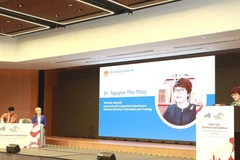
Nguyen Thu Thuy, Director of the Department of International Cooperation under the Ministry of Education and Training, delivers a speech during the discussion at APAIE. (Photo: VNA)

Vietnam promotes education partnerships at APAIE 2026

APAIE President Venky Shankararaman commended the Vietnamese delegation, noting that it marks the largest-ever participation by Vietnamese institutions at the forum. He said many Asia-Pacific countries, particularly in Southeast Asia, are keen to expand cooperation with Vietnamese universities.

Established in 2021, the Lang Son Geopark features a diverse and rich system of geological heritage. (Photo: VNA)

Geological heritage powers community livelihoods

Rock climbing may have sparked the transformation, but demand for accommodation, cuisine, experiences and cultural exchange has since fostered a mutually reinforcing community-based tourism ecosystem, opening a sustainable pathway out of poverty for ethnic minorities and offering a replicable model for other mountainous regions.

A teacher uses artificial intelligence applications in teaching. (Photo published by VNA)

Purpose-driven AI education prepares students for digital, people-centred future

Prof. Dr. Le Anh Vinh, Director General of the MoET's Vietnam Institute of Educational Sciences, said that during the development of the AI competency framework, the institute surveyed more than 11,000 students nationwide in early 2024. Results showed that 87% were aware of AI applications in education, but major challenges included limited knowledge and skills, inadequate equipment and technology, and insufficient teacher guidance.

Passengers travel on the Cat Linh – Ha Dong urban railway line in Hanoi. (Photo: VNA)

Public transport in Hanoi sees higher ridership during Tet

From February 7 (the 20th day of the last lunar month) to date, bus stations managed by the company handled 23,020 vehicle trips, up 1% year-on-year. Additional services reached 1,117 trips, a 9% increase compared to the same period in 2025.