Hanoi (VNA) - Vietnam is facing both opportunities and challenges as it seeks to sustain strong export performance in the coming period. Rising technical barriers, increasingly stringent quality standards, traceability requirements, and social responsibility expectations are creating new pressures for the country’s import-export sector.
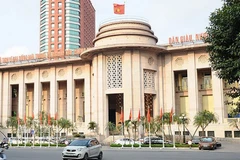
Against the complex backdrop of global trade, the Ministry of Industry and Trade is determined to maintain export growth of 15–16% while sustaining a trade surplus of around 23 billion USD to make a significant contribution to achieving double-digit GDP growth in 2026 and beyond.
Numerous challenges ahead
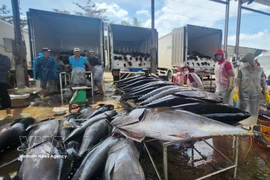
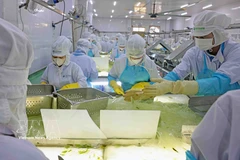
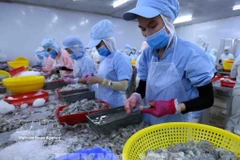
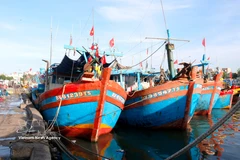
Vietnam’s aquatic product exports reached a record 11.3 billion USD in 2025, and growth continued into the first two months of 2026 with a 20% year-on-year increase to 1.7 billion USD. Nevertheless, the sector faces multiple challenges.
Le Hang, Deputy Secretary General of the Vietnam Association of Seafood Exporters and Producers (VASEP), highlighted the impact of rising logistics costs due to Middle East conflicts. Aquatic product exports, heavily reliant on maritime transport, are affected by diverted shipping routes via Africa, which extend delivery times to Europe and the US East Coast by one to two weeks, thus increasing costs. Insurers have also refused coverage for high-risk Middle East routes, while packaging and processing material costs are soaring.
Additionally, the sector must navigate trade defence measures and tariffs on key products such as shrimp and tra fish. Since January, the US has banned seafood from twelve fisheries that were not recognised as equivalent under the Marine Mammal Protection Act. In February, the US issued final results of the 19th administrative review of anti-dumping duties on shrimp, imposing nearly 26% tariffs on two Vietnamese firms and over 4.5% on non-reviewed companies, causing a 60% drop in shrimp exports to the US that month.
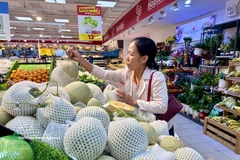
Trade with the UAE is also subject to volatility. Bilateral trade reached over 6.5 billion USD in 2025, with Vietnam exporting nearly 5 billion USD more than it imported. The Vietnam-UAE Comprehensive Economic Partnership Agreement (CEPA), effective February 3, initially boosted exports to almost 1 billion USD in the first two months of 2026. However, ongoing Middle East tensions pose logistical disruptions, fuel price volatility, and production cost increases, potentially affecting competitiveness and key agricultural exports such as spices and fresh fruits.
Expanding markets, reducing dependence
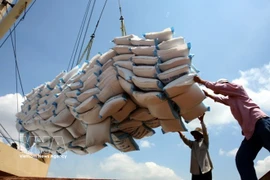
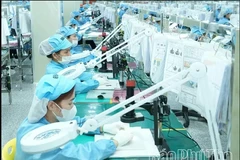
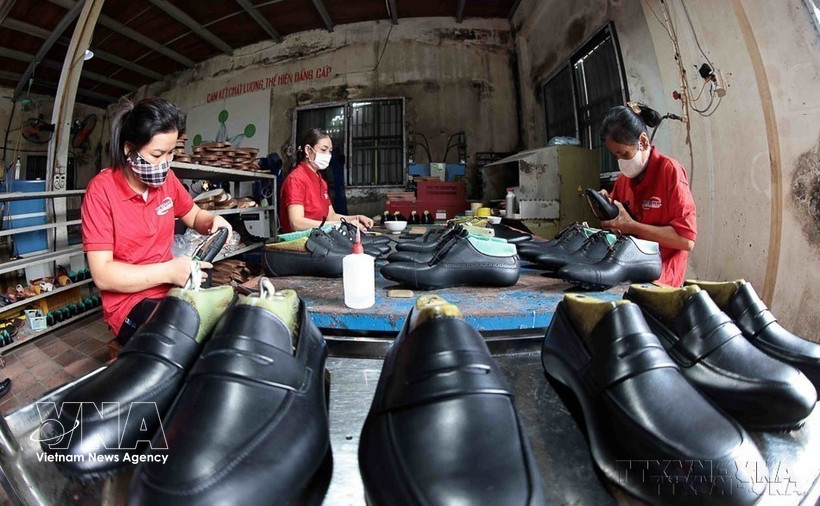
Vietnam’s textile and garment industry, a major export sector, ships products to around 130 countries but relies heavily on the US, EU, Japan, the Republic of Korea, and China, which account for nearly 90% of exports. Vice President and General Secretary of the Vietnam Textile and Apparel Association (VITAS) Truong Van Cam urged the ministry to help businesses explore new, high-potential markets and strengthen supply chains for raw materials and auxiliary inputs. Enhancing domestic production capacity is essential to fully benefit from free trade agreements.
VASEP also recommended diversifying markets for aquatic products beyond traditional destinations like the US and EU to regions such as Brazil, South America, and South Asia, while promoting Vietnamese exporters through overseas trade offices. Providing timely market information and early warnings will help businesses plan production and respond proactively to trade challenges.
Nguyen Anh Son, Director of the Agency for Foreign Trade, emphasised that the Ministry of Industry and Trade will closely monitor market developments and coordinate with related agencies to guide exporters effectively./.
See more
EU remains Vietnam’s leading economic partner: Deputy PM
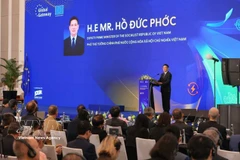
Deputy Prime Minister Ho Duc Phoc affirmed that Vietnam–EU relations have developed robustly over the past three decades, supported by an increasingly comprehensive cooperation framework. He highlighted the EU–Vietnam Free Trade Agreement (EVFTA) as a key driver of bilateral trade and investment.
Vietnam pledges best possible conditions for US investors
Vietnam is committed to accompanying and providing the most favourable conditions for foreign investors in general and US enterprises in particular to invest and operate successfully at the Vietnam International Financial Centre.
Vietnam secures lion’s share of Thailand pepper market
Vietnam now supplies about 99.63% of Thailand’s imported pepper, driven by strong demand from the food and tourism industries and limited domestic production.
Banks step up presence at Vietnam’s international financial centre
The Vietnam International Financial Centre (VIFC) is seen as a major capital hub where banks act as modern financial intermediaries, facilitating efficient capital flows and improving resource allocation.
Vietnam launches drive to boost private sector, reform state enterprises
The country aims to have nearly 2 million operating enterprises, equivalent to 20 businesses per 1,000 people, including at least 20 large corporations engaging in global value chains.
Vietnam, France seek railway cooperation
Diego Diaz, President of SNCF International under the French National Railway Company (SNCF), affirmed the company’s readiness to support Vietnam through strategic consultancy, human resources training and technology transfer, while sharing practical lessons in planning, operation and management of modern railway systems.
Reference exchange rate continues to go up
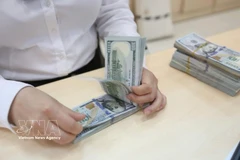
The State Bank of Vietnam set the daily reference exchange rate at 25,109 VND/USD on March 24, up 19 VND from the previous session.
Vietnam, India step up cooperation in electronics, IT
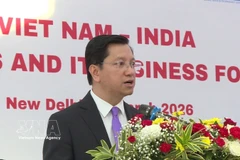
Opening the forum, Vietnamese Ambassador to India Nguyen Thanh Hai said both Vietnam and India are entering new development phases driven by innovation, digital transformation, and deeper integration into global value chains. He highlighted Vietnam’s goal of becoming a developed, high-income country by 2045 and India’s Viksit Bharat 2047 vision, noting strong alignment between the two countries’ strategies.
Vietnam diversifies supply sources to meet domestic fuel demand
Since the Middle East conflict disrupted crude and refined fuel supply chains, Petrovietnam has swiftly activated a range of response measures while moving decisively to implement the Government’s Resolution 36/NQ-CP dated March 6, 2026 to secure energy supply for the market.
Foreign investment in Phu Tho surges more than sevenfold in Q1
Phu Tho has renewed its investment promotion approach, expanding activities both at home and abroad to diversify partners and markets. It has also strengthened on-the-spot promotion, providing comprehensive support for investors from project preparation to implementation to ensure early and efficient operation.
International sourcing expo to open new supply chain links for Vietnam’s seafood sector
More than a conventional trade fair, the upcoming event is designed as a global supply chain transaction hub, where hundreds of international buyer delegations are expected to visit Vietnam to source suppliers across multiple industries, with seafood identified as a priority sector.
Logistics pressures drive urgent restructuring of agricultural value chains
In an official dispatch on measures to boost exports in 2026 issued recently, Prime Minister Pham Minh Chinh stressed the requirement to develop and upgrade transport infrastructure, warehousing systems, deep-water seaports, and logistics centres to meet the demand of goods import-export. He also called for strengthening the capacity and market share of Vietnamese shipping firms in international cargo transport.
Digital tools power Vietnam’s shift toward smarter fisheries
The Ministry of Agriculture and Environment has coordinated with relevant ministries, agencies and localities to finalise integrated fisheries data systems, including licensing and registration through the national fisheries database (Vnfishbase), electronic fishing logbooks (elogbook), eCDT, VMS, and digital platforms for handling administrative violations in the fisheries sector.
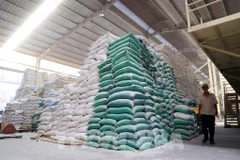
Can Tho to host 2026 rice export promotion conference on March 24
The the 2026 rice export promotion conference in Can Tho city is conceived as a key platform where management agencies, industry associations, overseas trade offices, and the business community can speak plainly about the state of the market, confront on-the-ground challenges, and sketch remedies for obstacles that impede smoother, more profitable exports.
Vietnam Women’s Union, Unilever Vietnam benefit over 100,000 women
In the 2022-2025 period, the collaboration between the Vietnam Women's Union and Unilever Vietnam established itself as a flagship public - private partnership empowering more than 100,000 Vietnamese women, particularly those in rural and underserved areas, by enhancing economic opportunities, improving health, and raising overall quality of life.
Vietnam Int’l Travel Mart 2026 to feature 450 booths
VITM 2026 is expected to attract participants from 15 countries and territories and 34 localities nationwide to promote destinations, introduce products and seek cooperation opportunities. The fair is projected to draw about 80,000 visitors, creating a vibrant platform for promotion and market stimulation.
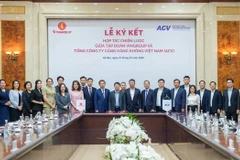
Vingroup, ACV partner to promote green transition at airports
Vingroup and ACV plan to roll out clean energy solutions and advanced power supply models tailored to airport operations and affiliated units. Priority will also be given to developing infrastructure for electric vehicles, including charging networks and related support services.
Sun Group, Marriott International enter strategic partnership
The collaboration portfolio adds 8 brands across diverse segments and operating models, including W Hotels, Marriott Hotels, Westin, Le Méridien, Courtyard by Marriott, Fairfield, Moxy Hotels, and Four Points by Sheraton; among which W Hotels and Moxy Hotels are making their debut in Vietnam.
Measures needed to balance budget amid recovery, growth requirements
Economists caution that an expansionary fiscal policy must be applied prudently as prolonged or broad tax and fee cuts could increase budget deficits and public debt risks.
Urgent measures ramped up to stabilise market amid rising costs
Authorities are urgently rolling out measures to stabilise the market as surging input costs place unprecedented pressure on the retail market, with suppliers pushing for price hikes and supermarket systems striving to keep prices in check.