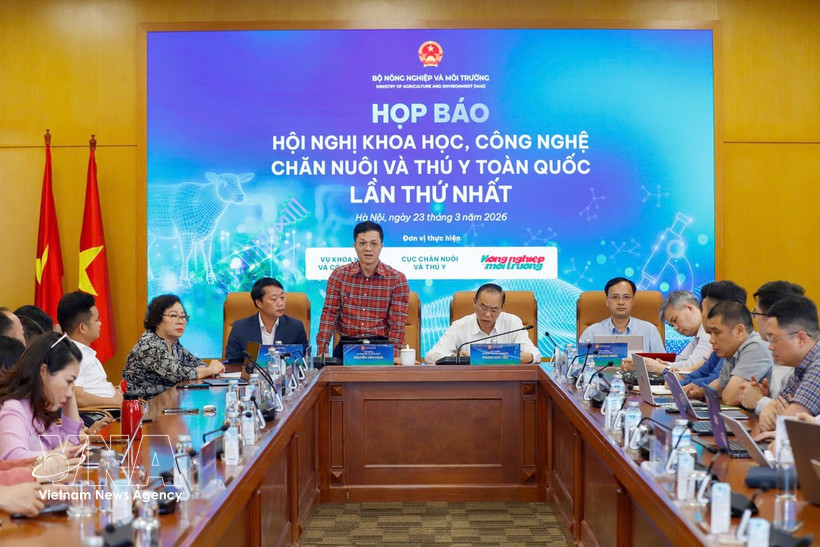
Hanoi (VNA) – Vietnam will hold its first national conference on livestock and veterinary science and technology on March 27–28 at the National Convention Centre, Hanoi.
The Ministry of Agriculture and Environment said at a press briefing on March 23 that the country’s largest scientific forum for the livestock and veterinary sectors will bring together more than 750 delegates from government agencies, research institutes, universities, industry groups, businesses and international organisations.
It will review research and technology applications from 2021–2025 and set priorities for 2026–2030, with a focus on modernisation, sustainability and digital transformation.
The ministry noted that the sector remains a pillar of agriculture, contributing around 26–28% of the industry’s value and helping to sustain food supplies for nearly 100 million people and about 20 million tourists annually.
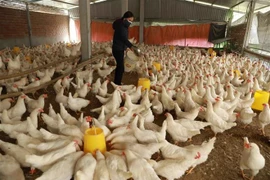
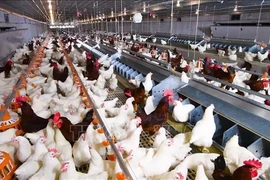
Vietnam’s livestock population includes roughly 31 million pigs, more than 500 million poultry, about 2 million buffalo, over 6 million cattle, and some 2.8 million goats and sheep, underscoring significant growth potential amid rising domestic and export demand.
However, officials warned that the sector continues to face persistent challenges. Smallholder production still dominates, dependence on imported breeding stock and inputs remains high, veterinary services at the local level are uneven, and the risk of disease outbreaks persists.
Authorities are also under increasing pressure to curb antibiotic misuse, ensure food safety, protect the environment and reduce emissions.
Le Trong Dam, deputy editor-in-chief of Nong nghiep va Moi truong (Agriculture and Environment) newspaper, said the conference comes at a critical time as the industry shifts towards a science and technology-driven development model.
He added that it would both review research outcomes and bring together regulators, scientists and businesses to accelerate the transfer of solutions to the market.
Nguyen Van Long, Director of the Department of Science and Technology, highlighted successful research applications that have improved productivity and disease control.
He pointed to Vietnam’s early success in developing a vaccine against African swine fever as a key achievement in strengthening disease resilience.
Phan Quang Minh, deputy director general of the Department of Livestock and Veterinary Services, said the conference would review the 2021–2025 period and map out the sector’s direction for 2026–2030, with the aim of boosting technology transfer into production.
A science and technology exhibition featuring around 20 booths will run from the afternoon of March 27 to March 28, showcasing innovations and promoting commercialisation and investment.
Deputy Minister Phung Duc Tien said the conference is expected to generate practical policy recommendations and priority R&D programmes while accelerating digital transformation across the sector.
“Science and technology are vital to raising value and sustainability in livestock,” he said, calling for stronger biosecurity, unified traceability systems and closer links between research and market needs.
Organisers expect the conference to lay the groundwork for modernisation, international integration and sustainable growth in Vietnam’s livestock and veterinary sector./.
Livestock product exports exceed target in 2025
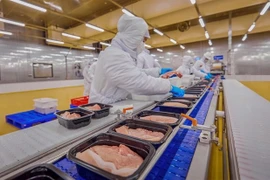
Vietnam's livestock product export revenue reached 628 million USD in 2025, marking a 17.4% increase compared to 2024. This figure exceeded the ministry's target of 550 million USD.