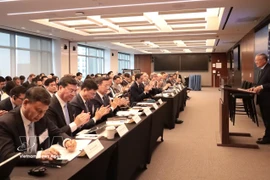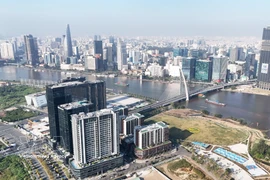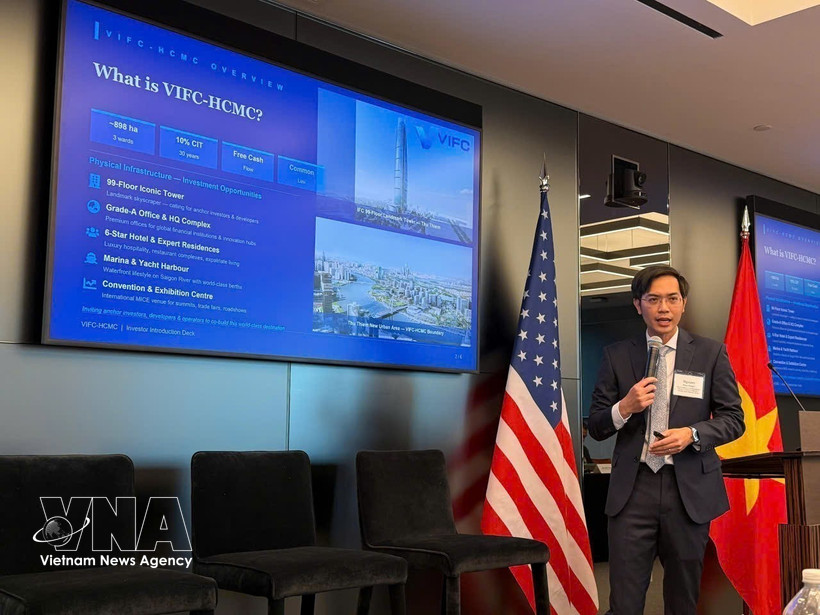
Ho Chi Minh City (VNA) – A working visit to the US from March 21 to 30 by Permanent Deputy Prime Minister Nguyen Hoa Binh, who also chairs the executive council of the Vietnam International Financial Centre (VIFC), is viewed as a strategic step to connect the emerging financial hub with global capital flows.
Taking place as the VIFC enters its implementation phase and seeks to attract strategic investors, the trip is expected to enhance the centre’s visibility on the international financial map.
Accompanying the delegation, Associate Professor Dr Nguyen Huu Huan, vice chairman of the VIFC executive council in Ho Chi Minh City, shared that the mission should be understood not merely as diplomatic outreach, but as a large-scale financial investment promotion effort aimed at directly connecting with leading financial institutions, investment funds and exchanges.
Direct engagement with “primary sources of capital” such as global banks, funds and fintech firms will allow Vietnam not only to present its broader economic outlook but also to showcase concrete investment opportunities at the VIFC. Early participation by major institutions, he noted, could generate strong spillover effects and attract additional investors during the centre’s formative stage.
The meetings during this trip will help position the VIFC in Ho Chi Minh City as a next-generation financial hub in the region, with a focus on digitalisation, green finance and emerging models such as tokenisation and fintech. In practical terms, such engagements are expected to yield three outcomes: attracting strategic investors as members or partners, advancing specific projects such as international exchanges or financial data centres, and building market confidence – an essential factor in capital allocation decisions, he said.
Regarding positioning, Huan indicated that the VIFC is not being promoted as a direct competitor to established hubs like Singapore, Hong Kong (China) or Dubai (the UAE), but rather as a specialised centre focusing on niche segments aligned with Vietnam’s comparative advantages. These include aviation finance, maritime finance, and financial technology.
He explained that aviation finance represents a key opportunity, given Vietnam’s rapidly growing aviation market and rising demand for aircraft financing, insurance and fuel hedging services – areas currently dominated by overseas centres.
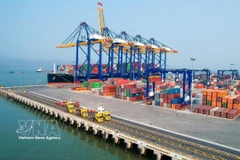
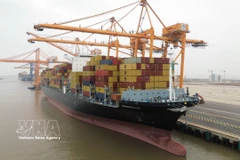
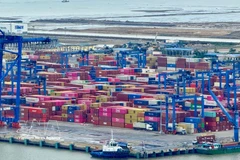
Similarly, maritime finance is linked to the country’s special advantage in the global logistics chain. Particularly, the Cai Mep – Thi Vai deep-water port complex in Ho Chi Minh City is among the few in the region capable of handling large vessels directly shipping cargo to Europe and the US.
In addition, the VIFC in Ho Chi Minh City is also positioned as an attractive destination for financial and technology corporations seeking to place headquarters or innovation centres. With operating costs estimated at a fraction of those in major financial hubs, combined with a young, abundant and tech-savvy workforce as well as sandbox policies for new financial models, the VIFC here holds potential to become a large-scale “factory of finance” delivering cost-efficient services.
From a broader perspective, Huan noted that global investors are reassessing geopolitical risks and adjusting portfolios accordingly. While capital has not been withdrawn en masse from established centres in the Middle East, there is a growing trend toward diversification. Investors are said to be prioritising locations offering geopolitical neutrality, cost efficiency and regulatory flexibility.
In that context, emerging centres such as the VIFC could serve as complementary destinations in multinational institutions' multi-hub strategies. Rather than replacing established hubs, the VIFC could position itself as an “Asia hedge”, particularly in sectors where Vietnam’s economy provides strong backing such as maritime finance linked to port and logistics chains; aviation finance associated with fleet expansion, airport infrastructure and leasing/hedging services; digital finance, including tokenisation and regulatory sandboxes for new models; alongside an international interbank market integrating traditional banking, digital banking and broader digital financial components.
On the institutional front, he emphasised that legal and regulatory frameworks will be decisive in converting positioning into investor confidence. He cited the National Assembly's Resolution 222/2025/QH15 as a legal foundation, alongside plans to set up specialised courts and an international arbitration mechanism aligned with global standards.
Preferential policies, including tax incentives and streamlined administrative procedures, were also highlighted as competitive advantages. Notably, early investor interest has been reflected in the pledged capital exceeding 9 billion USD within just over two months since the inception of the VIFC in Ho Chi Minh City.
Huan concluded that while building a fully-fledged international financial centre will take time, the VIFC is gradually moving from positioning to building credibility, thereby opening up new opportunities to attract global capital in the years ahead./.
See more
Reducing risks, removing logistics bottlenecks amid Middle East volatility
According to Truong Xuan Trung, Trade Counsellor of Vietnam in the UAE, the Middle East serves not only as a consumption market but also as a key global transhipment hub, meaning instability in the region creates ripple effects across intercontinental transport networks. Shipping route adjustments and airspace restrictions have lengthened transit times, increased costs and disrupted delivery schedules, with some Vietnamese shipments forced to reroute or seek alternative markets.
Senior housing emerges as high-potential segment in Vietnam
Major developers such as Vingroup, Sun Group and Tran Anh Group have already announced plans to enter the segment, signalling increasing investor interest in what is widely seen as an underdeveloped but promising market.
Businesses seek “survival momentum” amid global geopolitical turbulence
This is an urgent move as the challenges of 2026 differ markedly from previous ones, shaped by overlapping external shocks ranging from geopolitical tensions disrupting supply chains to surging logistics and raw material costs, exchange-rate pressures, and increasingly complex tariff barriers in global markets.
Reference exchange rate drops slightly on March 26
The State Bank of Vietnam set the daily reference exchange rate at 25,102 VND/USD on March 26, down 2 VND from the previous session.
Financial infrastructure - a critical enabler of sustainable cross-border e-commerce
Vietnam’s fast-growing e-commerce sector is increasingly viewed as a potential contributor to export growth. As the ecosystem matures, the focus is shifting from simply selling across borders to building the operational capacity required to run global businesses at scale.
Ho Chi Minh City gives boost to supporting industry firms
Supporting industry firms in Ho Chi Minh City are scrambling to embed themselves more deeply into both global and domestic supply chains, backed by a suite of local incentives that are speeding up their tech upgrades and market access.
Italian food firms eye opportunities in Vietnam
Italy’s exports of food and beverages to Vietnam reached 105.1 million EUR in 2025, up 4% year-on-year, positioning the country among the leading EU suppliers to the Vietnamese market.
German firms expand workforce cooperation with Vietnam’s labour market
BGWind GmbH, a member of the network of the German Association of Small and Medium-Sized Businesses (BVMW), intends to organise recruitment trips to Vietnam roughly once a month, with the next visit expected in late April 2026.
Quang Ninh promotes all-round cooperation with Guangxi Zhuang Autonomous Region
Quang Ninh encourages Guangxi enterprises to invest in high-tech marine aquaculture and expand aquatic product exports in China. At the same time, the province aims to develop livestock farming in line with international standards and attract investment in deep-processing plants for agricultural products such as cinnamon, star anise and tea, linked with traceability systems at border gates.
Vietnam becomes fastest growing market for Norwegian salmon in Southeast Asia
The Norwegian Seafood Council (NSC) reported at the “Norwegian seafood industry in Vietnam market 2026” event held in Ho Chi Minh City on March 25 that fresh Norwegian salmon exports to Vietnam jumped 16% in volume in the first two months of 2026 compared with a year earlier, while frozen salmon shipments surged about 37%.
Energy giants work hard to roll out E10 RON95 sale ahead of schedule
Petrolimex and PVOIL, are in a strong position to accelerate the transition toward cleaner fuels. These companies have been actively preparing infrastructure, upgrading blending systems, and coordinating supply chains to ensure the availability of E10 RON95 across their nationwide retail systems.
Over 200 booths join Bac Ninh trade, tourism fair 2026
Bac Ninh expects the event to help businesses expand partnerships, seek new markets and enhance product branding while offering visitors opportunities to explore local specialities and tourism services.
Vietnamese firms step up engagement at India’s tech exhibitions
Through these exhibitions, Vietnamese enterprises had valuable opportunities to connect with foreign partners and exchange technological ideas, thereby identifying suitable partners and promoting investment cooperation and technology transfer.
Unprecedented: Vietnam set to complete one of world’s most modern airports
With a total implementation timeline of 18 months, the expansion of the Phu Quoc International Airport is recognised as an unprecedented project in terms of speed within Vietnam’s aviation infrastructure sector.
Vietnam, Germany boost innovation, startup ecosystem connectivity
Deputy PM Nguyen Chi Dung highly valued CfE’s reputation and pioneering role in building Germany’s innovation-driven startup ecosystem, and called for stronger cooperation with NIC to support Vietnamese universities, research institutes and organisations in training and scientific research.
Measures sought to balance airfare pressures ahead of summer peak
Amid fuel price hikes due to Middle East tensions, the Civil Aviation Authority of Vietnam has instructed airlines to optimise costs, safeguard cash flow, and maintain stable operations, particularly during peak travel periods.
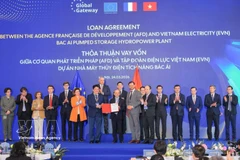
Vietnam's first pumped-storage hydropower project secures two int’l loan deals
Localted in the south-central province of Khanh Hoa, Bac Ai is Vietnam’s first pumped-storage hydropower plant. With four turbines and a total installed capacity of 1,200 MW, it is a key energy project playing a central role in the country’s energy transition.
ASEAN opens new export momentum for Vietnam
As competition in ASEAN is intensifying, Vietnamese enterprises are advised to strengthen distribution networks, enhance product innovation and closely monitor policy changes and trade-defence measures in importing markets to sustain and expand their market share.
Reference exchange rate down 5 VND on March 25
The State Bank of Vietnam set the daily reference exchange rate at 25,104 VND/USD on March 25, down 5 VND from the previous session.
Vietnam rice exports face shipping delays as Middle East tensions raise costs
Vietnam's rice exports in 2026 are likely to be affected by the conflict in the Middle East. Shipping insurance premiums have increased and delivery times have lengthened by 10-15 days, while domestic transport costs for rice shipments have risen by about 20,000-30,000 VND (0.8-1.2 USD) per tonne.