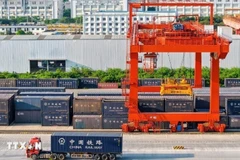
Hanoi (VNA) - Despite mounting global political and trade tensions as well as US tariff adjustments, Vietnam's agro-forestry-fishery sector had a promising start, achieving an export revenue of some 33.5 billion USD, and is gearing towards the target of 65 billion USD for the whole year.
The Ministry of Agriculture and Environment sketched out roadmap for the remainder of the year, targeting 14–15 billion USD in Q3 and at least 16 billion USD in Q4, capitalising on the surge in global demand during the year-end holiday season.
Capitalising on potential commodities
Key commodities including coffee, tea, pepper, cashews, rubber, and livestock products are expected to maintain export momentum, contributing significantly to the 65 billion USD target.
In the first half, the coffee sector recorded breakthrough results, with export value estimated at 5.5 billion USD, equivalent to the entire year's initial plan. Although Vietnam's coffee production is primarily concentrated in the harvest season from December to April of the following year, limiting supply in the second half, the sector could reach 7.5 billion USD by year-end, up 36.9% year-on-year.
The fruit will continue tapping on new trade opportunities, particularly from the EU which is seeking bolster cooperation in Asia and the Middle East, while shifting to large robusta consumers like China, Japan, the Republic of Korea (RoK), the Philippines, and Thailand. In long-term, the Northeast Asian region is evaluated as a key market that could compensate for any decline in US market share, the ministry analysed.
The cashew sector has set an export target of 4.5 billion USD for 2025, a modest 2.7% increase compared to 2024. Beyond maintaining large markets such as the US and China, the sector needs to intensify trade promotion and adjust export strategies towards markets with high demand but low market share, particularly in the Middle East region.
Meanwhile, rubber represents one of the key commodity sectors with an export goal of 3.3 billion USD for the whole year. Amidst challenges in traditional markets, the sector needs to capitalise on such potential markets as India, Russia, Turkey, Indonesia, and the RoK while leveraging trade agreements to boost sales in Brazil, Japan, Germany, and Malaysia.
The ministry said enhancing processing quality and tapping into mid- to high-end segments, especially in fashion and interior design, will be key to increasing value.
Livestock products are emerging as a high-potential growth segment, buoyed by expanded market access. Processed chicken has been present in Japan and Hong Kong (China), while frozen pork and eggs are being sold in Hong Kong, Singapore, Japan, and Taiwan (China). The Ministry is also negotiating further access to China and several Southeast Asian countries.
Addressing declining commodities
The ministry acknowledged that key agricultural products are facing intense pressure, especially from tax policies in the US market – Vietnam’s major trading partner.
Wood and wood products face the greatest pressure. Since the US market acconts for 67% of total export value, high tariffs are eroding competitiveness. The sector aims to reach 18.5 billion USD in export revenue, representing a 7% increase compared to 2024, with 8.4 billion USD in the first six months and approximately 10.1 billion USD in the second half.
In response, along with maintaining product lines suitable for US market’s preferences, Vietnam has increased imports of wood from the American country both to support traceability and reduce the trade deficit. At the same time, Vietnam is diversifying to such markets as China, Japan, the EU, Australia, Canada, and the Middle East, where demands for wood products in tourism and construction are strong.
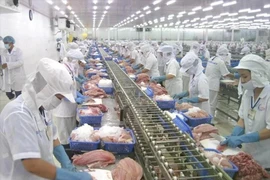
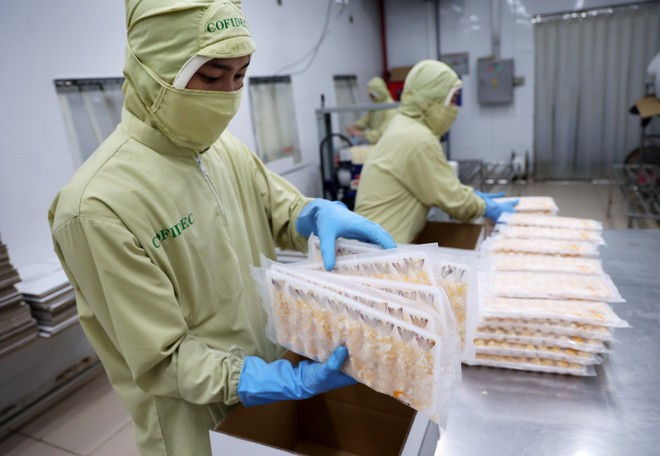
The fisheries sector, targeting 10.5 billion USD this year, have been under pressure with the US’s reciprocal duties and declining consumer demand for shrimp and salmon. Vietnam is prioritising catfish exports while strengthening compliance with marine protection standards in this market and expanding into Chinese fresh products, EU value-added exports, and Middle Eastern markets.
Rice, though less impacted by US tariffs, faces global headwinds of oversupply and falling prices. With buyers in a wait-and-see mode, this year exports are forecast to fall 0.9% year-on-year to 5.7 billion USD. Mid-year estimates suggest only 5.5 billion USD for the whole year.
The ministry said it is necessary to maintain traditional markets like the Philippines, Indonesia and Malaysia. In the meantime, enterprises should diversify into higher-end destinations like the EU, Japan, the RoK, and Singapore, particularly with rice-processed products including rice noodles, pho, pasta, and macaroni.
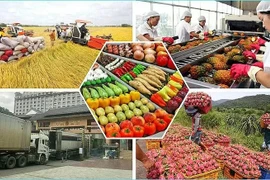
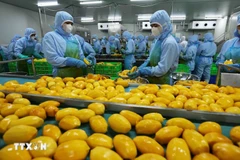
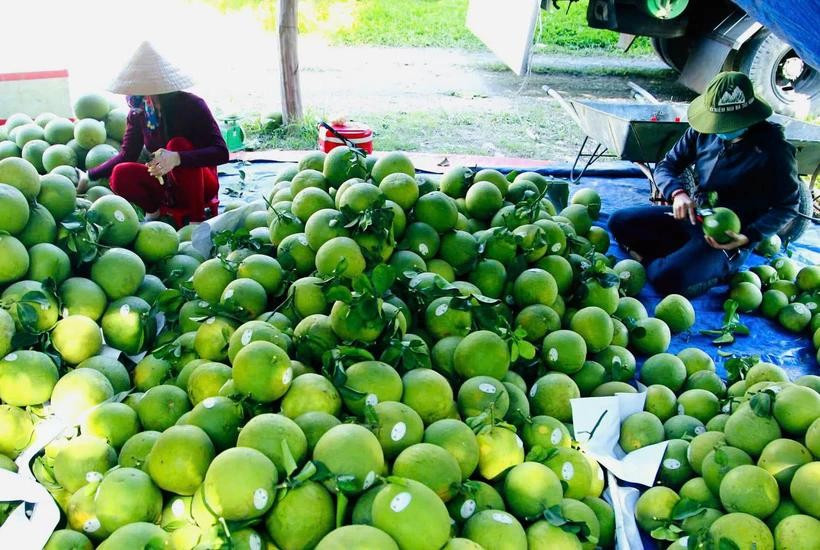
Fruit and vegetable exports are struggling with declining Chinese demand, potentially falling short of the 7.6 billion USD target. The sector is tapping on the free trade agreements with Japan, the RoK, and the EU to access higher-value markets, creating foundation for long-term development.
Minister Do Duc Duy said that the ministry has focused on promoting institutional reforms, building sustainable supply chains, as well as improving competitive edge and expanding markets for the products.
Priority is also being given to opening new markets for potential products such as fruits and livestock, he added./.