HCM City attracts over 5.3 billion USD into industrial parks in 2025

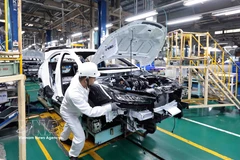
More than 5.3 billion USD in new and additional investment was channelled into Ho Chi Minh City’s export processing and industrial zones in 2025, up 0.37% year-on-year and exceeding the annual target by 17.5%.

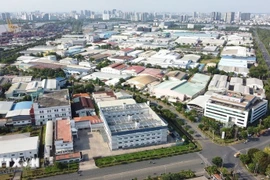
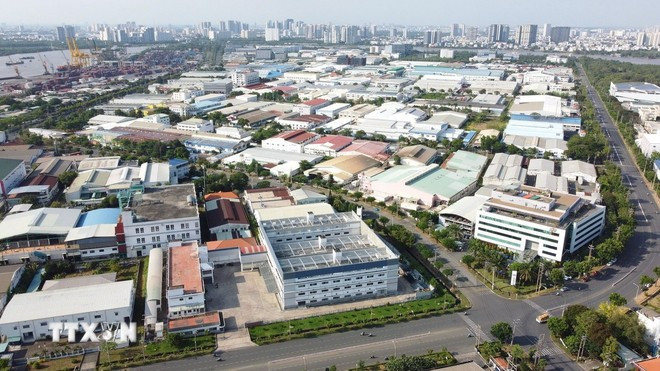
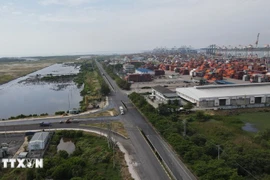
A view of Tan Thuan Export Processing Zone in Ho Chi Minh City. (Photo: VNA)

HCM City (VNA) – More than 5.3 billion USD in new and additional investment was channelled into Ho Chi Minh City’s export processing and industrial zones in 2025, up 0.37% year-on-year and exceeding the annual target by 17.5%.

Over 470 hectares of land and about 492,000 sq.m of factory space were leased during the year, according to the Ho Chi Minh City Export Processing and Industrial Zones Authority (HEPZA).

Foreign direct investment (FDI) reached more than 3.39 billion USD, down 7.09% from 2024. Of this, 210 new projects were licensed with registered capital totalling 1.93 billion USD, a decline of 44.32%. Meanwhile, additional capital registered by 179 existing projects surged 74.53% to 1.99 billion USD.

Hong Kong (China) topped the list of countries and territories by number of newly licensed projects, with 66 projects worth nearly 392 million USD. It was followed by mainland China, with 36 projects totalling more than 247 million USD. Singapore, with 24 projects, registered the largest amount of new investment capital, exceeding 415 million USD.

Sectors attracting the most foreign investment included mechanical engineering, with 52 projects worth more than 258.5 million USD; plastics and rubber, with 22 projects totalling over 80 million USD; and electronics, with 21 projects worth more than 210 million USD.

Domestic investment reached more than 48 trillion VND (over 1.9 billion USD), up 16.96% year-on-year. This comprised 99 new projects worth over 33.6 trillion VND and 52 projects registering additional capital totalling 14.3 trillion VND.

HEPZA reported a positive structural shift in FDI inflows, with capital increasingly directed towards priority industries such as mechanical engineering, which accounted for 18.5% of total FDI, and chemicals, which represented 15.2%. Domestic investment also maintained strong momentum, rising nearly 17% from 2024.

Of the 99 newly licensed domestic projects, the real estate sector accounted for the largest share, representing 56.2% of total capital, or 18.9 trillion VND. Mechanical engineering and food processing followed, accounting for 9.59% and 8.21%, respectively.

HEPZA Director Bui Minh Tri said exceeding the 2025 investment target as early as mid-December created an important foundation for economic breakthroughs in the coming period. In 2026, HEPZA will focus on strengthening business linkages and improving the timely provision of information to better support enterprises and workers.

The authority also plans to develop and implement a scheme on industrial and export processing zones, restructure key industries in line with high-tech development, and build eco-industrial parks and new-generation smart zones once approved by the municipal People’s Committee. These efforts are expected to stimulate growth while fostering stable and harmonious labour relations in key economic areas./.

VNA

See more

Tran Ngoc Quan, Trade Counsellor and head of the Vietnam Trade Office in Belgium and the EU (Photo: VNA)

Belgian firms suggested to expand presence in Vietnamese market

Entering 2026 – the first year of implementing the Vietnam – EU Comprehensive Strategic Partnership, the Vietnam Trade Office in Belgium and the EU views this as a pivotal time to inject new momentum into trade ties, said Trade Counsellor Tran Ngoc Quan.

Saigon Marina IFC, an emerging landmark, reflects Ho Chi Minh City’s pioneering spirit.

Saigon Marina IFC – The light of Ho Chi Minh City’s new icon

Saigon Marina IFC, an emerging landmark, reflects Ho Chi Minh City’s pioneering spirit. Designed to become an International Financial Centre, this new architectural icon along the Saigon River is envisioned not only as a premium commercial complex, but as a central platform supporting financial institutions, international investors and cross-border capital flows in the years ahead.

Shoppers at a supermarket in Hung Yen (Photo: VNA)

Retailers see tax compliance, AI as key to survival in 2026 survey

The annual survey, conducted at the end of 2025 among retail and food and beverage (F&B) sellers nationwide, found that businesses are shifting their focus from rapid growth to operational efficiency, cost control and legal compliance amid increasingly stringent regulatory standards.

Visitors shop at Glorious Spring Fair 2026 (Photo: VNA)

Spring Fair 2026 opens broader prospects for Vietnam–UAE trade cooperation

For Vietnam, the UAE serves not only as a consumer market but also as a gateway to the Middle East and North Africa. Vietnamese agricultural products such as cashew nuts, pepper, cinnamon and rice have steadily gained market share, while aquatic products, including tra fish and tuna, are increasingly present in the UAE’s hospitality sector.

Bao Viet Bank's employee counts Vietnamese banknotes at a transaction counter in Hanoi. (Photo: VNA)

Credit quota reform, tighter capital rules may widen gap among banks

Yuanta Vietnam Securities estimates that to achieve GDP growth above 10%, credit growth would need to exceed 16%. This suggests bank credit is no longer expected to be the main growth driver, with greater reliance on fiscal policy, public investment and capital markets.

Commercial Counsellor Do Viet Phuong, Head of the Vietnam Trade Office in Cambodia. (Photo: VNA)

Spring Fair 2026 offers ample room to deepen Vietnam–Cambodia trade ties

Cambodia holds substantial potential for cooperation in agro-processing and exports, especially in key products such as rice, cashew nuts and rubber. In recent years, the country’s cultivation area and agricultural output have grown steadily, providing a stable raw material base for processing industries.

Vietnam is projected to have approximately 2.4 million SMEs, accounting for over 98% of the country’s total enterprises. (Photo: cafef.vn)

Banks offer diverse solutions to support SMEs

With an increasingly significant role in the economy, the small and medium-sized enterprise (SME) sector is becoming a key segment in the credit growth strategies of many banks and the banks have been taking diverse solutions to support the enterprises.