HCM City posts 24% rise in registered FDI in 2025

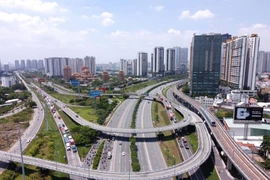
As of December 31, Ho Chi Minh City is expected to continue leading the nation in valid FDI capital and project numbers, with total registered capital standing at 141.9 billion USD across 20,310 projects.

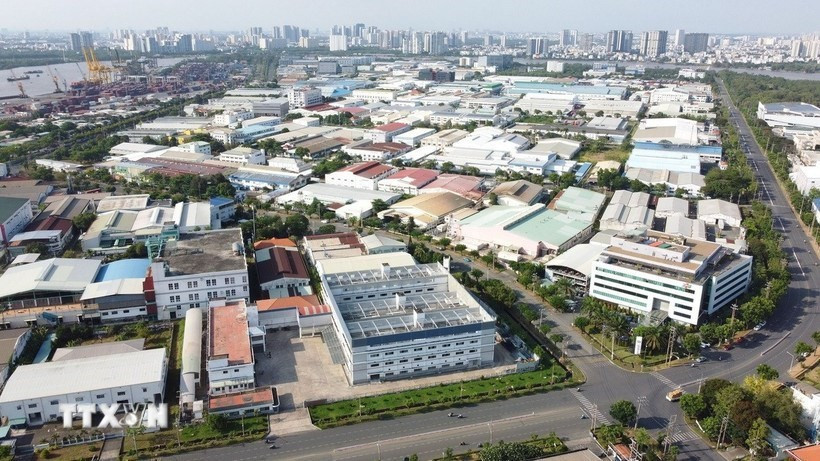
A view of the Tan Thuan Export Processing Zone in Ho Chi Minh City (Photo: VNA)

HCM City (VNA) – Total registered foreign direct investment (FDI) in Ho Chi Minh City in 2025 is estimated at nearly 8.37 billion USD, up 24.2% from 2024, reflecting the continued appeal of the southern metropolis to foreign investors.

The information was shared at a press conference on the city’s socio-economic situation held on December 25.

Specifically, the city granted investment certificates to 1,865 new FDI projects with a combined registered capital of more than 1.6 billion USD, while 432 existing projects adding their capital by 2.9 billion USD. In addition, foreign investors completed 2,700 transactions to contribute capital, purchase shares or acquire stakes in domestic enterprises, with a total registered value of 3.7 billion USD.

As of December 31, Ho Chi Minh City is expected to continue leading the nation in valid FDI capital and project numbers, with total registered capital standing at 141.9 billion USD across 20,310 projects.

By sector, manufacturing and processing continues to account for the largest share of registered FDI, with 5,829 projects and total capital exceeding 75.4 billion USD, or 53.3% of the total. Real estate ranks second with 28.5 billion USD (20.2%), followed by wholesale and retail trade and vehicle repair with 7.5 billion USD (5.3%). Other investments were channelled into education and training, professional and scientific services, construction, and information and communications.

The Department of Finance reported that investors from 89 countries and territories invested in the city this year. Singapore topped the list with 2.1 billion USD, accounting for 25% of total registered capital, followed by the Republic of Korea with 635.2 million USD (8%) and Hong Kong (China) with 482.2 million USD (6%). Other significant sources included China, Japan, the British Virgin Islands, Thailand and the United States.

The city aims to prioritise FDI into high value-added sectors, green energy and high technology. To this end, it plans to upgrade and modernise investment, trade and tourism promotion activities; strengthen economic diplomacy; and directly engage leading multinational corporations and strategic partners in key projects, including plans to develop the city into a national services hub and an international financial centre.

At the same time, the city will continue to address investment barriers, improve planning and infrastructure, simplify administrative procedures, develop high-quality human resources and strengthen dialogue with investors. It will also recommend the Government amend and supplement inadequate regulations, while proactively developing specific policies suited to the city’s development characteristics. Recently, the city proposed the National Assembly approve Resolution 260/2025/QH15 amending Resolution 98/2023/QH15 on piloting special mechanisms and policies for the development of HCM City, including expanding the framework for selecting strategic investors./.
VNA

See more

Visitors shop at Glorious Spring Fair 2026 (Photo: VNA)

Spring Fair 2026 opens broader prospects for Vietnam–UAE trade cooperation

For Vietnam, the UAE serves not only as a consumer market but also as a gateway to the Middle East and North Africa. Vietnamese agricultural products such as cashew nuts, pepper, cinnamon and rice have steadily gained market share, while aquatic products, including tra fish and tuna, are increasingly present in the UAE’s hospitality sector.

Bao Viet Bank's employee counts Vietnamese banknotes at a transaction counter in Hanoi. (Photo: VNA)

Credit quota reform, tighter capital rules may widen gap among banks

Yuanta Vietnam Securities estimates that to achieve GDP growth above 10%, credit growth would need to exceed 16%. This suggests bank credit is no longer expected to be the main growth driver, with greater reliance on fiscal policy, public investment and capital markets.

Commercial Counsellor Do Viet Phuong, Head of the Vietnam Trade Office in Cambodia. (Photo: VNA)

Spring Fair 2026 offers ample room to deepen Vietnam–Cambodia trade ties

Cambodia holds substantial potential for cooperation in agro-processing and exports, especially in key products such as rice, cashew nuts and rubber. In recent years, the country’s cultivation area and agricultural output have grown steadily, providing a stable raw material base for processing industries.

Vietnam is projected to have approximately 2.4 million SMEs, accounting for over 98% of the country’s total enterprises. (Photo: cafef.vn)

Banks offer diverse solutions to support SMEs

With an increasingly significant role in the economy, the small and medium-sized enterprise (SME) sector is becoming a key segment in the credit growth strategies of many banks and the banks have been taking diverse solutions to support the enterprises.

Workers process coconuts for export at Vina T&T Group. (Photo: nhandan.vn)

Agricultural exports reliant on securing raw material supply

According to Secretary General of the Vietnam Pepper and Spice Association Le Viet Anh, pepper remained Vietnam’s leading spice export in 2025, with shipments exceeding 247,000 tonnes, accounting for 59.3% of total spice export volume. Export revenue reached 1.66 billion USD, out of total spice exports of 2.1 billion USD.

Prime Minister Pham Minh Chinh speaks at the meeting between standing Government members and representatives of ministries, agencies and Phu Tho province (Photo: VNA)

PM orders new Lo river bridge to meet emerging development needs

Stressing both immediate and long-term imperatives, Prime Minister Pham Minh Chinh directed that authorities pursue a dual-track approach: repairing the existing bridge to ensure safety while simultaneously investing in a new structure capable of opening up new socio-economic development space and safeguarding national defence and security.

Online event promotes Vietnamese products in Canada (Photo: VNA)

Online programme promotes Vietnamese products in Canada

Vietnam’s exports to Canada have doubled over the past five years to more than 13 billion USD, reflecting strong cooperation potential, especially as the Comprehensive and Progressive Agreement for Trans-Pacific Partnership (CPTPP) continues to take effect.

Vehicles transporting import and export goods at Mong Cai international border gate. (Photo: VNA)

Mong Cai smart border gate to open new era for cross-border trade

The smart border gate will be based on Industry 4.0 technologies, with cross-border data connectivity serving as its core. Beyond modernising a single customs checkpoint, the project aims to create a regional-scale “digital gateway” facilitating more efficient trade flows.

Vietnam’s Trade Counsellor in Italy Duong Phuong Thao. (Photo: VNA)

Spring Fair 2026: Trade fairs boost Vietnam–Italy trade connectivity

Vietnam’s Trade Counsellor in Italy Duong Phuong Thao said the bilateral relations are developing positively, providing a solid foundation for economic and trade ties. The Italian Government, financial institutions and business community regard Vietnam as a key market in Southeast Asia.