Beijing (VNA) – The 14th National Congress of the Communist Party of Vietnam (CPV) is set to mark a milestone of special significance, ushering the country into a new stage of “strategic breakthrough” development, with science – technology, innovation, and institutional reform playing a pivotal role, according to a Chinese professor.
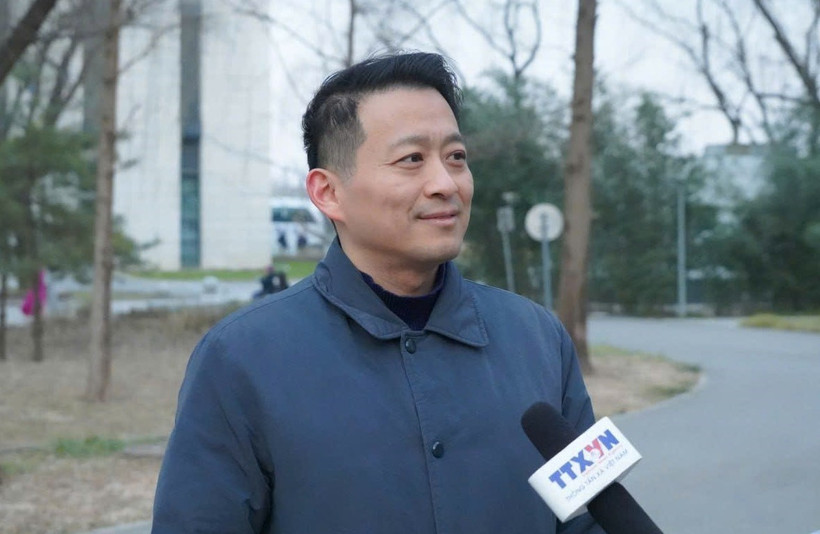
In an interview granted to the Vietnam News Agency correspondents in Beijing, Professor Qu Qiang of Minzu University of China said that considering both international and domestic backdrops, Vietnam has emerged as a country with an increasingly prominent position in Southeast Asia. With a population of around 100 million, a youthful demographic structure, rapid urbanisation, and a stable socio-political environment, it enjoys favourable conditions for medium- and long-term development.
He noted that during the period from the 12th to the 13th National Party Congress, Vietnam stood out as one of the region’s most dynamically growing economies, with deepened international integration and steadily improved national competitiveness.
However, the current development context differs markedly from the past. The global economy is facing complex fluctuations, supply chains are disrupted, strategic competition among major powers is intensifying, and regional conflicts and geopolitical instability remain unpredictable. In this context, Qu emphasised that Vietnam – an important emerging economy and a key link in ASEAN’s supply chains – needs to make appropriate strategic choices to sustain growth momentum and enhance development quality.
A central issue he highlighted is the need to transform the growth model. To move beyond reliance on scale expansion and low-cost labour, and to avoid the “middle-income trap”, Vietnam must raise the technological content and value-added of its economy, he opined. The professor also pointed to Vietnam’s strong development fundamentals. Internet penetration has reached about 80% of the population, creating a critical “take-off point” for the digital and platform economies. Drawing on China’s experience, he noted that once Internet usage surpasses 70%, the Internet economy typically enters a phase of rapid growth. Vietnam, he observed, is currently at this pivotal juncture.
In addition, Vietnam’s higher education system is expanding fast, helping to form a young workforce capable of engaging with advanced technologies. Educational reforms are increasingly geared toward training talent for future-oriented sectors such as semiconductors, artificial intelligence (AI), green energy, and the digital economy. Notably, Vietnam has introduced innovative training models, including two-year master’s programmes linked to enterprise internships, alongside policies to attract talent, particularly overseas Vietnamese professionals, through a long-term visa mechanism.
These measures, he said, reflect long-term vision and careful preparation for the next development phase.
From a regional perspective, the professor noted that a large East Asian common market is gradually taking shape in reality. Historically, advanced economies have been closely associated with expansive regional markets, such as the North American Free Trade Agreement (NAFTA) or the EU market. Today, the integrated economic space encompassing China, ASEAN, Vietnam, Japan, and the Republic of Korea is already operational and increasingly effective. Against the backdrop of the “China +1” strategy, Vietnam is well positioned to capitalise on global investment shifts and supply chain restructuring, assessed Qu.
Besides, he went on, the enhancement of bilateral cooperation, along with ties within the frameworks of ASEAN and East Asia, will help regional economies strengthen resilience to external shocks.
Regarding the high growth targets discussed ahead of the 14th Congress, Qu described the goal of around 10% growth as ambitious yet grounded. Vietnam’s GDP growth of approximately 7.5% in the first three quarters was an encouraging result amid global volatility. More importantly, he stressed, are the structural policy shifts, particularly the decision to raise spending on science, technology, and innovation from about 0.5% of GDP to 1.5% and enshrine it in law.
He also called Vietnam's promotion of apparatus streamlining, administrative reform, and organisational restructuring as a strategic step, helping cut expenses, improve governance capacity, and create more room for development in the next phase.
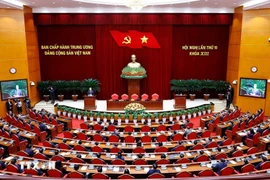
Qu concluded by expressing confidence that the 14th National Party Congress will be a landmark event, shaping Vietnam’s development strategy for years to come, with positive spillover effects not only domestically but also across the region and beyond in an increasingly complex global landscape./.
See more
PM calls for concentrated leadership, resources for railway projects
Prime Minister Pham Minh Chinh on January 6 stressed the need to focus leadership, manpower and resources on key railway projects, so that they can be put into operation soon, thereby contributing to socio-economic development and better living standards for the people.
Ministry completes IUU fishing report for submission to EC
Over the past week, no Vietnamese fishing vessels were detained by foreign authorities. However, 24 vessels that violated foreign waters have yet to be fully handled.
Finance sector must take lead in renewing mindset, institutions: PM
PM Pham Minh Chinh stressed the need to turn institutions from a “bottleneck” into a national competitive advantage, and to shift from a “management” mindset to one of “creating and nurturing a development ecosystem.”
Vietnamese business community in Berlin holds New Year gathering
The annual meeting of Vietnamese enterprises operating at the Dong Xuan Centre in Berlin served as a platform for networking and sharing experiences, while reaffirming the growing role of Vietnamese businesses in contributing to economic development and cultural diversity in Berlin’s Lichtenberg District and the German capital more broadly.
Plan approved to implement Vietnam – Israel FTA
The plan also calls for stronger trade and investment promotion activities in Israel to inform Israeli businesses about Vietnam’s investment climate and advantages, thereby expanding bilateral trade ties, attracting foreign investment into priority sectors and promoting Vietnamese goods to Israeli consumers and importers.
Vietnam’s industrial output surges to highest level since 2019
Industrial production rose by 9.2% for the year, accelerating from an 8.2% increase in 2024 and marking the strongest performance since 2019.
Israel, Vietnam launch first direct Tel Aviv–Hanoi flight
Arkia flight IZ595 departed Tel Aviv shortly after midnight local time and landed in Hanoi at 4.30pm after an 11.5-hour journey. The return flight leaves Hanoi at 7.40pm, arriving at Ben Gurion Airport at 2.25am the following day.
Vietnam’s exporters gear up for recovery as new markets open
Phan Minh Thong, General Director of Phuc Sinh Group, said the firm expects revenue to rise by about 27% thanks to a stable order pipeline.
GRDP growth gains momentum across provinces in 2025
Hanoi ranked 16th nationwide with GRDP growth of 8.16%, while HCM City placed 21st at 7.53%. Despite falling outside the top 10, these two major cities, together with Hai Phong, Dong Nai and Bac Ninh, continued to act as core pillars of the national economy, making the largest contributions to overall GDP growth. As the five largest local economies, they accounted for 55.4% of national growth in 2025.
Reference exchange rate down 2 VND on January 6
With the current trading band of +/- 5%, the ceiling rate applicable for commercial banks during the day is 26,378 VND/USD, and the floor rate 23,866 VND/USD.
Quang Tri flower growers eye bumper Tet harvest
An Lac village in Dong Ha Ward is Quang Tri’s largest and most renowned Tet flower-growing hub, supplying fresh flowers to local markets and neighbouring localities.
Vietnam’s real estate M&As shift toward long-term strategies
While the headline values of announced deals have tended to remain modest, these figures do not fully reflect the scale of actual capital commitments as investor focus is increasingly shifting towards development opportunities and long-term, strategic partnerships.
Hanoi’s budget revenue reaches a record 25.4 billion USD
The surge in budget collection stemmed from a stable macroeconomic foundation and positive growth momentum.
HCM City works to turn Cai Mep-Thi Vai into Asia’s major transshipment port
As the Government is adjusting the national master plan for 2021–2030 with a vision to 2050, which sets a target of sustained double-digit economic growth (over 10%) during 2026–2030, cargo volumes passing through the city’s seaports are expected to rise even further.
Business capital surges 77.8% on new, reactivated firms in 2025
The report said 102,300 businesses roared back to life last year, up a robust 34.3% from the previous year. The total number of new and reactivated firms reached 297,500, up 27.4% year on year. That translates to roughly 24,800 firms entering or re-entering the market every month, with new ventures maintaining an average registered capital of 9.8 billion VND, steady from 2024.
Vietnam runs trade surplus of over 20 bln USD in 2025
Vietnam’s total trade hit 930.05 billion USD in 2025, a 18.2% jump from a year earlier, with a trade surplus of 20.03 billion USD, according to the National Statistics Office (NSO).
FDI inflows into Vietnam exceed 38 billion USD in 2025
The figures were released at a press conference on January 5, announcing Vietnam’s socio-economic statistics for the fourth quarter and the whole of 2025. Notably, disbursed FDI reached an estimated 27.62 billion USD, a year-on-year increase of 9% and the highest level recorded over the past five years.
Vietnam's 2025 CPI rises 3.31%, within National Assembly’s target
The NSO reported that December's CPI climbed 0.19% from November and 3.48% from a year earlier. Fourth-quarter average CPI went up 3.44% year-on-year.
Vietnam posts 8.02% GDP growth in 2025 amid challenges
According to the NSO, agriculture, forestry and fisheries grew 3.78% in 2025, contributing 5.3% to overall growth. Industry and construction expanded 8.95%, accounting for 43.62%, while the services sector rose by 8.62%, contributing the largest share at 51.08%.
Vietnam’s aquatic exports hit new record, surpassing 11 billion USD
For the year as a whole, shrimp remained a pillar of growth, generating 4.65 billion USD in export revenue, nearly 20% higher than in 2024 and accounting for about 41% of the sector’s total export value.