FPT announces semiconductor testing, packaging plant

The establishment of the advanced semiconductor chip testing and packaging factory demonstrates FPT’s commitment to implementing Resolution 57 on breakthroughs in science and technology development, innovation and national digital transformation, and the National Strategy for Semiconductor Industry Development.

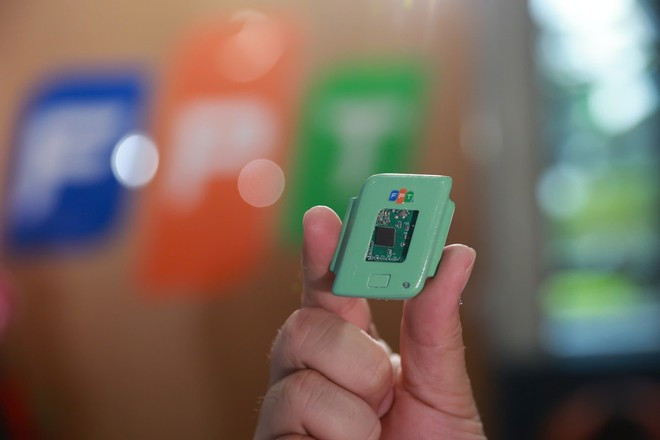
FPT semiconductor chip (Photo: VNA)

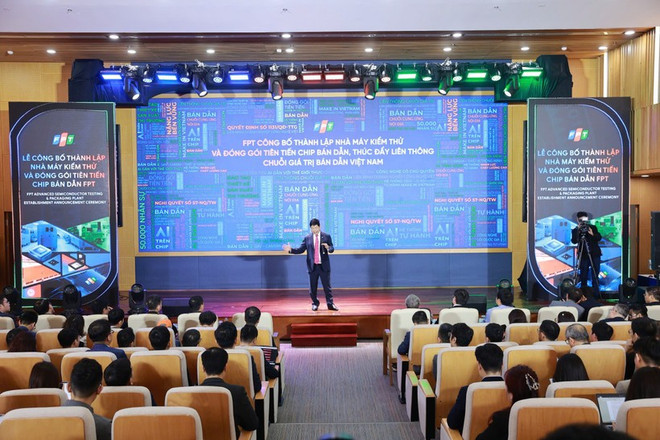
Hanoi (VNA) – FPT Corporation on January 28 announced the establishment of its Advanced Semiconductor Testing and Packaging Plant, making it the first plant of its kind owned by the Vietnamese and contributing to building the national semiconductor ecosystem.

The plant is located in Yen Phong II-C Industrial Park, the northern province of Bac Ninh. In Phase 1 (2026–2027), it will cover an area of 1,600 sq.m, comprising six functional testing lines (ATE tester & handler) and one area equipped with multiple reliability testing and specialiaed durability testing systems.

In Phase 2 (2028–2030), FPT plans to expand the plant to about 6,000 sq.m and invest in additional functional testing lines, conventional and advanced packaging lines, raising capacity to billions of products per year.

FPT will also strengthen testing capabilities for high-end chips serving the Internet of Things (IoT), automotive applications, and edge AI SoC (system-on-chip integrating AI at the edge).
z7475491164820-3409637c03ae5d6128366bf19fb1b483.jpg
FPT Corporation on January 28 announces the establishment of its Advanced Semiconductor Testing and Packaging Plant. (Photo: VNA)

The establishment of the advanced semiconductor chip testing and packaging factory demonstrates FPT’s commitment to implementing Resolution 57 on breakthroughs in science and technology development, innovation and national digital transformation, and the National Strategy for Semiconductor Industry Development.

The factory is expected to provide hands-on practice and experimentation opportunities for semiconductor students in Vietnam, contributing to improving the quality of semiconductor human resource training and supporting the goal of training 50,000 semiconductor personnel by 2030, including at least 35,000 personnel in manufacturing, packaging, testing and other stages of the semiconductor industry.

Speaking at the ceremony, Deputy Minister of Science and Technology Bui Hoang Phuong said the FPT plant will fill in Vietnam’s semiconductor ecosystem.

Meanwhile, FPT Chairman Truong Gia Binh emphasised that a key way for the country to become prosperous is to master chip technology.

He said Vietnamese professionals worldwide possess strong potential in the semiconductor sector; however, the most critical challenge is linking these forces to develop Vietnam’s own semiconductor ecosystem.

With this semiconductor plant, the group takes another step in closing the Vietnamese semiconductor ecosystem, closely cooperating with Viettel and other domestic partners to bring Vietnamese-made chip technology products into everyday life.

At the event, FPT signed cooperation agreements with the Military Industry and Telecommunications Group (Viettel) and international partners. It also announced its research and development direction for on-edge AI SoC chips, aiming to comprehensively master the smart device ecosystem./.

VNA

See more

Vinh Truong hamlet in Phuoc Dinh commune, Khanh Hoa province is located within the planned area for the Ninh Thuan 1 nuclear power plant. (Photo: VNA)

Khanh Hoa eyes renewable energy hub status following Resolution 70

The Ministry of Industry and Trade’s Institute of Energy (IOE) ranks the province among the nation’s top locations for renewables, highlighting stable year-round solar radiation and the country’s longest annual sunshine duration, spanning 2,500 to 3,100 hours.

The Vietnam Exposition Centre (VEC), the venue of the Spring Fair 2026 (Photo: VNA)

Spring Fair 2026 to promote Vietnamese goods, Tet traditions

By eliminating intermediary stages and linking producers, distributors and consumers more directly, the fair is expected to deliver more competitive prices than those on the wider market, and also improve transparency and strengthen consumer confidence in domestic products, particularly as interest in quality and traceability continues to rise.

Tilapia exports to the US last year reached 53.15 million USD, accounting for approximately 54% of Vietnam's total tilapia exports. (Photo doanhnghiephoinhap.vn)

Vietnam’s tilapia exports to US accelerate

Compared to 2024, the strong growth reflected both increased import demand from the US market and the ability of Vietnamese businesses to capitalise on opportunities amid fierce international competition.

The Mong Cai international border gate in Quang Ninh province (Photo: VNA)

Vietnam to pilot smart border gate at Mong Cai-Dongxing international crossing

The overall objective of the pilot scheme to develop a smart border gate at the Mong Cai (Vietnam) – Dongxing (China) international border gate pair is to transform the Mong Cai border-gate economic zone in particular and Quang Ninh province in general into a major hub for import-export activities, trade, services, tourism and border-gate economy within the northern key economic region.

Do Thi Quynh Phuong, owner of Viet–France Market (Photo: VNA)

Vietnamese goods ready for peak Tet shopping season in France

At markets and specialty stores selling Vietnamese goods in France, preparations for the festive season are already in full swing. Imported Vietnamese products this year are diverse, focusing on items closely associated with Tet meals and traditions.

People visit Autumn Fair 2025. (Photo: VNA)

Spring Fair 2026: New Year boost for consumer demand

More than a conventional trading venue, the Spring Fair 2026 is emerging as a convergence point for consumption, culture and tourism, offering enterprises an opportunity to engage directly with consumers, test products and shape market strategies as early as the first quarter.

Auto technology solutions are on display at an exhibition on the 80-year national achievements (Photo: VNA)

Digital economy expected to revamp growth model

Meeting the goals set in Resolution No. 57-NQ/TW, including a digital economy share of at least 30% of GDP by 2030 and 50% by 2045, will demand more substantive, high-value progress fueled by breakthrough innovations.