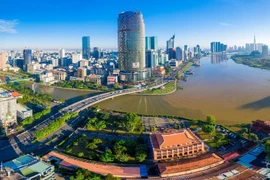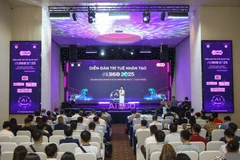
Ho Chi Minh City (VNA) – A consultation workshop on the development strategy for Vietnam’s International Financial Centre in Ho Chi Minh City (VIFC-HCMC) was held in the southern economic hub on January 28, drawing participants from central ministries and agencies, municipal leaders, consulting organisations, and domestic and international economic and financial experts.
According to the draft VIFC-HCMC development strategy, the city aims to rank among the world’s top 75 financial centres under the Global Financial Centres Index (GFCI) by 2035, with the longer-term goal of reaching the top 50 by 2045.
In the 38th edition of the GFCI released in September last year, Ho Chi Minh City was ranked 95th out of 120 global financial centres, up three places from the previous assessment. While seen as a positive signal, the ranking also highlights a significant gap between the city and leading regional financial hubs. The target of entering the top 75 is widely regarded as challenging, but it reflects Ho Chi Minh City’s ambition and potential at a time when international capital flows are undergoing major restructuring.
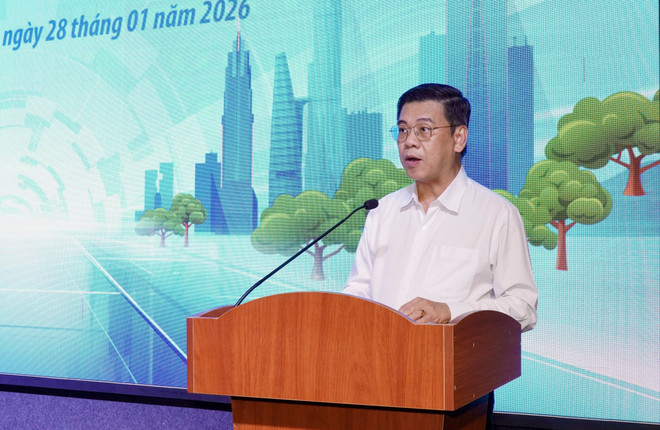
Addressing the workshop, Nguyen Van Dung, Vice Chairman of the municipal People’s Committee, said the VIFC-HCMC operating authority is accelerating two key tasks. The first is finalising the operating regulations for the VIFC, to be applied uniformly in Ho Chi Minh City and Da Nang. The second is refining the draft strategy through further consultations with advisory bodies and experts.
“The goal for the initial phase from 2026 to 2030 is to build and firmly lay the foundations for the centre, creating strong momentum for subsequent stages of development,” Dung said.
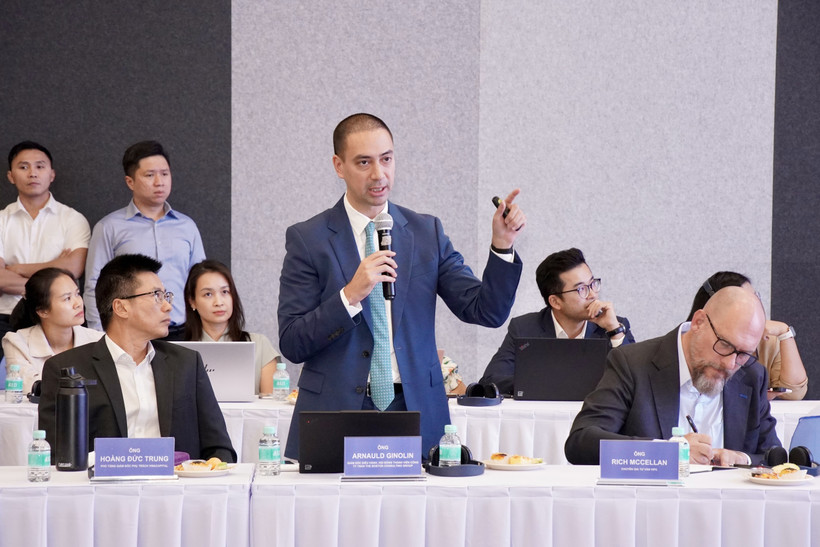
From a strategic advisory perspective, Arnaud Ginolin, Managing Director of The Boston Consulting Group (BCG), noted that the VIFC-HCMC remains at an early stage of development, with the key objective over the next three to five years being to emerge as a regional financial centre.
Ginolin said that, for Ho Chi Minh City, a diversified product portfolio is a more appropriate strategy in the initial phase, before moving towards the ambition of becoming a global financial centre over the next 10 to 15 years.
On that basis, BCG recommended that the VIFC-HCMC focus on developing four core product groups to establish early competitive advantages. The foremost priority is the international capital market, including international bond products and initial public offerings (IPOs) targeting global investors. International trade finance was also identified as a key pillar, encompassing cross-border payments, trade finance and supply-chain finance, leveraging the strong growth of trade and foreign direct investment flows into Vietnam and the region.
In addition, digital banking and fintech were seen as potential breakthrough areas, through the development of digital hubs and “digital factories” where global financial institutions could establish development and operations centres, alongside the deployment of regulatory sandbox mechanisms.
BCG also underscored the importance of niche segments such as commodity finance, green finance and maritime finance – areas with strong growth potential in Ho Chi Minh City but requiring the early establishment of a clear legal framework to be effectively developed.
Providing further details on the strategy’s refinement, Truong Minh Huy Vu, Director of the Ho Chi Minh City Institute for Development Studies (HIDS) and Chairman of the VIFC-HCMC operating authority, said the body had received six written submissions from the State Bank of Vietnam, the Ministry of Finance, and consulting organisations in addition to direct contributors. The drafting committee will continue to work closely with partners, particularly BCG, to finalise the draft strategy and provide detailed responses and explanations.
Alongside strategic development, the VIFC-HCMC is also studying longer-term issues such as institutions, capital-flow infrastructure, digital infrastructure and digital services. Cooperation with major domestic technology firms to build secure and sovereign digital infrastructure, ready for artificial intelligence and digital-platform applications, has been identified as a key pillar for the centre’s sustainable development in the future./.