Vietnam, Singapore enhance cooperation in IFC development

Permanent Deputy PM Nguyen Hoa Binh noted that as Singapore is a seasoned player in this field, the delegation wishes to learn its experience to support Vietnam’s IFC development.

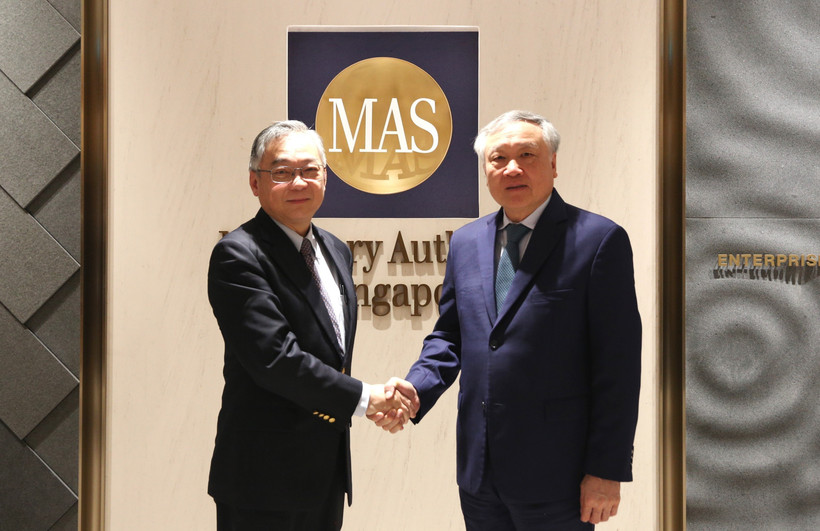
Permanent Deputy Prime Minister Nguyen Hoa Binh (right) meets with Singaporean Deputy Prime Minister Gan Kim Yong, who is also Minister for Trade and Industry and Chairman of the Monetary Authority of Singapore, on January 12. (Photo published by VNA)

Singapore (VNA) – A Government delegation led by Permanent Deputy Prime Minister Nguyen Hoa Binh is paying a working visit to Singapore from January 10 to 14 to learn the city state’s experience in developing an international financial centre (IFC).

On January 12, Deputy PM Binh had a meeting with Singaporean Deputy PM Gan Kim Yong, who described his Vietnamese delegation’s visit as a demonstration of both countries’ activeness in implementing the Comprehensive Strategic Partnership, established during Party General Secretary To Lam’s official visit to Singapore in March 2025.

The two sides noted with satisfaction the vigorous growth of their countries’ cooperation as seen in frequent mutual visits and meetings, and fruitful bilateral mechanisms, especially the annual meeting between the two PMs.

Besides, economic collaboration remains a bright spot as Singapore, with 4,400 valid projects worth over 90 billion USD, remains the biggest ASEAN investor and the second largest among 153 countries and territories investing in Vietnam. The Vietnam – Singapore Industrial Parks (VSIP) are operating effectively and being expanded, now numbering 21 across 14 provinces and cities of Vietnam. The countries have also frequently consulted each other and coordinated closely at regional and international forums, particularly ASEAN.

Amid regional and global volatility, they agreed to further strengthen multifaceted ties and productively carry out the 2025–2030 action plan for implementing the Vietnam – Singapore Comprehensive Strategic Partnership. The two sides will step up economic and investment links, especially in emerging and potential fields like agriculture, energy, new-generation VSIP development, carbon credit, and digital technology. They will also keep joining hands with other ASEAN members to build an ASEAN Community of solidarity and development for peace, stability, cooperation, and development in the region and the world.

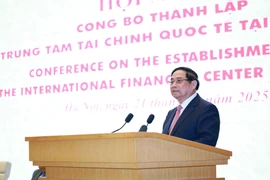
At the meeting, Binh informed Gan on Vietnam’s recent IFC establishment to mobilise high-quality resources, especially finance, for a new development phase. He noted that as Singapore is a seasoned player in this field, the delegation wishes to learn its experience to support Vietnam’s IFC development.

He called on Singapore to share its experience in designing the organisational model and operating mechanism of an IFC, as well as in management and supervision to ensure financial and systemic security. He also expressed the hope to gain an insight into Singapore’s expertise in developing and managing new financial sectors linked with IFC operations.
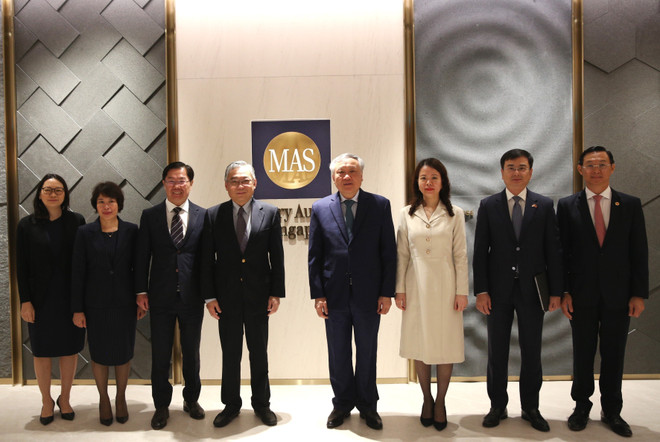
vietnam-singapore-enhance-cooperation-in-ifc-development-2.jpg
Vietnamese and Singaporean officials at the meeting (Photo published by VNA)

The Vietnamese Deputy PM suggested measures be discussed to strengthen financial connectivity between the IFCs of Vietnam and Singapore, along with substantive cooperation programmes be initiated to develop human resources, especially high-quality financial management and supervision personnel.

Binh lauded Singapore’s United Overseas Bank (UOB)’s plan to soon start the construction of its building at the IFC in Ho Chi Minh City, encouraging Singaporean enterprises, banks, and financial funds to increase investment and operations in the IFC of Vietnam.

Highly valuing Vietnam’s IFC establishment, Gan considered this move as a right and timely decision, and congratulated Binh on his appointment as head of the IFC steering council.

He affirmed Singapore’s readiness to share experience in operating an IFC with Vietnam, and to enhance financial connectivity between the two countries’ IFCs.

The host emphasised some of his country’s experiences in IFC development and agreed to foster ties between the two IFCs to contribute to common development in ASEAN.

Also on January 12, Deputy PM Binh had working sessions with leaders of the Singapore International Arbitration Centre and the Singapore Economic Development Board.

Earlier, the Vietnamese delegation laid wreaths at the monument to President Ho Chi Minh at the Asian Civilisations Museum, and visited the Vietnamese Embassy and talked to the embassy staff and Vietnamese community in Singapore. They also met with UOB Deputy Chairman and CEO Wee Ee Cheong./.
VNA

See more

PM Pham Minh Chinh speaks at the meeting (Photo: VNA)

PM pushes five strategic breakthroughs to fuel digital economy

Addressing the first meeting of the National Steering Committee on Data linked virtually with all 34 cities and provinces nationwide, PM Pham Minh Chinh, who is also head of the committee, stressed that the Party’s policies and guidelines and the State’s laws have long articulated a strategic vision for data development. He cited Resolution No. 57-NQ/TW and the recently enacted Law on Data, both of which designate data as a “new means of production” and a strategic resource that must be transformed into high-value assets.

A customer conducts transactions at the Vietnam Joint Stock Commercial Bank for Industry and Trade (VietinBank). (Photo: VNA)

Central bank aims for 15% credit growth in 2026

In 2026, monetary policy will continue to be implemented in a proactive, flexible, timely and effective manner to help stabilise the macroeconomy, keep inflation under control, support economic growth and advance the restructuring of banks under compulsory transfer.

Vietnam is emerging as a preferred destination for many foreign enterprises (Photo: hanoimoi.vn)

Vietnam emerges as bright spot of growth, trusted and responsible partner

Despite a volatile global environment, Vietnam recorded solid gains in 2025. With flexible and proactive policies under the leadership of the Communist Party of Vietnam and the Government, all 15 key socio-economic targets were met or exceeded, while GDP expanded by about 8.02%, surpassing expectations.

An image of a Vietnamese game. CIS region has potential for gaming developers from Viet Nam. (Photo: Courtesy of cellphones.com.vn_

CIS: Opportunity for game developers in Vietnam

The CIS region, which includes Eastern Europe and Central Asia, has potential for gaming developers from Vietnam as this market displays user behaviour patterns that are highly favourable for mobile gaming growth, particularly around major holiday periods.

Banks, including MB Bank, have issued alerts about scams conducted via social media platforms such as Zalo and Facebook, where criminals impersonate acquaintances. (Photo: The Courtesy of MBBank)

Financial scams surge ahead of Tet

As the Lunar New Year (Tet) approaches, financial and banking scams in Vietnam are showing a sharp upward trend, prompting banks and law enforcement agencies to issue repeated warnings.

Hai Phong targets 4.3 billion USD in FDI in 2026 (Photo: VNA)

Hai Phong city targets 4.3 billion USD in FDI in 2026

Hai Phong’s investment appeal is underpinned by a rapidly expanding development space, including the Southern Coastal Economic Zone covering more than 20,000 hectares, a planned free trade zone, deep-water ports at Lach Huyen, and 12 industrial parks newly established in 2025.

The relocation of check-in counters aims to better meet the travel needs of residents and visitors. (Photo: VNA)

Vietjet shifts domestic check-in at Tan Son Nhat from January 13

During the recent New Year 2026 holiday peak, Vietjet added 380 flights, equivalent to nearly 78,000 additional seats, on many key domestic routes linking Hanoi and Ho Chi Minh City with destinations such as Vinh, Thanh Hoa, Hai Phong, Da Nang, Phu Quoc, Nha Trang and Da Lat.

Commercial banks are providing approximately 88% of total green credit outstanding in Vietnam. (Photo: nhandan.vn)

Capital sources expanded for sustainable growth

According to the State Bank of Vietnam (SBV), by the end of November 2025, outstanding green credit was estimated at around 750 trillion VND (28.55 billion USD), with an average growth rate exceeding that of overall credit in the economy.

Customers select goods at a supermarket. (Photo: VNA)

Retail market expands sharply, sustainability challenges persist

According to a report on recently released by the Ministry of Industry and Trade’s Agency for Domestic Market Surveillance and Development, the size of the market reached more than 7 quadrillion VND (about 266 billion USD) in 2025, up around 10% compared with 2024.

Oil rigs at the Bach Ho oil field. (Photo: VNA)

Resolution 79: State economy to lead growth

Resolution 79 is described as a “clear action declaration” by the Politburo, saying the state economy is not only responsible for maintaining macroeconomic stability, but must also become the force leading a new growth model that is green and sustainable.

Workers at Garment 10 Corporation produce apparel for export. (Photo: Nhan Dan)

Vietnam leverages export advantages within RCEP region

In 2025, seafood exports to China alone exceeded 2.2 billion USD, up about 33% compared to 2024. Shipments to Japan fetched nearly 1.7 billion USD, a year-on-year increase of 14.6%, while those to the Republic of Korea and Australia grew by 9.6% and 3.2%, respectively.

Certificates of membership in the Vietnam International Financial Centre in Da Nang are awarded at the conference on January 9. (Photo: VNA)

Da Nang continues targeted investment promotion approaches

According to Chairman of the Da Nang People’s Committee Pham Duc An, the city prioritises building sustainable economic ecosystems and focuses on key breakthrough sectors with strong spillover effects, including high technology and digital transformation, logistics, urban infrastructure, finance, processing and manufacturing industries, high-tech agriculture, and the pharmaceutical and medicinal herb industry.