AI, messaging to shape Vietnam's social commerce in 2026

Vietnam has long ranked among the world’s leading countries for business-to-consumer interactions via chat and Meta now sees the market entering what it calls “conversational commerce in the AI era.”

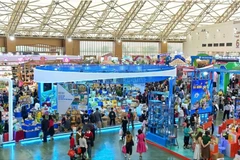
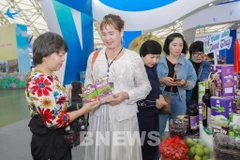
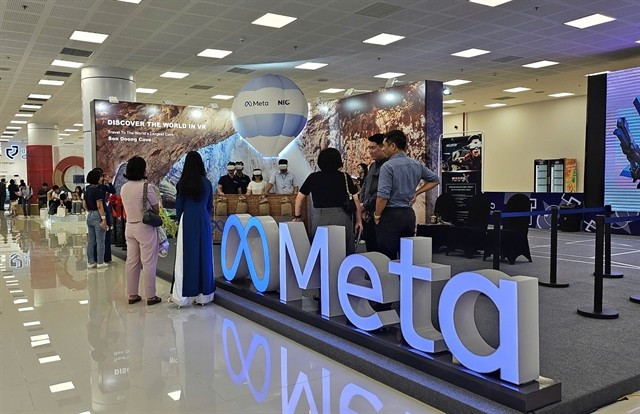
A booth of Meta at a fair in Hanoi (Photo: VNA)

Hanoi (VNS/VNA) – Artificial intelligence (AI), conversational commerce and cross-border shopping are set to redefine how Vietnamese enterprises engage customers and scale sales on social media platforms in 2026, according to Meta’s latest market insights.

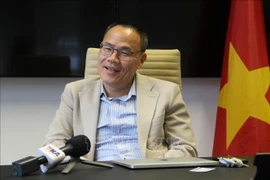
Le Khoi, country director for Vietnam at Meta, outlined what he described as the most influential social media shifts shaping enterprise operations this year.

He highlighted the growing convergence of AI, automation, messaging, video and global commerce, elements that are becoming increasingly inseparable in Vietnam’s digital economy.

The country continues to stand out as one of Meta’s most deeply connected markets. Khoi noted that about 94% of internet users in Vietnam are active on at least one Meta-owned platform, including Facebook, Instagram, Messenger, WhatsApp or Threads.

This level of penetration, he said, gives businesses unparalleled access to consumers across the entire purchasing journey, from product discovery to post-sale engagement.

Instagram and Threads are gaining momentum alongside Facebook, particularly among younger users and office professionals.

Threads is seeing strong organic growth in Vietnam as a space for open discussion and real-time interaction.

Khoi said the platform is expected to undergo further development through 2026, creating new engagement opportunities for brands and creators alike.

User behaviour across Meta platforms in Vietnam remains heavily driven by video consumption, livestreaming and messaging, with AI now embedded across these formats.

According to Meta, around 93% of Vietnamese small and medium-sized enterprises (SMEs) have already applied AI tools in some aspect of their operations.

“AI has moved beyond experimentation,” Khoi said. “It is becoming a standard requirement for business efficiency.”

Messaging-based commerce was also highlighted as a defining strength of the Vietnamese market.

Vietnam has long ranked among the world’s leading countries for business-to-consumer interactions via chat and Meta now sees the market entering what it calls “conversational commerce in the AI era.”

AI-powered chatbots are increasingly being used to support customer enquiries, provide product information and operate continuously beyond business hours.

Vietnamese consumers, Khoi noted, are becoming more comfortable interacting with automated systems due to their speed, convenience and availability.

The role of content creators is evolving rapidly. Once focused largely on entertainment, creators are now integral to commerce, driving a closed-loop cycle that connects content discovery, product review, purchase and customer feedback.

In Vietnam, this cycle is anchored in short-form video and livestream formats, which now account for more than half of total user time spent on Meta platforms.

Meta’s tools allow creators and businesses to embed product links directly into videos or livestreams, enabling smooth transitions from viewing to purchasing.

AI is increasingly deployed behind the scenes to support these experiences. During livestream sessions, automated assistants can answer common questions on pricing, delivery and return policies, cutting response times and easing operational pressure on sellers.

Khoi said such integrations show how AI, video and live commerce are being combined to enhance both user experience and business performance.

Advertising technology is undergoing a parallel shift. Meta’s AI-driven solutions, including its Advantage+ tools, use machine learning to optimise targeting and creative delivery beyond traditional demographic assumptions.

According to data shared at the briefing, businesses using AI-assisted advertising solutions recorded an average 22% improvement in return on advertising spend, while some enterprises reported up to fourfold increases in campaign efficiency.

Cross-border commerce emerged as another major theme. While Vietnamese consumers have long been active buyers on international platforms, a growing number of domestic enterprises are now using social media and messaging tools to sell directly into overseas markets.

AI-powered translation, automated content localisation and global messaging infrastructure are lowering barriers to entry, enabling Vietnamese sellers to reach demand in Southeast Asia, the US and Latin America.

Messaging platforms such as WhatsApp, which dominates communication in many overseas markets, are playing a central role in this expansion.

Meta cited the example of Thanh Vinh Holdings using WhatsApp-based commerce to enter regional markets, achieving strong revenue growth while cutting per-order costs through automation and direct customer interaction.

To Khoi, these developments reflect how social media in Vietnam is evolving from a communication channel into a fully integrated digital commerce ecosystem./.

VNA
See more

Part of the Vung Ang II Thermal Power Plant. (Photo: VNA)

Vung Ang II thermal power plant inaugurated in Ha Tinh

With a total investment of 2.2 billion USD, the Vung Ang II Thermal Power Plant is developed under a build-operate-transfer (BOT) model and has a designed capacity of 1,200 MW, comprising two turbines. The plant is expected to play a key role in ensuring stable electricity supply for the central region and neighbouring areas, thereby facilitating the development of industries, agriculture and services.

Aircraft at the Noi Bai International Airport in Hanoi. (Photo: VNA)

Vietnam seeks stable jet fuel supplies from China amid Middle East disruptions

On the basis of the long-standing friendship and cooperation between Vietnam and China, as well as close ties between their aviation authorities, the Civil Aviation Authority of Vietnam has asked the Civil Aviation Administration of China to direct relevant fuel suppliers to ensure sufficient and stable supplies for Vietnam.

Illustrative photo (Photo: Xinua/VNA)

Remittances to Ho Chi Minh City decline in Q1 amid global headwinds

Data from the State Bank of Vietnam (SBV)'s Region 2 branch showed that remittances transferred through credit institutions and economic organisations in Ho Chi Minh City exceeded 2 billion USD in the January–March period, down 15.6% from the previous quarter and 16.9% year-on-year.

The shipments are unloaded at the airport. (Photo: VNA broadcasts)

Nearly 100 tonnes of Vietnamese fruits, vegetables airlifted to UAE

Vietnamese fresh produce and processed foods are increasingly recognised for their quality, with items such as cashew nuts, coffee and spices gaining popularity among Middle East consumers. In 2025, Vietnam’s farm produce exports to the UAE exceeded 445 million USD, up nearly 24% year-on-year.

The World Coffee Heritage Forum officially opens at the World Coffee Museum in Dak Lak province, with eyes on UNESCO recognition for Vietnamese coffee culture. (Photo: VNA)

World Coffee Heritage Forum opens in Dak Lak

Dak Lak is known as the 'capital' of Vietnamese coffee, with rich, fertile basalt red soil ideal for agriculture. The coffee provides livelihoods for thousands of locals and has developed a unique cultural space, closely tied to the socioeconomic life, customs and identity of local communities.

Chili peppers are on the list of essential goods in Indonesia (Photo: VNA)

Indonesia reduces imports of strategic food commodities

In 2026, Indonesia is expected to have approximately 12 million tonnes of rice carried over from the previous year, supported by annual production of around 34.7 million tonnes. With projected consumption of 31.1 million tonnes, national rice reserves could reach approximately 16 million tonnes by the end of the year.

Hanoi’s roadmap to implement low-emission zones from July is providing a strong boost to the electric two-wheeler market (Photo: VNA)

Low-emission zone roadmap drives electric two-wheeler boom in Hanoi

From July 1, Hanoi will introduce time-based or area-based restrictions on petrol-powered motorcycles within Ring Road 1, with plans to expand coverage across the entire zone by 2028 and extend to areas within Ring Road 3 by 2030. The policy is expected to reshape travel habits for millions of urban residents.

Delegates at the opening ceremony of the Made in Da Nang Expo 2026 (Photo: VNA)

Nearly 300 firms join Made in Da Nang Expo 2026

Speaking at the opening ceremony, Vice Chairman of the Da Nang People’s Committee Tran Chi Cuong said the exhibition is a large-scale trade promotion event aimed at showcasing products, connecting markets, and helping businesses enhance competitiveness while expanding domestic and export markets.

 Green production, standardised value chains key to fruit, vegetable sector growth

Green production, standardised value chains key to fruit, vegetable sector growth

Facing mounting pressure from increasingly stringent domestic and international standards, Vietnam’s fruit and vegetable sector is accelerating its shift toward green, safe, and sustainable production models. Beyond changing farming practices, localities and businesses are stepping up efforts to standardise value chains and build brands to achieve growth targets for 2026.

Hiep Phuoc Industrial Park in Ho Chi Minh City. (Photo: VNA)

Southern industrial real estate enters strategic growth phase

Key industrial hubs in the south, including Ho Chi Minh City, Dong Nai and Tay Ninh, are transitioning from a period driven largely by supply expansion and rising land prices to a more refined growth model. This new phase is shaped by infrastructure upgrades, supply chain restructuring, product improvement and greater emphasis on operational performance.