Objectives of Vietnam’s sci-tech, innovation strategy reachable: Israeli expert

Vietnam is aiming to become a high-tech economy with the STI pillars identified as the enablers, and the local conditions enable their rapid development, said an Israeli expert.

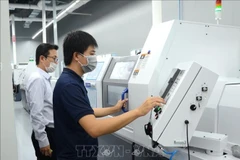
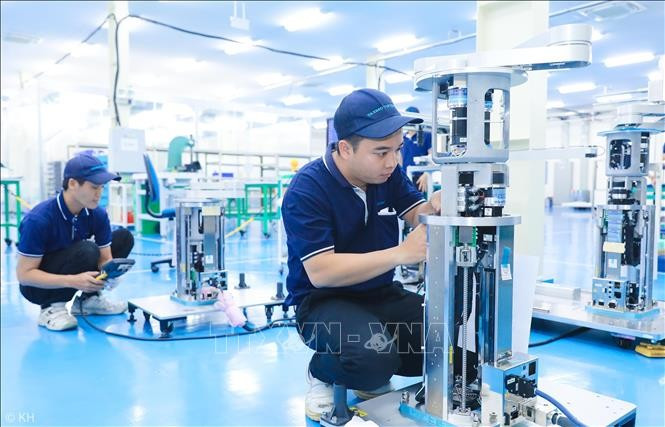
A robotic wafer conveyor assembly line in the semiconductor industry. (Photo: VNA)

Tel Aviv (VNA) – The objectives of Vietnam's current strategy for developing science, technology and innovation (STI) make good sense, and they are certainly reachable and doable, said Israeli expert Mel Shalev.

Shalev, a senior Israeli expert who has over 40 years of working in the field of technology, including 37 years with IBM and decades of working in Vietnam, made the comment during a recent interview granted to the Vietnam News Agency.

Vietnam is aiming to become a high-tech economy with the pillars identified as the enablers, he said, noting that the local conditions enable their rapid development.

He held that too much is expected of the private sector and too little of the public sector. If FDI is part of the private sector support for the strategy and the desired FDI objectives are met, the strategy should succeed and even exceed expectations. However, if FDI is not part of the private sector support, this may lead to insufficient total funding to ensure maximum success.

Talking about opportunities and challenges for Vietnam in advancing its technology and innovation landscape over the next decade, Shalev said there are many opportunities, each with their own particular challenges. The trick is not to put too many eggs in one basket nor to put too few eggs in too many baskets.

Software is one area which has already proved successful and appropriate for Vietnam, he went on. “Probably, software is the greatest opportunity for Vietnam. The sector has advanced rapidly with home-grown companies such as FPT leading the way, especially in software services and in training of the new generation.”

“Hardware – unless we are talking about integration – is much more difficult, as it is capital intensive at most levels. This is especially the case for semiconductors, where local initiative, such as was there for software, will not be enough.”

He also mentioned the agro-technology sector, given the importance which agriculture and aquaculture play in the economy. For example, increasing both yields and quality of yields would require leveraging both new hardware and new software.

The expert took the coffee sector as an example, saying it could become more productive and more profitable by using robotics and AI for selective picking, intelligent sorting, and intelligent processing. Given the amount of fertile land in Vietnam, new crops and new varieties of crops could also be grown, leveraging technologies such as tissue culture.

“Thus, software is a key, if not the key stepping stone for many of those opportunity areas in Vietnam's STI strategy,” he opined.
mel-shalev.jpg
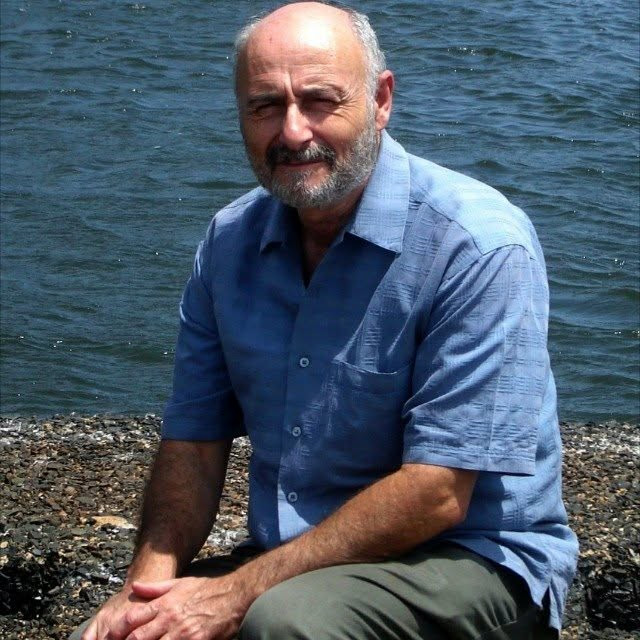
Mel Shalev has over 40 years of working in the field of technology (Photo courtesy of Mel Shalev)

Regarding how Vietnam can leverage international partnerships and local talent to become a more competitive player in the global tech industry, Shalev suggested the top three ways in which international partnerships can be mixed with local talent to become a significant global player.

The first is to realise that the partners do not have to be more advanced than Vietnam for both of them to benefit from an STI relationship, and one way to start would be in education and training. Improving skills in English comprehension and conversation would also be important for such a strategy as English has become the paramount global language of science, technology and trade.

Second, there are large Vietnamese communities, numbering in the millions in key technology countries such as the US, Japan, France, Australia, and Canada. Shalev suggested Vietnam make greater efforts to attract more of them home, or at least to their second home, as they are a bridge between Vietnam and some key high-tech partner countries.

The third is to attract on-site expats of any nationality among those top partner STEM countries, something he described as worth investing in.

Currently, two main technology hubs are in Ho Chi Minh City and Hanoi. He thought that it would be wise – and for the good of Vietnam's main cities – not to grow them further but to grow some five tech hubs, spread in a logical fashion in the northern, central, and southern regions of the country, in Tier-2 cities with a maximum population of 1 million residents, and which have at least one university with a strong STEM focus.

Some candidates could be Da Nang, Hai Phong, Vinh, Hue, etc. These would be magnets for young Vietnamese families seeking a higher quality of life combined with a lower cost of living than the two megacities. Also, they would be cities where expats would be comfortable living in and even bringing their families to.

There are a mix of necessary conditions which catapult a country from insignificant global STI player to one which is making a significant impact. They include a culture which abhors indolence; a culture which cherishes individualism, creativity and entrepreneurship; a nation with a sense of urgency; a nation which cherishes and promotes education for the masses as well as for the elite; and neither last nor least and somewhat counter-intuitively, a culture which tolerates indolence as long as it is not extreme, according to the expert./.

VNA

See more

Participants at the 5th ASEAN Digital Ministers Meeting (ADGMIN) in Thailand. (Photo: VNA)

Hanoi to host 6th ASEAN Digital Ministers’ Meeting in January

Held annually on a rotating basis among ASEAN member states, the meeting plays a key role in shaping strategic orientations, formulating policies and promoting digital cooperation within ASEAN, while strengthening collaboration with partners and international organisations amid rapid digital and digital-economy transformation globally.

(Illustrative photo: Viettel)

Viettel records breakthrough in first 5G Advanced trial

The achievement, marked as Vietnam’s first 5G Advanced trial, was made possible by carrier aggregation (CA) technology, enabling mobile devices to operate across multiple frequency bands simultaneously instead of a single band.

Professor Vu Minh Khuong, of the Lee Kuan Yew School of Public Policy (right), talks to a Vietnam News Agency correspondent in Singapore. (Photo: VNA)

Resolution 57 - catalyst for scientific and technological breakthroughs

The resolution also seeks to create stronger mechanisms to mobilise social and private resources and support an innovation ecosystem; link digital transformation in the public sector with the modernisation of national governance; and prioritise the development of elite human resources and internationally-standard research infrastructure.

Workers produce electronic components (Photo: VNA)

Science, technology drive Vietnam’s rising global profile: expert

Assoc. Prof. Le Duc Anh from Tokyo University held that for fast and sustainable development, Vietnam should prioritise science – technology and innovation as the main driver of productivity, focusing on sectors with high spillover effects such as semiconductors, AI, data, new energy and materials, biomedical technology, automation – robotics, and cybersecurity.

An overview of the workshop. (Photo: nafosted.gov.vn)

National portal expected to transform innovation into reality

The portal, which can be accessed at sangkien.gov.vn, was built to address the urgent need to mobilise collective intelligence and unlock the creativity of the entire population, in accordance with the directives of the steering committee for the implementation of the Politburo’s Resolution No. 57-NQ/TW on creating breakthroughs in science, technology, innovation and national digital transformation.

Sucker-mouthed minnow (Supradiscus varidiscus). (Photo: researchgate.net)

Vietnamese fish, bee named among 70 species newly identified in 2025

One of the most notable “hidden” finds is a small sucker-mouthed minnow endemic to Vietnam’s highlands, discovered in the Lo River. Scientifically named Supradiscus varidiscus, the specimen was collected and shelved some 25 years ago but has only now been studied and formally described.

The Ministry of Science and Technology launches a centralised one-stop-shop unit on December 19. (Photo: VNA)

Vietnam pushes sci-tech, innovation as growth drivers under Resolution 57

The Ministry of Science and Technology (MoST) bears the responsibility of “paving the way”, guided by a consistent spirit of transitioning from a management-oriented mindset to a facilitative one, from “input-based management” to “output-based evaluation”, and from fragmented investment to a focused approach centred on strategic technologies.

Prime Minister Pham Minh Chinh visits a display of science and technology development, innovation and digital transformation. (Photo: VNA)

Gov't leader requests greater efforts to step up development of sci-tech, innovation

Emphasising three strategic digital breakthroughs - digital institutions, digital infrastructure and digital human resources - PM Chinh called for close integration of science and technology development, innovation, administrative reforms, digital transformation and Project 06 with efforts to streamline the organisational apparatus and modernise leadership, management and working styles.

Doctors from Cho Ray Hospital (Ho Chi Minh City) and Vinh Long General Hospital (Vinh Long province) test the operation of a linear accelerator radiotherapy system for cancer treatment (Photo: VNA)

Vietnam sets orientations for applying nuclear energy across sectors

The plan aims to ensure the effective implementation of Decision No. 245/QD-TTg dated February 5, 2025, which approved the national master plan, while concretising objectives, orientations, solutions and resources for applying radiation and radioisotopes across sectors. It also assigns responsibilities to ministries, sectors and localities, and sets roadmaps and priorities for key programmes and projects.