Hanoi (VNA) – The 6th ASEAN Digital Ministers' Meeting (ADGMIN) has approved the Hanoi Declaration on digital cooperation, reaffirming the bloc’s goals and principles as outlined in the 1967 Bangkok Declaration and the ASEAN Charter.
The 6th ADGMIN and related meetings, themed “ASEAN Adaptive: From Connectivity to Connected Intelligence”, took place in Hanoi from January 12 to 16.
The Hanoi Declaration places special emphasis on strengthening intra-bloc digital cooperation to promote economic growth, social progress, and cultural development in the region through joint efforts based on equality and partnership, aiming to lay a solid foundation for a prosperous and peaceful ASEAN Community.
The Hanoi Declaration builds on the ASEAN leaders’ statement on advancing digital transformation, approved at the 38th ASEAN Summit in 2021. It calls for coordinated and inclusive digital transformation efforts across all ASEAN sectoral pillars, stressing the need to speed up inclusive, safe, and sustainable digital transformation within the bloc. The declaration also highlights promoting innovation, bridging the digital divide, and enhancing regional cooperation, towards building a people-centred, resilient, and digitally integrated ASEAN Community.
The declaration acknowledges the summary report of the ASEAN Digital Masterplan 2025, spotlighting key achievements, outcomes, and recommendations to further strengthen cooperation and enhance the region’s digital competitiveness and readiness. It also provides important orientations for developing a new, forward-looking, and inclusive framework to coordinate intra-bloc digital cooperation for in 2026–2030.
It emphasises that artificial intelligence (AI) is emerging not just as a technology but as a critical new infrastructure—an intelligent backbone underpinning the next phase of ASEAN’s digital transformation, shaping how societies function, economies grow, and governments deliver services.
AI is recognised as a key driver of the digital future, enabling ASEAN to proactively adapt to the shift from infrastructure connectivity to intelligence connectivity. This paves the way for the region to fully harness the benefits of AI-driven transformation, promoting deeper regional integration and building a trustworthy, innovative, and inclusive digital community.
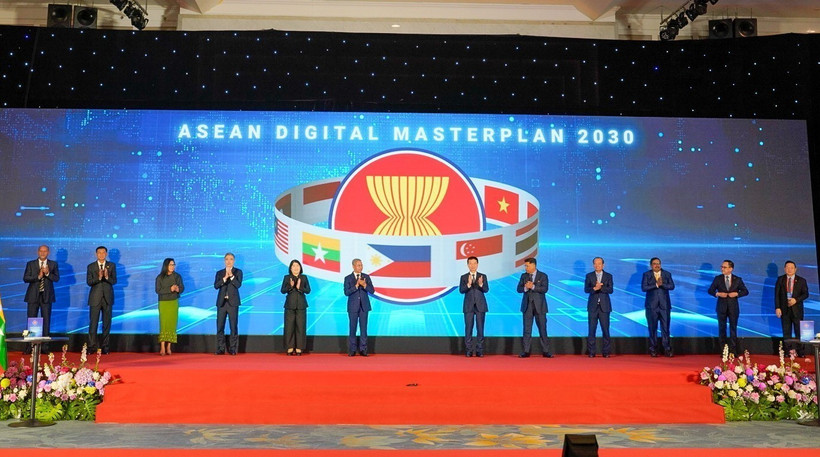
The Hanoi Declaration agrees to shape ASEAN’s digital future through the adoption of the ASEAN Digital Masterplan 2026–2030 (ADM 2030) as a pillar of regional digital integration, with the vision of building an inclusive, trustworthy, and innovative digital community that empowers all citizens and businesses to thrive in the global digital economy. Guided by this vision, ADM 2030 will steer both regional cooperation and the updating of national digital strategies, ensuring a coordinated rollout across ASEAN.

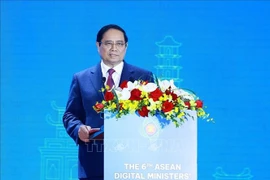
A view of the 6th ASEAN Digital Ministers' Meeting in Hanoi (Photo: VNA)
The declaration also highlights the development of intelligent, seamless, inclusive, and resilient digital infrastructure by integrating AI and the Internet of Things (IoT) for smart operations and predictive capabilities; enhancing network speed and coverage to ensure seamless connectivity; and diversifying access through broadband, 5G/6G, cloud services, data centres, low-Earth orbit (LEO) satellites, and submarine cables to guarantee resilience and cross-border continuity.
The document advocates a trustworthy and secure digital ecosystem by enhancing regional cybersecurity resilience and strengthening cooperation to combat telecom fraud through the implementation of the ASEAN Guide on Anti-Scam Policies and Best Practices. It also encourages inclusive digital participation by expanding affordable and widespread connectivity, ensuring accessible technology for all—including women, youth, rural communities, persons with disabilities, and other vulnerable groups—while boosting digital capacity, fostering lifelong learning and responsible digital behaviour.
The Hanoi Declaration emphasises strengthening the digital workforce and talent pipeline for the future by encouraging collaboration in joint research and development (R&D) initiatives, academia-business partnerships, and engagement with global innovation platforms. It also promotes the sharing and development of ICT skills among colleges, universities, and training institutions. In parallel, the declaration aims to accelerate digital economic integration through the development of public digital infrastructure and interoperable data connectivity; advance seamless and paperless digital trade; enhance a secure, safe, and trustworthy cyberspace, including collective efforts to prevent online fraud; and support start-ups, micro, small and medium-sized enterprises (MSMES), and digital businesses by improving access to technology and finance.
According to the document, ASEAN countries will intensify AI cooperation by promoting policy harmonisation and enhancing joint safety efforts under the guidance of the Working Group on AI Governance (WG‑AI) and ASEAN’s support mechanisms, including the ASEAN AI Safe Network, to boost the bloc’s capacity to address emerging AI opportunities and risks. The declaration also underlines green digital transformation by promoting energy-efficient digital infrastructure and low-carbon software practices, integrating environmental, social, and governance (ESG) principles into national and regional digital strategies, and increasing the use of renewable energy in data centres.
The declaration encourages collaboration with ASEAN’s dialogue partners and international organisations in funding, capacity building, technical cooperation, and innovation partnerships to realise ASEAN’s ambition of becoming a leading digital hub in the world./.