Hanoi (VNA) – Digital transformation has become a defining hallmark of the first Glorious Spring Fair 2026, leaving a clear imprint across exhibition booths, trade promotion activities and consumer experiences, while opening new avenues to raise product value, strengthen supply–demand linkages and support economic growth in line with Vietnam’s national digital transformation drive.
Digital drive in trade promotion
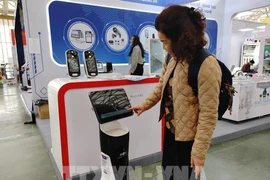
At Spring Fair 2026, digitalisation is embedded throughout the entire chain of organisation, promotion and commercial transactions. From the outset, many businesses completed registration fully online, while booth information and product catalogues were digitised, enabling more efficient management by organisers and closer connections among participants. Across the exhibition space, QR codes are widely used, allowing visitors to quickly access information on organisers, product origins, quality standards, production processes and distribution channels.
Hoang Thu Ha from Hanoi’s Bo De ward said she was particularly impressed by the QR codes displayed on overhead electronic boards. With a single scan, visitors can view the overall layout, zone divisions and exact locations of desired booths, saving time and making navigation far more convenient, she noted.
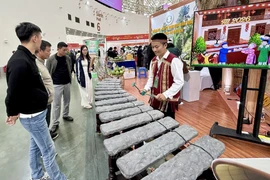
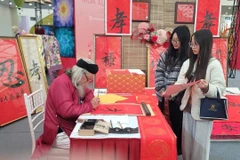
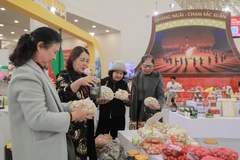
At the “Tet reunion” zone, alongside traditional Tet offerings, many craft villages are actively applying digital tools to broaden their market reach. At their booths, producers combine direct product introductions with livestreaming on social media, online posting, order processing and real-time interaction with remote customers.
Several exhibitors have also integrated QR codes linking to online stores, fanpages or e-commerce platforms, enabling visitors to continue following and purchasing products after the fair. This flexible approach highlights how craft villages are both preserving traditional values and gradually adapting to digital business models to expand consumption opportunities.
Embroidery artisan Le Thi Xuan, owner of Tu Hoa Embroidery in Hanoi’s Chuong Duong commune, said that in addition to participating in fairs and exhibitions, her business has stepped up promotion through social media, e-commerce platforms and online sales channels. Digital transformation, she noted, allows businesses to reach customers faster, more broadly and at lower cost, while enabling distant buyers to view products, discuss designs, place orders and make payments with ease.
A practical digital transformation platform
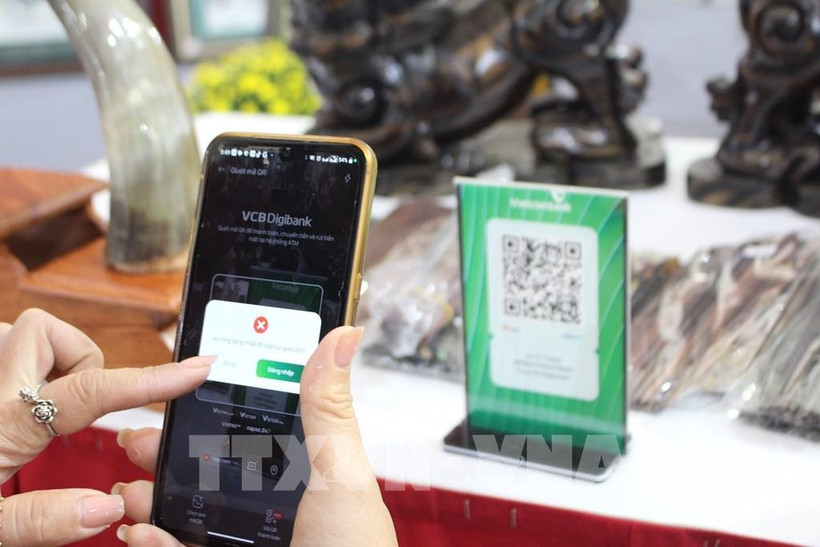
Many enterprises at the fair have proactively integrated digital solutions into product presentation and distribution. Most booths feature QR codes for traceability, helping consumers easily verify production processes, quality standards and product origins. Cashless payments via QR scanning, e-wallets and digital banking are also widely adopted, shortening transaction times and enhancing transparency.
Nguyen Huu Tinh, Director of KINOKO Thanh Cao Import-Export Co. Ltd., said the company’s participation goes beyond conventional brand promotion, aiming instead to help consumers clearly identify and choose clean, safe products. All items are labelled with QR codes, providing instant access to detailed information at the booth, while the company’s official website and fanpage allow customers to stay connected even after the fair.
Meanwhile, at the booth showcasing bronze products from the traditional casting village of Ngu Xa in Hanoi’s Ba Dinh ward, Pham Van Hiep, a representative of Van Nhan Bronze, said digital transformation is viewed as a core element of the workshop’s long-term development strategy, from order management and product presentation to after-sales services. Effective digital channels, he added, enhance competitiveness not only domestically but also internationally.
Beyond stimulating trade promotion and early-year consumption, Spring Fair 2026 is emerging as a hands-on environment for businesses and the public to engage with digital transformation. From operations and promotion to transactions and customer engagement, a wide range of digital solutions are being deployed in an integrated manner, underscoring technology integration as an increasingly essential requirement of the market.
The models and experiences tested at Spring Fair 2026 are expected to be further replicated, making tangible contributions to Vietnam’s national digital transformation process in trade and production./.