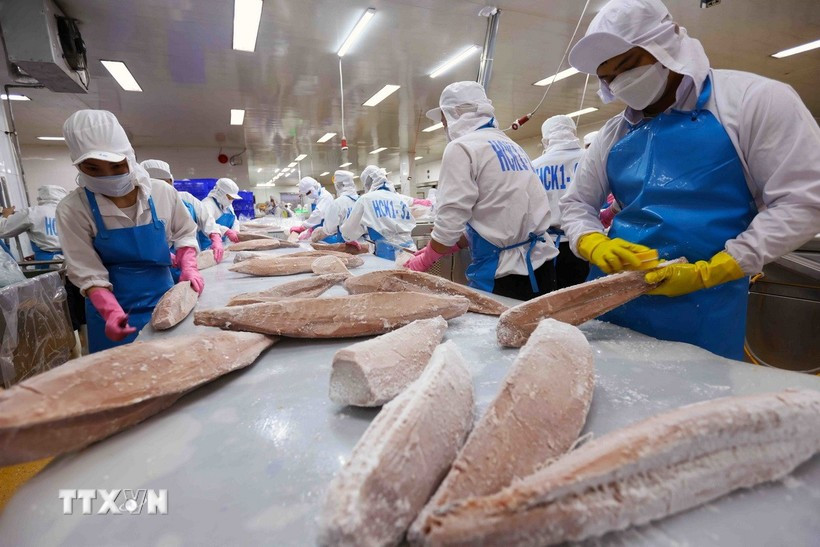
Ho Chi Minh City (VNA) – Vietnam’s seafood exports reached an estimated 874 million USD in January, marking a 13% year-on-year increase, according to the Vietnam Association of Seafood Exporters and Producers (VASEP).
The result reflects efforts by seafood enterprises to maintain early-year order momentum amid continued pressure from technical barriers and tariff-related factors in several major markets.
Growth in the first month of this year was driven mainly by Asian markets, particularly China, Japan and ASEAN, and by strong performance in key product groups such as pangasius and squid, octopus.
In contrast, exports to the US declined noticeably, especially for tuna, due to the impact of the Marine Mammal Protection Act (MMPA) and difficulties related to the issuance of certificates of analysis (COA) for seafood exports.
China remained Vietnam’s largest seafood market in January, with export turnover reaching nearly 250 million USD, up 28.7% from the same period last year. The main driver was strong shrimp demand ahead of the Lunar New Year, when consumption of premium seafood products typically rises. Lobster, in particular, made a significant contribution, as many enterprises accelerated shipments to China to capitalise on festive demand.
Exports to Japan, ASEAN and the Republic of Korea also recorded solid growth. Shipments to Japan climbed 21.3% year-on-year to almost 146 million USD, supported by steady demand for processed shrimp, frozen pangasius fillets, and squid and octopus. Exports to ASEAN surged 32.2% to around 69 million USD, reflecting stronger intra-regional trade and rising consumption in markets such as Thailand, the Philippines and Singapore. Meanwhile, exports to the RoK rose 9.1% to more than 67 million USD, driven mainly by squid, octopus and pangasius.
By contrast, exports to the European Union fell 6.3% to nearly 72 million USD, due to weak demand and carry-over inventories from late 2025, particularly for molluscs and crab products. Shipments to the Middle East also declined 9.4% to about 21 million USD, following a period of strong imports at the end of last year.
In terms of product structure, shrimp continued to be Vietnam’s leading seafood export item, generating 331 million USD, up 6.4%, and accounting for nearly 38% of total export value. Growth was mainly recorded in China and Japan. For the US market, some exporters proactively delivered shipments earlier in January to reduce risks ahead of expected announcements on anti-dumping duties, helping prevent a sharper decline in shrimp exports during the month.
Pangasius emerged as the brightest spot, with export value exceeding 177 million USD, up 33.2%, making it the fastest-growing product group in January. Strong demand from China, ASEAN and Japan supported this performance. Squid and octopus exports also rose sharply, reaching nearly 69 million USD, up 30.9%, thanks to robust consumption in Japan and the RoK.
Meanwhile, tuna exports dropped 14% to around 57 million USD, and shipments of crab and other crustaceans declined 10.6% to about 31 million USD, while bivalve molluscs fell 11.7% to approximately 20 million USD, mainly because of sluggish demand in the EU.
VASEP forecasts that seafood exports in February may fall compared to January and ease slightly year-on-year, due to production and logistics disruptions during the Lunar New Year holiday, ongoing regulatory challenges in the US, and softer Chinese import demand after early stockpiling. Despite short-term challenges, the industry is expected to continue diversifying markets, improving compliance and tapping domestic demand to sustain growth momentum./.