PM orders tougher IP enforcement under new decree

The move aims to promptly combat, curb, and minimise IP violations; safeguard the legitimate rights and interests of citizens and businesses; build a transparent and healthy business environment; spread the nation’s image and prestige to advance rapid and sustainable development.

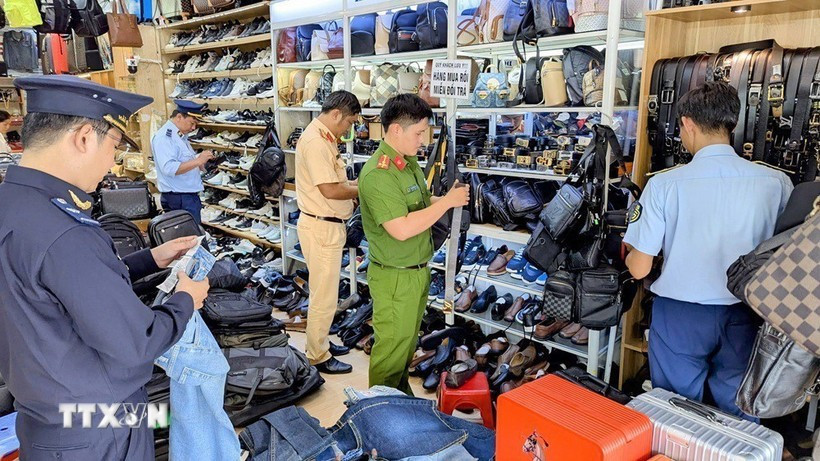
A large volume of goods of unclear origin is found in An Giang province (Photo: VNA)

Hanoi (VNA) – Prime Minister Pham Minh Chinh has signed a decree to strengthen the enforcement of intellectual property (IP) rights, strict action against infringements under the principle of clear roles, tasks, timelines, responsibility, deliverables, and authority.

The move aims to promptly combat, curb, and minimise IP violations; safeguard the legitimate rights and interests of citizens and businesses; build a transparent and healthy business environment; spread the nation’s image and prestige to advance rapid and sustainable development.

PM Chinh asked ministers, heads of ministerial-level and government-affiliated agencies, and chairpersons of the municipal and provincial People’s Committees to step up the capacity, effectiveness, and efficiency of IP rights enforcement within their assigned mandates.

The Ministry of Science and Technology (MoST) will lead efforts, working closely with relevant ministries and agencies, to review and propose revisions to guiding documents for the IP Law and relevant administrative sanction regulations.

In collaboration with the Ministry of Public Security and relevant ministries and agencies, the MoST will build a comprehensive national database on IP rights enforcement that is regularly updated, aligned with international practices, and compliant with the law. The database is targeted for completion and operation in 2026, with ongoing sustainability thereafter, to serve as a key tool to support the handling of IP infringements. More technological solutions, such as artificial intelligence and blockchain, will be adopted to detect infringements, trace origins, and protect IP rights in the digital environment.
buon-lau.jpg
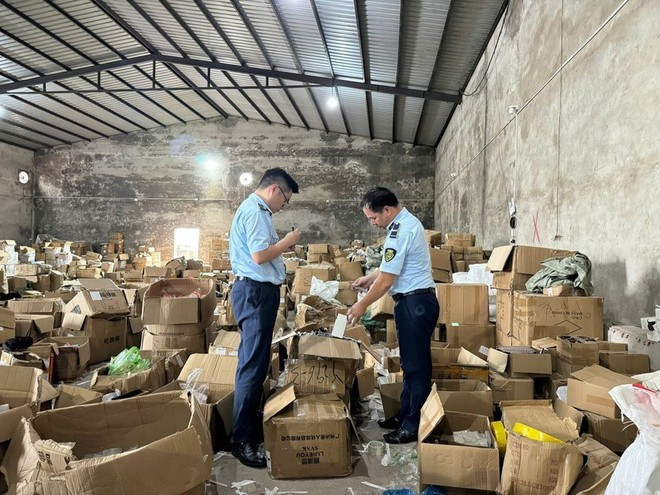
Quang Ninh officers inspect a warehouse showing signs of violations. (Photo: VNA)

The MoST will also lead and work with relevant bodies to urgently study and adopt solutions to improve the quality and effectiveness of inter-agency coordination in IP enforcement.

Administrative procedures will be streamlined to facilitate IP protection registration, while inspections of enforcement activities by ministries, agencies and localities will be intensified, with a focus on key industries, product groups and peak periods.

Ministries, agencies, and localities must deepen international cooperation in the collection and sharing of information, investigations, and the handling of cross-border IP violations, tapping international resources to bolster Vietnam’s enforcement capacity.

The People’s Committees of provinces and cities were assigned to direct relevant agencies to increase inspections, detection, and the timely handling of IP violations within their jurisdictions. Chairpersons of people’s committees at all levels will bear personal accountability for infringements occurring in their localities.

Other specific tasks were also assigned to relevant ministries and agencies./.
VNA

See more

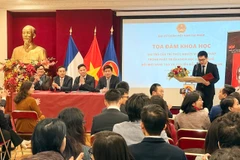
An overview of the seminar (Photo: VNA)

Vietnamese intellectuals in France join hands to advance science, technology at home

Held amid the nationwide efforts to implement the Resolution of the 14th National Party Congress and the Politburo’s Resolution No. 57-NQ/TW on breakthroughs in science, technology, innovation, and national digital transformation, the seminar served not only as an academic forum but also as a platform reflecting the sense of responsibility, intellectual engagement and aspiration to contribute among overseas Vietnamese intellectuals in the nation’s new development era.

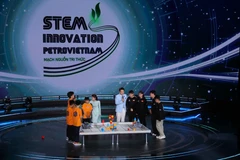
The robotics team from Cau Giay Secondary School, Hanoi, performs at the event (Photo: VNA)

STEM Innovation Petrovietnam helps cultivate knowledge in technological era

The programme connected three sites in Hanoi, Nguyen Hue High School in Lao Cai, and Chau Thanh High School in Ho Chi Minh City, bringing together educators, students, representatives of businesses, and industry–energy engineers, and those directly supporting schools in implementing STEM (science, technology, engineering, and mathematics) education in practice.

Top 10 start-ups from Vietnamese universities receive innovation support from Singapore. (Photo: VNA)

Top 10 university start-ups in Vietnam secure innovation backing

The selected projects share a strong technology-driven orientation, particularly in artificial intelligence (AI), digital solutions and advanced materials. Their innovations address large-scale, real-world issues across sectors including healthcare, education, legal services, agriculture, energy, environmental protection and public governance.

Khanh Hoa province is accelerating digital transformation in tandem with building a smart city. (Photo: VNA)

Breakthroughs under Resolution No. 57 affirm leadership in digital era

After one year of implementing the Politburo’s Resolution No. 57-NQ/TW on breakthroughs in science, technology, innovation, and national digital transformation, numerous digital models and knowledge-based initiatives have been rolled out, bringing digital transformation to communities and contributing to the fulfilment of socio-economic development targets.

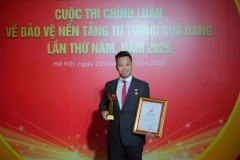
Assoc. Prof. Dr. Tran Le Hung, lecturer at the ESIEE Paris - an engineering school of University Gustave Eiffel. wins the promising award in the 5th national writing contest on safeguarding Party's ideological foundations in 2025 (Photo: VNA)

Science - technology paves way for “second wave of Doi moi”: expert

Assoc. Prof. Dr. Tran Le Hung, lecturer at the ESIEE Paris - an engineering school of University Gustave Eiffel, said future “Make in Vietnam” science and technology products will not only directly serve domestic demands, improve the people’s livelihoods, and boost labour productivity, but also have the potential to compete in international markets.

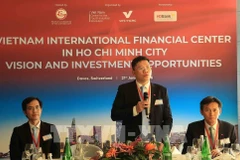
Hoang Nguyen Dinh, Vice Chairman of the People’s Committee of Ho Chi Minh City, speaks at the event (Photo: VNA)

Vietnam promotes On-chain financial infrastructure cooperation at Davos 2026

Jointly organised by the municipal People’s Committee, the Centre for the Fourth Industrial Revolution (C4IR) in the city (HCMC C4IR) and the Vietnam International Financial Centre in Ho Chi Minh City (VIFC-HCMC), the event was part of a series of activities showcasing the vision for building VIFC-HCMC, while expanding cooperation with global partners in finance, technology and innovation.

Trio of core drivers of new growth model highlighted at 14th National Party Congress

Trio of core drivers of new growth model highlighted at 14th National Party Congress

Member of the Party Central Committee and Minister of Science and Technology Nguyen Manh Hung emphasised that in moving from middle-income to high-income status, Vietnam must rely on science and technology, innovation, and digital transformation. These three drivers have been expanded and redefined by the Party under a new approach, creating broader development space and unlocking new resources for growth. With this trio, Vietnam has the potential to achieve double-digit growth.

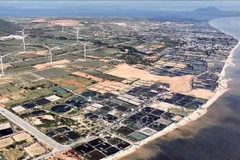
A view of the site where the Ninh Thuan 1 Nuclear Power Plant is located in Phuoc Dinh commune, Khanh Hoa province (Photo: VNA)

Gov’t rolls out communication scheme for nuclear energy development

By 2027 around 60% of leaders, managers, civil servants and public employees in relevant ministries and localities will acquire basic knowledge of nuclear energy development and application. In parallel, the professional capacity of reporters, editors and information officers covering the sector will be strengthened.

According to Minister of Science and Technology Nguyen Manh Hung, Vietnam has established a new framework in which science, technology, innovation and digital transformation are judged by outcomes, with socio-economic effectiveness as the core benchmark. (Photo: baochinhphu.vn)

Science, technology and innovation elevate Vietnam’s standing in new era

The most significant achievement in recent years has not been a single technological success, but a fundamental shift in awareness, mindset and ways of doing. Vietnam has established a new framework in which science, technology, innovation and digital transformation are judged by outcomes, with socio-economic effectiveness as the core benchmark.

Dr. Heng LiHong, Permanent Vice Chairman and Secretary-General of the Vietnam-Cambodia Business Association. (Photo: VNA)

New growth model helps position Vietnam on global technology map: expert

Heng LiHong, who is also a member of the Standing Board of the Business Association of Overseas Vietnamese (BAOOV), expressed his confidence that this new growth model will help Vietnam move beyond a development path reliant on low-cost labour and resource extraction, enabling the country to gradually climb to higher levels in the global value chain.

Deputy Prime Minister Nguyen Chi Dung receives a delegation of Seoul Semiconductor Co., Ltd. led by its CEO Lee Chung-hoon in Hanoi on January 16. (Photo: Government Portal)

Vietnam seeks stronger sci-tech cooperation with international partners

Informing the UN official about some of Vietnam’s achievements in sci-tech development, innovation, and digital transformation, Deputy PM Nguyen Chi Dung highlighted that the country and the UN have recorded progress in their sci-tech relations, with cooperation in strategic areas matching global trends and bilateral cooperation demand.