Upcoming general election sparks expectations for new development phase

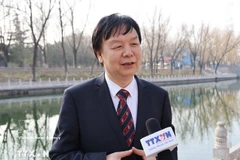
The upcoming election is an important step in consolidating leadership structures as Vietnam prepares for a new stage of development, said Quynh Iris Nguyen–de Prelle, founder and director of the Intercultural Vietnam–Pacific Centre (IVB) in Belgium.

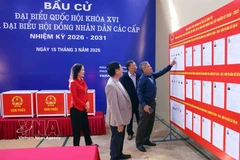
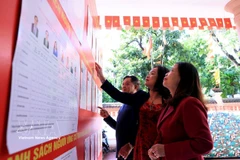
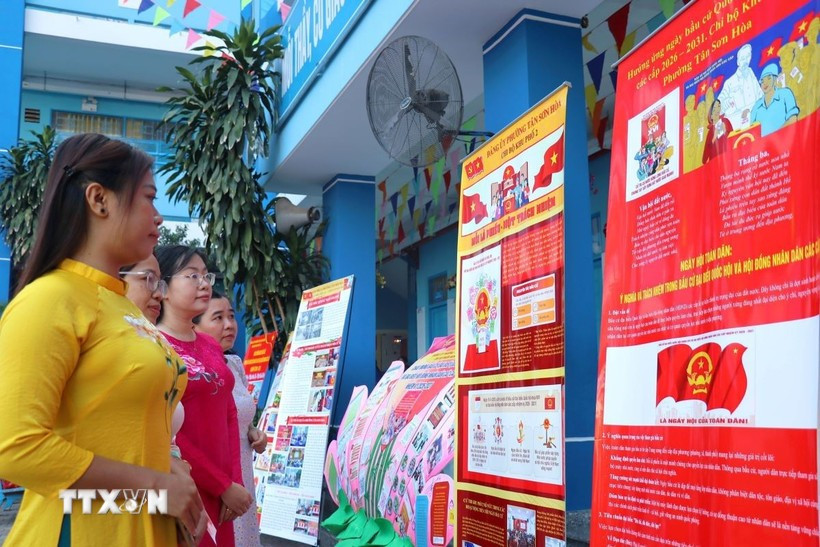
Voters look at election information in Tan Son Hoa ward, Ho Chi Minh City. (Photo: VNA)

Brussels (VNA) – As Vietnam enters a new phase of development marked by significant institutional, economic and social changes, the activities of the National Assembly and People’s Councils at all levels are drawing increasing attention from observers both at home and abroad.

Ahead of the election of deputies to the 16th National Assembly and People’s Councils at all levels for the 2026–2031 term, Quynh Iris Nguyen–de Prelle, founder and director of the Intercultural Vietnam–Pacific Centre (IVB) in Belgium and a member of the education council of Woluwe-Saint-Lambert commune in Brussels, shared her views with Vietnam News Agency correspondents in Brussels on the role of elected bodies and expectations for the next generation of deputies.

According to Quynh Iris, the 15th National Assembly (2021–2026) is regarded as a historically significant term. During this period, Vietnam faced the unprecedented challenges of the COVID-19 pandemic while also undergoing major socio-economic transformations as the country moved into a new stage of development.

She noted that in recent years, Vietnam has marked important milestones, including 50 years of national reunification and 80 years of independence, while increasingly strengthening its position in the region and on the international stage. In this process, the National Assembly and the administrations at all levels have played a key role in improving institutions and advancing development policies.

She highlighted reforms aimed at streamlining the administrative apparatus and modernising governance models in many localities. The gradual adoption of digital governance and the application of science and technology in public administration improve efficiency and bring public services closer to people.

The upcoming election is an important step in consolidating leadership structures as Vietnam prepares for a new stage of development. This is particularly significant as the country continues efforts to streamline the administrative system and implement a two-tier local administration model.

In light of the development goals set following the 14th National Party Congress, Quynh Iris said that expectations for NA and People’s Council deputies in the next term will be increasingly higher.

The growing presence of younger candidates, including academics, entrepreneurs and professionals, reflects a positive generational transition and greater diversity of expertise within the bodies elected by the people.

However, she emphasised that the elected deputies must possess not only professional competence but also strong ethical values and a commitment to public service. Regular engagement with voters and close attention to social developments will be essential for lawmakers to formulate effective policies in a rapidly changing world.

Quynh Iris also underlined the importance of promoting gender equality in political participation and encouraging greater involvement of women in legislative bodies and policymaking processes.

In the international context, she stressed that inter-parliamentary cooperation is becoming increasingly important as countries seek to address shared challenges in areas such as digital transformation, environmental protection and sustainable development. For Vietnam, strengthening parliamentary diplomacy and improving legal frameworks will help enhance international cooperation and support national development.

Ultimately, she said, the success of development policies and international partnerships should be measured not only by economic growth but also by improvements in people’s quality of life and the promotion of humanistic values.

She expressed confidence that with continued reforms, the active participation of younger generations and the engagement of overseas Vietnamese communities, Vietnam will continue to advance toward a future of sustainable and inclusive development./.

VNA
See more

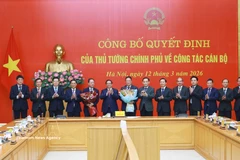
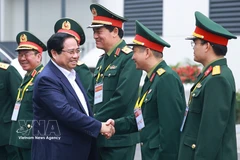
The appointment decision handover ceremony is held in Hanoi on March 12. (Photo: VNA)

PM appoints new leader for Vietnam’s top science academy

PM Pham Minh Chinh asked the VAST to continue to serve as the Party and State’s strategic advisory body on science – technology in key areas such as artificial intelligence, energy, marine economy, water security, and aerospace, alongside building a national sci-tech database.

Do Thanh Hai (right), Deputy Director-General of the East Sea Institute under the Diplomatic Academy of Vietnam, speaks at the dialogue. (Photo: VNA)

Vietnam, India promote maritime security cooperation through blue economy development

Through four rounds of bilateral “Track 1” Maritime Security Dialogue, the two sides have outlined priority areas of cooperation, including marine scientific research, blue economy development, humanitarian assistance and disaster relief, naval and coast guard cooperation, maritime law enforcement, capacity building, and maritime connectivity.

Ha Thi Nga (right), Vice President and General Secretary of the Vietnam Fatherland Front, meets with V.G. Kalganov, Deputy Chairman of the External Relations Committee of Saint Petersburg, in Hanoi on March 12. (Photo: mattran.org.vn)

Vietnam, Saint Petersburg step up people-to-people exchanges

The VFF will continue strengthening bilateral ties and promoting cooperation activities, while seeking closer coordination and support from Saint Petersburg to expand people-to-people exchanges in the coming period, VFF Vice President and General Secretary Ha Thi Nga has said.

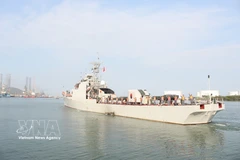
Ship 17 of Brigade 171 under Naval Region 2 of the Vietnam People’s Navy. (Photo: VNA)

Navy ship completes Milan 2026 multinational exercise in India

Over a journey covering more than 5,000 nautical miles, the ship’s officers and crew combined operational participation with extended sea training aimed at enhancing command coordination capabilities, combat readiness, mastery of weapons and technical equipment, and overall physical endurance.

An overview of the 10th session of the 15th National Assembly which opens on October 20, 2025. (Illustrative photo: VNA)

France-based expert suggests elevating parliamentary diplomacy to support national development

Inter-parliamentary cooperation should be closely aligned with the country’s development priorities, including institutional reform, trade and investment, digital transformation, green transition, energy security, high-quality human resources development and the implementation of international commitments, said Le Van Tranh, a Vietnamese doctoral researcher in law at Paris Panthéon-Assas University in France.

Residents visit polling stations in their wards to review the list of candidates for deputies to the 16th National Assembly and members of People’s Councils at all levels for the 2026–2031 term. (Photo: VNA)

📝OP-ED: Resolutely removing discordant voices ahead of national election day

When March 15 arrives, one will see elderly voters approaching a hundred years old making their way to the polls, young voters casting their ballots with enthusiasm, and multi-generational families going together to fulfil their civic duty. Together, these moments will create a vibrant atmosphere, resembling a national celebration.

Le Thuong, Chairwoman of the Vietnamese Association in the Kansai region, Japan. (Photo: VNA)

OV in Japan place high expectations on NA, People’s Council election

Le Thuong, Chairwoman of the Vietnamese Association in the Kansai region, said overseas Vietnamese are closely following the upcoming election, viewing it as an important opportunity to strengthen the effectiveness of governance and ensure that development policies meet the country’s evolving needs.

Professor Mi Liang, Director of the Centre for Southeast Asian Studies at Beijing Foreign Studies University of China. (Photo: VNA)

14th National Party Congress opens new stage in Vietnam’s growth: Chinese scholar

The professor noted that summarising four decades of experience with Doi Moi is essential for further refining Vietnam’s development model in the coming period. He also suggested that Vietnam should continue strengthening anti-corruption efforts and preventing negative practices and moral degradation among officials to ensure the sustainability of the reform process.