Agricultural sector stays steadfast in export target of nearly 70 billion USD

To achieve this year's targets, the ministry has improved institutional frameworks, prioritised resources for implementing action programmes, and at the same time carried out administrative reforms and simplified procedures in the fields of agriculture, environment, land and minerals.

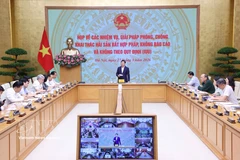
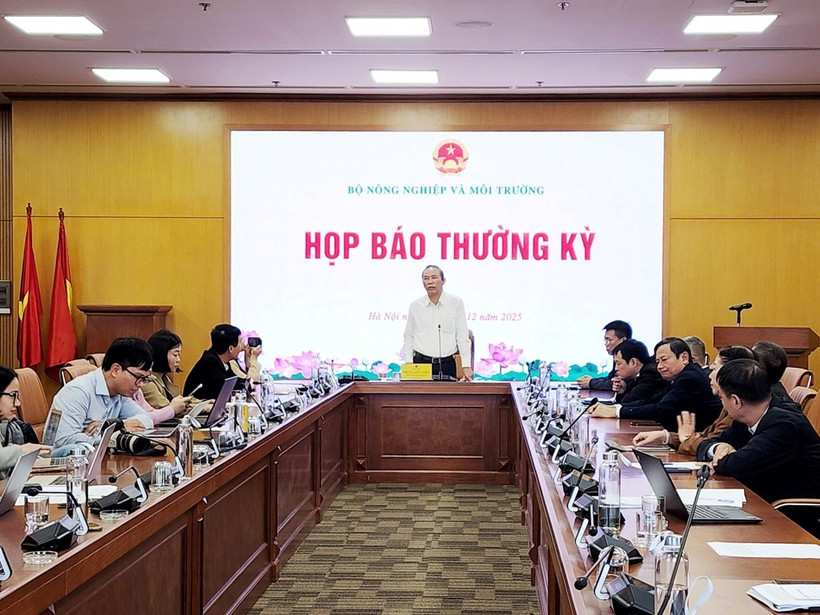
Deputy Minister of Agriculture and Environment Phung Duc Tien (centre) speaks at the press briefing in Hanoi on December 4 (Photo: VNA)

Hanoi (VNA) – The Ministry of Agriculture and Environment has effectively implemented resolutions, strategies, and plans in efforts to reach the growth target of 4% and export turnover of 65–70 billion USD this year, a senior official has said.

Deputy Minister of Agriculture and Environment Phung Duc Tien made the remarks at the ministry’s monthly press briefing held in Hanoi on December 4.

Vietnam’s agro-forestry-fishery export value in November 2025 was estimated at 5.8 billion USD, down 3.7% from the previous month but up 8.4% year-on-year. Over the first 11 months, total export earnings stood at about 64.01 billion USD, an increase of 12.6% year-on-year.

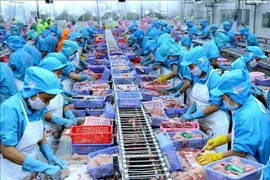
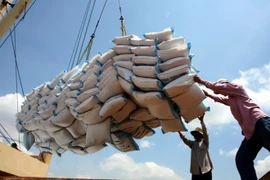
Of this total, agricultural products accounted for 34.24 billion USD (up 15%), livestock products 567.4 million USD (up 16.8%), aquatic products 10.38 billion USD (up 13.2%), forestry products 16.61 billion USD (up 5.9%), production inputs 2.2 billion USD (up 29.9%), and salt 11 million USD (up 93.1%).

To achieve this year's targets, Tien noted, the ministry has improved institutional frameworks, prioritised resources for implementing action programmes, and at the same time carried out administrative reforms and simplified procedures in the fields of agriculture, environment, land and minerals.

It has accelerated sector restructuring in association with ecological agriculture, the green and circular economy, and climate change adaptation. Efforts have also been made to improve productivity, quality, added value, and the overall efficiency of agro-forestry-fishery production and business, while ensuring food, water and ecological security.

The ministry has sped up digital transformation and fostered breakthroughs in the application and transfer of sci-tech advances, while promoting the development of both domestic and export markets, he added.

Regarding livestock production, Nguyen Thu Thuy, Deputy Director of the Department of Livestock Production and Animal Health, said pig farming is gradually recovering from the impacts of African swine fever, although progress remains slow due to storms, flooding and farmers’ cautious approach to restocking. Poultry farming, meanwhile, has grown strongly thanks to favourable production conditions, effective disease control, the absence of major outbreaks, and stable prices. As of late November, the number of pigs farmed nationwide had increased by 0.3% year-on-year, and the poultry flock grew 2.8%.

According to the official, to support farmers and businesses in disaster-affected regions to restore agricultural production, the Vietnamese Government has issued several support policies, including Decree 09/2025/ND-CP, dated January 10, 2025, on assistance for agricultural production recovery in areas hit by natural disasters and plant pests.

These policies not only help livestock producers overcome immediate difficulties but also play a crucial role in stabilising, restoring, and promoting the sustainable development of the livestock sector — an important pillar of the national economy and social security, she added./
VNA

See more

Permanent Deputy Prime Minister Nguyen Hoa Binh addresses the Vietnam–US Finance and Technology Dialogue. (Photo: VNA)

US firms eye expanding fintech investment in Vietnam

Addressing the Vietnam–US Finance and Technology Dialogue, themed “Technology and the future of global finance,” Permanent Deputy Prime Minister Nguyen Hoa Binh reaffirmed Vietnam’s commitment to a pro-investment environment, with breakthrough policies and stronger protections for foreign investors.

An LNG tanker docks at the Thi Vai LNG terminal in Ho Chi Minh City (Photo: VNA)

Solutions proposed to support firms amid Middle East conflict impacts

Top priority should be given to stabilising energy prices to ease input cost pressures and ensure supply stability – the most widely supported recommendation, chosen by 61.9% of surveyed firms. Businesses urged close monitoring of global fuel prices and supply risks, along with flexible measures to curb abnormal domestic price fluctuations and secure supplies of fuel and essential materials.

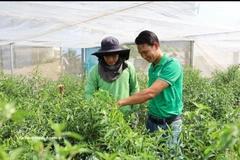
Nguyen Viet Tu (right) and a cooperative technician inspect a bird’s eye chilli field ready for harvest for export to European countries. (Photo: VNA)

Vietnamese herbs gain ground in European market

The Chau Pha Agricultural Production and Services Cooperative model is widely seen as an illustration of a new direction for Vietnam’s agriculture sector, one that combines clean production practices, modern management and proactive engagement with global markets.

Garment production for export to the EU at the TNG company in Thai Nguyen province (Photo: VNA)

Businesses pivot strategies to sustain export growth momentum

Enterprises are shifting toward reasonably priced, easy-to-consume products such as tra fish, tilapia, canned items and surimi, instead of focusing mainly on high-end products like large-sized shrimp, which are facing weaker demand in some markets.

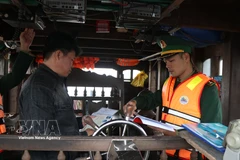
Border guards inspect and verify fishing vessels’ documents and procedural records before departure. (Photo: VNA)

Hue accelerates tech upgrades, strengthens vessel monitoring to combat IUU fishing

During the first quarter, the Department of Agriculture and Environment worked closely with city police and the Border Guard Command to inspect and supervise so-called “three-no” fishing vessels — those lacking registration, licences, or inspection certification — along with boats deemed ineligible for operation in Thuan An, Quang Dien, Vinh Loc, and Chan May–Lang Co.

Officials of former Ninh Thuan province (which is part of Khanh Hoa province now) inspect the progress of Bac Ai pumped-storage hydropower plant. (Photo: VNA)

Efforts made to keep Bac Ai pumped-storage hydropower project on schedule

The project, which is included in the approved National Power Development Plan for 2021–2030 with a vision towards 2050, is developed to strengthen national energy security, support a circular economy and contribute to Vietnam’s commitment to achieving net-zero emissions by 2050, as pledged at the COP26 climate conference.

NSMO Chairman Nguyen Duc Cuong speaks at the event (Photo: VNA)

Experts seek to improve power dispatch in new energy era

Electricity demand is expected to rise strongly, while global energy markets remain volatile. In this context, rooftop solar and BESS are emerging as key solutions to improve flexibility and ensure supply, especially during peak periods.

Prime Minister Pham Minh Chinh speaks at the conference. (Photo: VNA)

Enterprises must pioneer in achieving double-digit economic growth from 2026: PM

Reports delivered at the conference showed that Vietnam had about 1 million active enterprises by late 2025, up more than 25% from 2020, contributing roughly 60% of GDP and employing more than 16 million workers. They also account for the bulk of the country’s trade turnover, while Vietnam ranks among the world’s top 15 destinations for foreign direct investment.

Visitors browse the Vietnamese product display booths at the "Vitality of Vietnamese Goods" exhibition and livestream in Hanoi from March 7-9, 2026. (Photo: VNA)

Vietnamese goods promotion: Greater transparency needed

As transparency, traceability and social responsibility increasingly become essential entry requirements, proactive compliance will give Vietnamese enterprises a clear advantage in building trust among international partners.