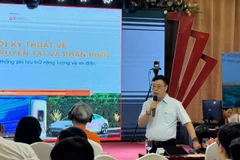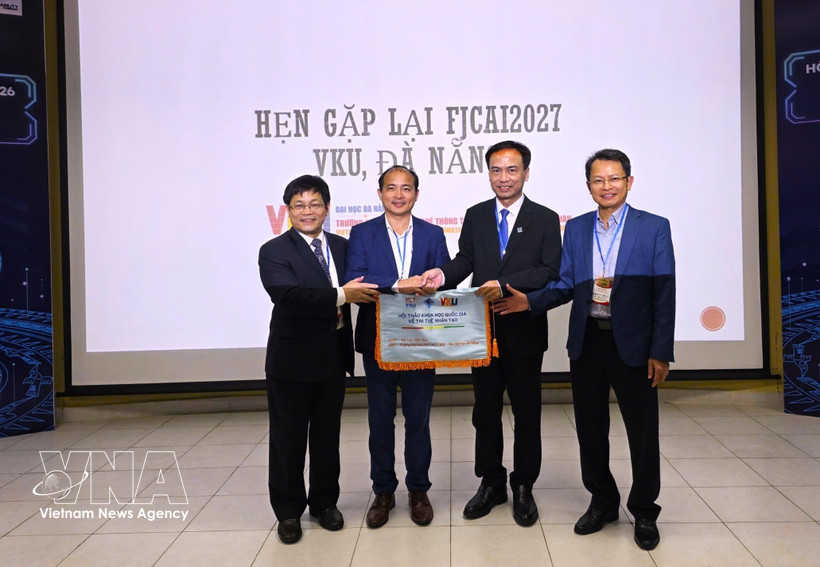
Can Tho (VNA) – A national scientific conference on artificial intelligence (AI) took place in the Mekong Delta city of Can Tho on March 27, drawing scientists, lecturers, experts, postgraduates and students from across the country.
Organised by Can Tho University, the annual event serves as a reputable academic forum to announce research findings and discuss development trends, challenges and applications of AI. As technology increasingly underpins socio-economic activities, participants said the conference plays a key role in shaping orientations for Vietnam’s AI ecosystem.
In his opening remarks, Nguyen Thanh Thuy, President of FISU – the Club of ICT Faculties, Institutes, Schools in Vietnam, described AI as a core driver of innovation and growth rather than merely a supporting tool. He stressed the need to build a strong academic community with closer links among research, training and real-world deployment, noting that the conference helps connect resources and promote knowledge and technology transfer.
A key highlight of the event was a series of plenary presentations on emerging AI trends. Among them, artificial general intelligence (AGI) attracted significant attention.
Nguyen Ngoc Thanh from Poland’s Wroclaw University of Science and Technology said AGI refers to systems capable of performing intellectual tasks at a human-comparable level. While still facing major technical challenges and debate, AGI is seen as a long-term goal with the potential to generate new knowledge and enhance machine creativity.
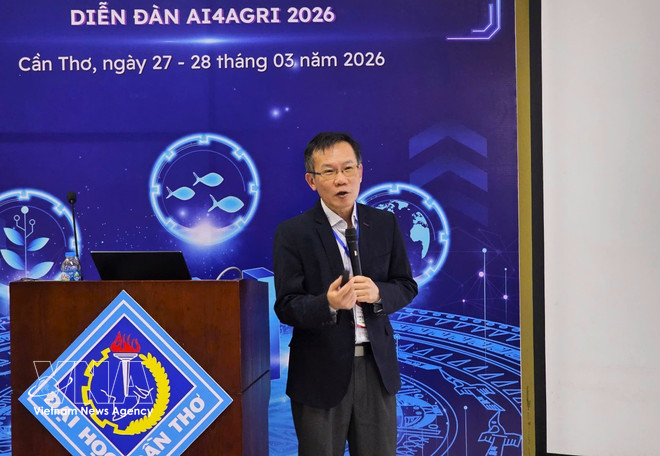
Experts also underscored the rapid rise of multimodal AI.
Pham Huy Hieu from VinUniversity noted that next-generation systems can simultaneously process text, images, audio and video, enabling deeper contextual understanding, improved accuracy and stronger reasoning capabilities.
Advances in multimodal AI, particularly those built on large foundation models, are expanding applications across sectors, from healthcare diagnostics and smart cities to education, robotics and creative industries. These developments are transforming previously unfeasible ideas into practical solutions, helping organisations harness data for automation, decision-making and innovation.
Beyond theoretical discussions, the conference also addressed practical topics such as Vietnamese language processing, computer vision, information security and advanced AI models. The participation of technology enterprises strengthens links between research and application, with a focus on bringing scientific outcomes into practice.
From a policy perspective, Ly Hoang Tung, Deputy Director of the Department of Science, Technology and Innovation under the Ministry of Science and Technology, emphasised that science and technology activities must move beyond academic publication towards generating practical solutions. Turning research into applicable products, he said, is essential for enhancing technological self-reliance and supporting rapid, sustainable growth.
Experts agreed that Vietnam has strong potential to make breakthroughs in AI if it effectively leverages its human resources and promotes collaboration among stakeholders. Conferences such as this not only update knowledge but also help build cooperative networks and foster innovation.
Recommendations discussed at the event on research orientation, training and AI application are expected to provide concrete guidance, positioning AI as a key driver of Vietnam’s socio-economic development in the years ahead./.