Vietnam steps up rice market diversification through FTAs

Effective utilisation of free trade agreements (FTAs) has also been identified as a key solution to expand export markets. Authorities are incorporating rice into support roadmaps helping enterprises maximise FTA benefits while accelerating negotiations to expand tariff quotas with partners such as the EU and the UK.

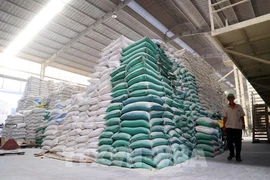
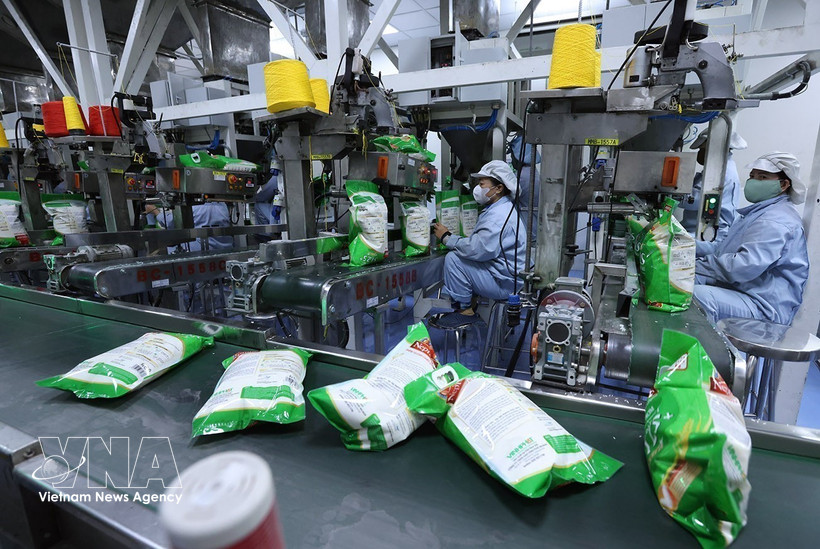
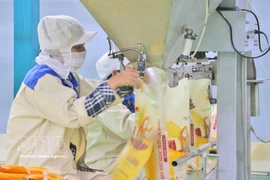
Rice packaged for export at the factory of Vinh Phat Wilmar Rice Co., Ltd. in Binh Duc ward, An Giang province. (Photo: VNA)

Hanoi (VNA) – Amid heightened volatility in the global rice market caused by geopolitical tensions, expanding global supply, and intensifying competition, Vietnam’s rice sector is under growing pressure to recalibrate its development strategy towards broader market diversification, improved quality, and greater value addition.

According to the Plant Production and Protection Department under the Ministry of Agriculture and Environment, the 2025–2026 Winter–Spring crop in the Mekong Delta is expected to produce nearly 11 million tonnes of paddy, with March accounting for about 5.5 million tonnes. Total exportable paddy output in 2026 is projected at roughly 15.46 million tonnes, equivalent to 7.73 million tonnes of rice, creating significant pressure on consumption and exports amid unstable market conditions.

In the first months of 2026, Vietnam’s rice exports recorded growth in volume but a decline in value. Nguyen Anh Son, Director General of the Agency of Foreign Trade under the Ministry of Industry and Trade (MoIT), said exports had reached around 1.74 million tonnes worth more than 826 million USD by mid-March, up 2.3% in volume but down 8.7% in value year-on-year. The average export price dropped 10.7% to 477.6 USD per tonne, underscoring rising competitive pressures in global markets.

Export markets have also shown clear divergence. The Philippines remained Vietnam’s largest buyer, accounting for over 55% of total shipments and maintaining steady growth. Exports to China, Malaysia, and Australia increased, while several African markets saw notable declines.

Do Ha Nam, Chairman of the Vietnam Food Association (VFA), said global rice demand remains strong but uneven across regions. To capitalise on opportunities, the sector must further diversify markets, enhance product quality, strengthen trade promotion, and apply more flexible export management policies.

China has emerged as a bright spot in Asia’s rice trade. Vietnam is now China’s second-largest supplier, exporting roughly 700,000 tonnes, more than double the previous year’s level.

Beyond traditional markets, Japan and the Republic of Korea are emerging as promising destinations for Vietnam’s premium rice products. Initial shipments branded as “low-emission green Vietnamese rice” have successfully entered the Japanese market, marking progress in brand development and penetration of high-end segments.

Africa is also viewed as a key pillar in Vietnam’s export diversification strategy. According to the Vietnam Trade Office in Algeria, which also oversees Senegal, the country imports about 1 million tonnes of rice annually, mainly low-priced broken rice. In 2025, Vietnam’s rice exports to Senegal surpassed 168,000 tonnes worth 52.57 million USD, nearly 30 times higher than the previous year.

During National Assembly Chairman Tran Thanh Man’s official visit to Senegal in July last year, the two countries signed a memorandum of understanding on rice trade, under which Vietnam aims to export around 100,000 tonnes annually. The agreement contributes to Senegal’s food security while opening new opportunities to expand Vietnam’s footprint in African markets.

Looking ahead, rice export prospects for 2026 are expected to face stronger headwinds as global supply recovers. The VFA forecasts export volumes will likely remain around 7 million tonnes rather than achieving rapid growth as seen in previous years.

The MoIT has directed relevant agencies and Vietnam’s overseas trade offices to closely monitor supply–demand trends, price movements, and import policies in key markets, while providing timely information, risk alerts, and support to businesses in addressing emerging trade challenges.

Meanwhile, the Vietnam Trade Promotion Agency is stepping up international promotion of Vietnamese rice through diversified programmes combining both in-person and online activities to widen market access.

Effective utilisation of free trade agreements (FTAs) has also been identified as a key solution to expand export markets. Authorities are incorporating rice into support roadmaps helping enterprises maximise FTA benefits while accelerating negotiations to expand tariff quotas with partners such as the EU and the UK.

Nguyen Quoc Manh, Deputy Director General of the Plant Production and Protection Department, recommended that localities adopt flexible cropping calendars and proactively manage water resources to mitigate saltwater intrusion and climate risks. He also called for continued restructuring towards higher proportions of high-quality, fragrant, and specialty rice varieties, which now account for about 75% of total cultivation.

At the same time, the implementation of the one-million-hectare high-quality, low-emission rice programme linked to green growth is helping raise the value of Vietnamese rice through lower production costs, higher farmer profits, and compliance with international sustainability standards./.
VNA

See more

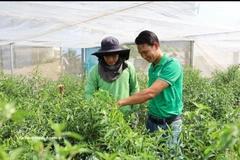
Nguyen Viet Tu (right) and a cooperative technician inspect a bird’s eye chilli field ready for harvest for export to European countries. (Photo: VNA)

Vietnamese herbs gain ground in European market

The Chau Pha Agricultural Production and Services Cooperative model is widely seen as an illustration of a new direction for Vietnam’s agriculture sector, one that combines clean production practices, modern management and proactive engagement with global markets.

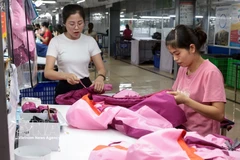
Garment production for export to the EU at the TNG company in Thai Nguyen province (Photo: VNA)

Businesses pivot strategies to sustain export growth momentum

Enterprises are shifting toward reasonably priced, easy-to-consume products such as tra fish, tilapia, canned items and surimi, instead of focusing mainly on high-end products like large-sized shrimp, which are facing weaker demand in some markets.

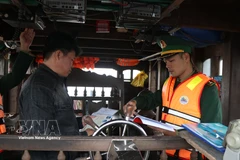
Border guards inspect and verify fishing vessels’ documents and procedural records before departure. (Photo: VNA)

Hue accelerates tech upgrades, strengthens vessel monitoring to combat IUU fishing

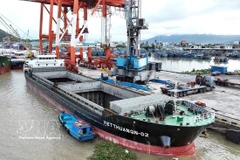
During the first quarter, the Department of Agriculture and Environment worked closely with city police and the Border Guard Command to inspect and supervise so-called “three-no” fishing vessels — those lacking registration, licences, or inspection certification — along with boats deemed ineligible for operation in Thuan An, Quang Dien, Vinh Loc, and Chan May–Lang Co.

Officials of former Ninh Thuan province (which is part of Khanh Hoa province now) inspect the progress of Bac Ai pumped-storage hydropower plant. (Photo: VNA)

Efforts made to keep Bac Ai pumped-storage hydropower project on schedule

The project, which is included in the approved National Power Development Plan for 2021–2030 with a vision towards 2050, is developed to strengthen national energy security, support a circular economy and contribute to Vietnam’s commitment to achieving net-zero emissions by 2050, as pledged at the COP26 climate conference.

NSMO Chairman Nguyen Duc Cuong speaks at the event (Photo: VNA)

Experts seek to improve power dispatch in new energy era

Electricity demand is expected to rise strongly, while global energy markets remain volatile. In this context, rooftop solar and BESS are emerging as key solutions to improve flexibility and ensure supply, especially during peak periods.

Prime Minister Pham Minh Chinh speaks at the conference. (Photo: VNA)

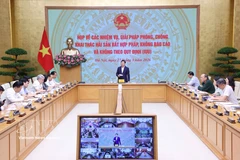
Enterprises must pioneer in achieving double-digit economic growth from 2026: PM

Reports delivered at the conference showed that Vietnam had about 1 million active enterprises by late 2025, up more than 25% from 2020, contributing roughly 60% of GDP and employing more than 16 million workers. They also account for the bulk of the country’s trade turnover, while Vietnam ranks among the world’s top 15 destinations for foreign direct investment.

Visitors browse the Vietnamese product display booths at the "Vitality of Vietnamese Goods" exhibition and livestream in Hanoi from March 7-9, 2026. (Photo: VNA)

Vietnamese goods promotion: Greater transparency needed

As transparency, traceability and social responsibility increasingly become essential entry requirements, proactive compliance will give Vietnamese enterprises a clear advantage in building trust among international partners.

Trade Counsellor Hoang Duc Nhuan of the Vietnam Trade Office in Algeria speaks at the online export consultancy session on the markets of Algeria, Senegal and Tunisia for more than 40 Vietnamese agencies and enterprises on March 26. (Photo: VNA)

Opportunities for Vietnamese businesses to promote exports to African markets

Vietnamese exporters were advised to seek partners through reputable channels and to use secure payment methods, such as irrevocable letters of credit confirmed by trusted European or American banks, or documentary collection with a deposit of at least 20% of the contract value. Deferred payment arrangements should be avoided.

Prime Minister Pham Minh Chinh speaks at the conference (Photo: VNA)

Prime Minister stresses firms’ role in double-digit growth target

While the Party and State will continue refining institutional framework, mechanisms and policies, Prime Minister Pham Minh Chinh made clear that enterprises must be the main drivers of growth. He urged them to take greater responsibility for rapid and sustainable development, while actively contributing to institutional reform.

Illustrative photo (Photo: deplacementspros.com)

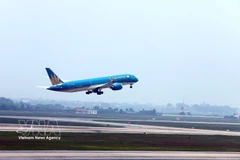
Aviation authority grants Qatar Airways permission for three flights

According to the authority, these flights will not carry domestic passengers on the Hanoi–Ho Chi Minh City leg. Instead, they are intended to transport passengers affected by the exceptional situation in the Middle East, while gradually restoring air transport activities between Qatar and Vietnam, including passengers, cargo and parcels.