Vietnamese herbs gain ground in European market

The Chau Pha Agricultural Production and Services Cooperative model is widely seen as an illustration of a new direction for Vietnam’s agriculture sector, one that combines clean production practices, modern management and proactive engagement with global markets.

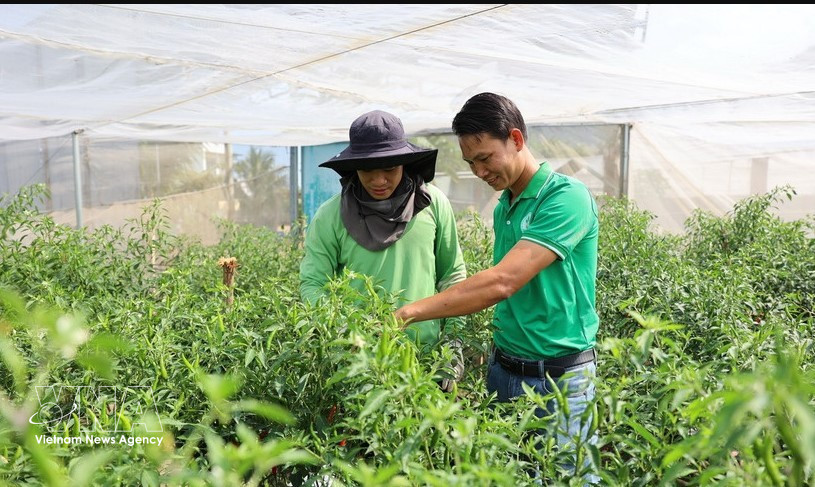
Nguyen Viet Tu (right) and a cooperative technician inspect a bird’s eye chilli field ready for harvest for export to European countries. (Photo: VNA)

Ho Chi Minh City (VNA) – Familiar Vietnamese herbs such as cilantro, basil, perilla, Vietnamese balm and bird’s eye chilli are increasingly finding their way onto supermarket shelves in several European countries, reflecting growing demand for authentic Asian flavours and the success of modern agricultural initiatives at home.

The journey behind this export story is closely associated with the entrepreneurial efforts of Nguyen Viet Tu, Director of the Chau Pha Agricultural Production and Services Cooperative in Ho Chi Minh City.

Born and raised in Chau Pha commune, where many households rely on leafy vegetable cultivation, Tu initially pursued a stable career in the city after graduating with a degree in economics. However, he later returned to his hometown to start an agricultural venture, motivated by concerns over the recurring cycle of bumper harvests accompanied by falling prices that often undermined farmers’ incomes.

He believes that while Vietnamese farmers are highly capable in production, greater value can only be achieved through stronger linkages and adherence to standardised processes that meet international market requirements.

With this vision, Tu founded the Chau Pha cooperative in 2022 to build a high-tech clean vegetable production area that complies with VietGAP standards. The transition was not without challenges, as persuading local farmers to shift from traditional cultivation methods required patience and consistent technical guidance. By supporting output markets and demonstrating tangible economic benefits, he gradually gained the trust of participating households.

After stabilising raw material supply, the cooperative began exploring export opportunities. Market research indicated a sizeable Vietnamese and Asian community in Europe, alongside limited availability of Vietnamese-style herbs meeting strict quality standards. Recognising this potential, Tu initiated pilot cultivation on a hectare of land in 2023, growing ten herbal varieties to assess their suitability for export-oriented production.

Following careful preparation and the refinement of production procedures, the cooperative successfully exported its first shipment of herbs weighing 25 tonnes to the European market.

To meet the region’s stringent technical barriers, products had to comply with rigorous requirements on pesticide residues, microbiological safety and traceability. Tu therefore introduced digital production management software, requiring farmers to maintain electronic logs covering all stages from soil preparation and fertilisation to harvesting and packaging.

Thanks to these strict quality controls, Chau Pha’s herbs have gradually gained acceptance among European consumers. The cooperative now exports more than three tonnes of herbs per week to the market. It has expanded to include 63 members cultivating a total of 55 hectares of VietGAP-certified vegetables, with around 20 hectares dedicated specifically to herb production for export. The model has not only helped local produce reach international markets but also provided farmers with more stable incomes.

Local growers participating in the scheme have reported improved economic returns. Modern greenhouse systems equipped with automated irrigation, fertilisation and humidity monitoring enable multiple harvest cycles each year while ensuring consistent quality. Stable purchase prices under cooperative contracts have reduced market risks, allowing farmers to generate more predictable earnings compared with traditional cultivation methods.

According to local agricultural representatives, the cooperative’s value-chain-based approach has also contributed to job creation and broader rural economic development. In 2025 alone, export revenue from herb shipments exceeded 23 billion VND (over 873,000 USD), with profit margins of over 30%.

Encouraged by these results, Tu plans to expand production areas further and invest more in high-tech cultivation to improve efficiency. In addition to Europe, the cooperative is exploring new export opportunities, including the potential shipment of chilli products to the Republic of Korea in 2026.

The Chau Pha model is widely seen as an illustration of a new direction for Vietnam’s agriculture sector, one that combines clean production practices, modern management and proactive engagement with global markets./.

VNA

See more

An LNG tanker docks at the Thi Vai LNG terminal in Ho Chi Minh City (Photo: VNA)

Solutions proposed to support firms amid Middle East conflict impacts

Top priority should be given to stabilising energy prices to ease input cost pressures and ensure supply stability – the most widely supported recommendation, chosen by 61.9% of surveyed firms. Businesses urged close monitoring of global fuel prices and supply risks, along with flexible measures to curb abnormal domestic price fluctuations and secure supplies of fuel and essential materials.

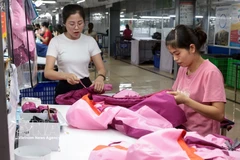
Garment production for export to the EU at the TNG company in Thai Nguyen province (Photo: VNA)

Businesses pivot strategies to sustain export growth momentum

Enterprises are shifting toward reasonably priced, easy-to-consume products such as tra fish, tilapia, canned items and surimi, instead of focusing mainly on high-end products like large-sized shrimp, which are facing weaker demand in some markets.

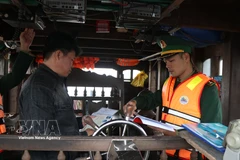
Border guards inspect and verify fishing vessels’ documents and procedural records before departure. (Photo: VNA)

Hue accelerates tech upgrades, strengthens vessel monitoring to combat IUU fishing

During the first quarter, the Department of Agriculture and Environment worked closely with city police and the Border Guard Command to inspect and supervise so-called “three-no” fishing vessels — those lacking registration, licences, or inspection certification — along with boats deemed ineligible for operation in Thuan An, Quang Dien, Vinh Loc, and Chan May–Lang Co.

Officials of former Ninh Thuan province (which is part of Khanh Hoa province now) inspect the progress of Bac Ai pumped-storage hydropower plant. (Photo: VNA)

Efforts made to keep Bac Ai pumped-storage hydropower project on schedule

The project, which is included in the approved National Power Development Plan for 2021–2030 with a vision towards 2050, is developed to strengthen national energy security, support a circular economy and contribute to Vietnam’s commitment to achieving net-zero emissions by 2050, as pledged at the COP26 climate conference.

NSMO Chairman Nguyen Duc Cuong speaks at the event (Photo: VNA)

Experts seek to improve power dispatch in new energy era

Electricity demand is expected to rise strongly, while global energy markets remain volatile. In this context, rooftop solar and BESS are emerging as key solutions to improve flexibility and ensure supply, especially during peak periods.

Prime Minister Pham Minh Chinh speaks at the conference. (Photo: VNA)

Enterprises must pioneer in achieving double-digit economic growth from 2026: PM

Reports delivered at the conference showed that Vietnam had about 1 million active enterprises by late 2025, up more than 25% from 2020, contributing roughly 60% of GDP and employing more than 16 million workers. They also account for the bulk of the country’s trade turnover, while Vietnam ranks among the world’s top 15 destinations for foreign direct investment.

Visitors browse the Vietnamese product display booths at the "Vitality of Vietnamese Goods" exhibition and livestream in Hanoi from March 7-9, 2026. (Photo: VNA)

Vietnamese goods promotion: Greater transparency needed

As transparency, traceability and social responsibility increasingly become essential entry requirements, proactive compliance will give Vietnamese enterprises a clear advantage in building trust among international partners.

Trade Counsellor Hoang Duc Nhuan of the Vietnam Trade Office in Algeria speaks at the online export consultancy session on the markets of Algeria, Senegal and Tunisia for more than 40 Vietnamese agencies and enterprises on March 26. (Photo: VNA)

Opportunities for Vietnamese businesses to promote exports to African markets

Vietnamese exporters were advised to seek partners through reputable channels and to use secure payment methods, such as irrevocable letters of credit confirmed by trusted European or American banks, or documentary collection with a deposit of at least 20% of the contract value. Deferred payment arrangements should be avoided.

Prime Minister Pham Minh Chinh speaks at the conference (Photo: VNA)

Prime Minister stresses firms’ role in double-digit growth target

While the Party and State will continue refining institutional framework, mechanisms and policies, Prime Minister Pham Minh Chinh made clear that enterprises must be the main drivers of growth. He urged them to take greater responsibility for rapid and sustainable development, while actively contributing to institutional reform.

Illustrative photo (Photo: deplacementspros.com)

Aviation authority grants Qatar Airways permission for three flights

According to the authority, these flights will not carry domestic passengers on the Hanoi–Ho Chi Minh City leg. Instead, they are intended to transport passengers affected by the exceptional situation in the Middle East, while gradually restoring air transport activities between Qatar and Vietnam, including passengers, cargo and parcels.