Fuel prices continue to fall from midnight on March 26

According to the MoIT, Vietnam’s fuel prices remain at an average level in the region and are lower than those in neighbouring countries sharing land borders.

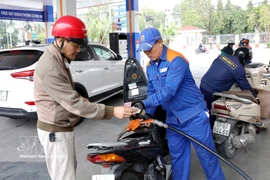
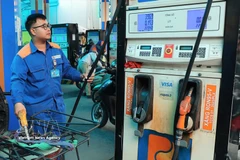
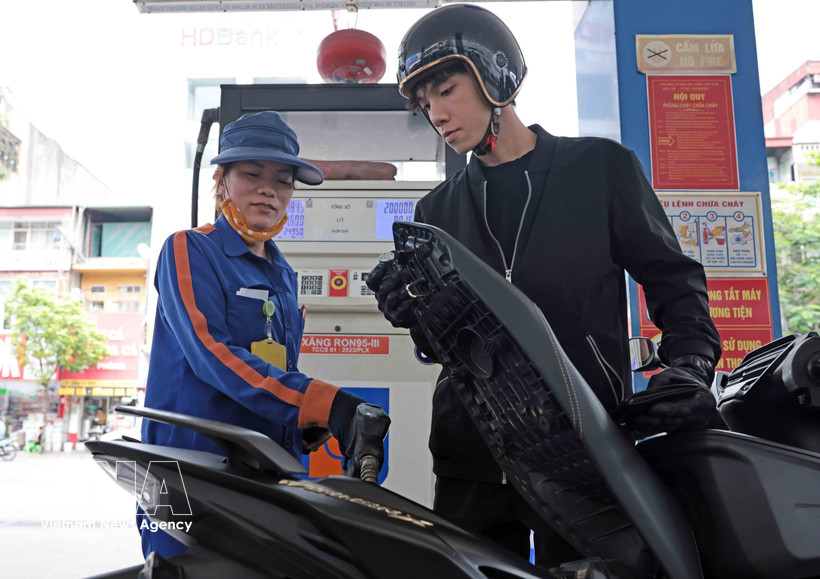
At a filling station in Hanoi. (Photo: VNA)

Hanoi (VNA) – The Ministry of Industry and Trade (MoIT) and the Ministry of Finance have decided to further cut retail fuel prices, effective from midnight on March 26.

Under the new pricing framework, E5 RON92 biofuel is capped at 23,326 VND (0.89 USD) per litre, down 4,749 VND from the previous ceiling. The price of RON95-III is set at no more than 24,332 VND per litre, marking a decrease of 5,625 VND.

Meanwhile, diesel 0.05S is priced at a maximum of 35,440 VND per litre, down 2,459 VND, and kerosene at no more than 35,384 VND per litre, a drop of 971 VND. In contrast, mazut 180CST 3.5S has risen by 1,503 VND to a maximum of 21,748 VND per kilogramme.

Since March 10, authorities have continuously used the fuel price stabilisation fund, with spending ranging from 3,000–5,000 VND per litre for petroleum products. In the latest adjustment, however, the two ministries have suspended the use of the fund.

According to the MoIT, Vietnam’s fuel prices remain at an average level in the region and are lower than those in neighbouring countries sharing land borders.

The ministry said it will coordinate with relevant agencies to inspect and supervise fuel traders to ensure adequate supply for the domestic market, while strictly handling any violations.

It added that the two ministries will continue closely monitoring global and domestic market developments to adjust fuel prices in line with regulations and propose timely measures to the Government and the Prime Minister to stabilise the market./.
VNA

See more

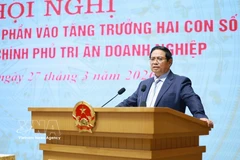
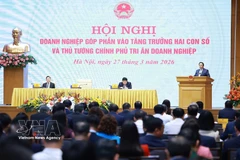
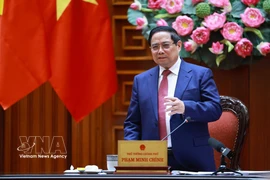
Prime Minister Pham Minh Chinh speaks at the conference. (Photo: VNA)

Enterprises must pioneer in achieving double-digit economic growth from 2026: PM

Reports delivered at the conference showed that Vietnam had about 1 million active enterprises by late 2025, up more than 25% from 2020, contributing roughly 60% of GDP and employing more than 16 million workers. They also account for the bulk of the country’s trade turnover, while Vietnam ranks among the world’s top 15 destinations for foreign direct investment.

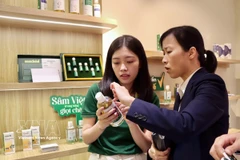
Visitors browse the Vietnamese product display booths at the "Vitality of Vietnamese Goods" exhibition and livestream in Hanoi from March 7-9, 2026. (Photo: VNA)

Vietnamese goods promotion: Greater transparency needed

As transparency, traceability and social responsibility increasingly become essential entry requirements, proactive compliance will give Vietnamese enterprises a clear advantage in building trust among international partners.

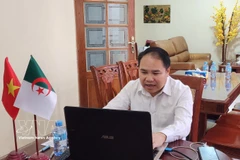
Trade Counsellor Hoang Duc Nhuan of the Vietnam Trade Office in Algeria speaks at the online export consultancy session on the markets of Algeria, Senegal and Tunisia for more than 40 Vietnamese agencies and enterprises on March 26. (Photo: VNA)

Opportunities for Vietnamese businesses to promote exports to African markets

Vietnamese exporters were advised to seek partners through reputable channels and to use secure payment methods, such as irrevocable letters of credit confirmed by trusted European or American banks, or documentary collection with a deposit of at least 20% of the contract value. Deferred payment arrangements should be avoided.

Prime Minister Pham Minh Chinh speaks at the conference (Photo: VNA)

Prime Minister stresses firms’ role in double-digit growth target

While the Party and State will continue refining institutional framework, mechanisms and policies, Prime Minister Pham Minh Chinh made clear that enterprises must be the main drivers of growth. He urged them to take greater responsibility for rapid and sustainable development, while actively contributing to institutional reform.

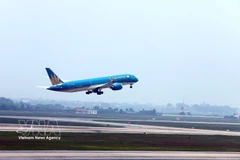
Illustrative photo (Photo: deplacementspros.com)

Aviation authority grants Qatar Airways permission for three flights

According to the authority, these flights will not carry domestic passengers on the Hanoi–Ho Chi Minh City leg. Instead, they are intended to transport passengers affected by the exceptional situation in the Middle East, while gradually restoring air transport activities between Qatar and Vietnam, including passengers, cargo and parcels.

Rice packaged for export at the factory of Vinh Phat Wilmar Rice Co., Ltd. in Binh Duc ward, An Giang province. (Photo: VNA)

Vietnam steps up rice market diversification through FTAs

Effective utilisation of free trade agreements (FTAs) has also been identified as a key solution to expand export markets. Authorities are incorporating rice into support roadmaps helping enterprises maximise FTA benefits while accelerating negotiations to expand tariff quotas with partners such as the EU and the UK.

Consumers shop at a supermarket. (Illustrative photo: VNA)

Launch of Vietnam Consumer Rights Day 2026 set to take place this weekend

At the national launch ceremony, scheduled for the afternoon of March 28, representatives of ministries and agencies, social organisations and businesses are expected to make commitments affirming their responsibility to comply with the law, provide safe and transparent products, and help build consumer confidence and a fair marketplace.

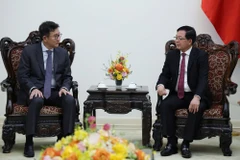
Deputy Prime Minister Ho Quoc Dung (right) receives Yongsoo Huh, Vice Chairman and CEO of GS Energy. (Photo: chinhphu.vn)

Deputy PM meets GS Energy leader, encourages renewable investment

Deputy Prime Minister Ho Quoc Dung called on GS Energy to continue working closely with Vietnamese authorities and partners to explore solutions for developing local supply chains, enhance mutually beneficial cooperation and contribute to the sustainable development of both countries.

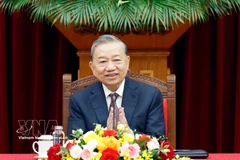
Party General Secretary To Lam speaks at the meeting with representatives of more than 40 international corporations from the Asia Business Council in Hanoi on March 26 (Photo: VNA)

Vietnam pledges partnership to develop resilient, green supply chains: Party leader

Party General Secretary To Lam affirmed that Vietnam will continue to encourage domestic enterprises to expand partnerships with foreign investors, while directing legislative, executive and judicial bodies, along with agencies in the political system, to create the best possible conditions for businesses to grow, enhance international cooperation, and move up global value chains.

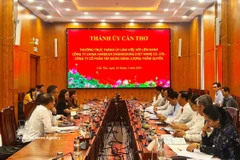
Nguyen Tuan Anh, Deputy Secretary of the municipal Party Committee, holds a working session with a consortium of China Harbour Engineering Company (Vietnam) and Shenzhen Energy Group on March 26, 2026. (Photo: VNA)

Can Tho city courts global investors to accelerate energy ambitions

Rising interest from major global players underscores Can Tho city’s growing appeal as an investment destination. Clean energy, particularly wind power, has been identified as a strategic pillar to drive socio-economic growth while strengthening energy security across the Mekong Delta.

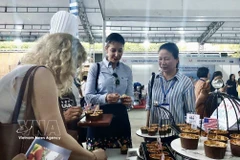
Visitors savor freshly prepared dishes on-site at the “Discover US Agriculture” programme, held on July 19, 2025 in Ho Chi Minh City. (Illustrative photo: VNA)

Vietnam, US work to step up agricultural cooperation

Vietnam has strengths in tropical farm produce, seafood and wooden products, while the US is a major supplier of key inputs such as soybeans, corn, wheat and dairy products. This trade structure creates a balanced supply chain with little direct competition, delivering tangible benefits to businesses and consumers in both countries.

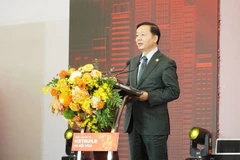
Deputy Prime Minister Tran Hong Ha speaks at the opening ceremony of the Vietbuild Hanoi International Exhibition 2026 on March 26. (Photo: VNA)

Vietbuild Hanoi 2026 International Exhibition opens

The five-day event, themed “Construction – Building Materials – Real Estate – Green Transport”, brings together more than 2,500 booths from domestic and international enterprises, reflecting the development momentum of Vietnam’s construction sector and the broader economy.

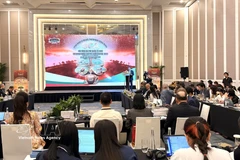
An overview of the International Coffee Conference 2026 (Photo: VNA)

Global Coffee Alliance launched to drive sustainable, inclusive growth

The Global Coffee Alliance is envisioned as a public–private partnership that bridges diplomatic efforts with business operations. Looking ahead to 2040, it aims to develop a global coffee ecosystem that is inclusive, technology-driven, and aligned with net-zero emissions goals.