Vietnam needs “breakthrough pushes” to ensure energy security

Le Huu Phuc, Vietnam’s Trade Counsellor in Thailand, said Vietnam should expand national crude oil reserves to ensure at least 90 days of supply in the event of major global disruptions.

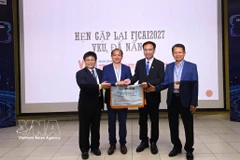
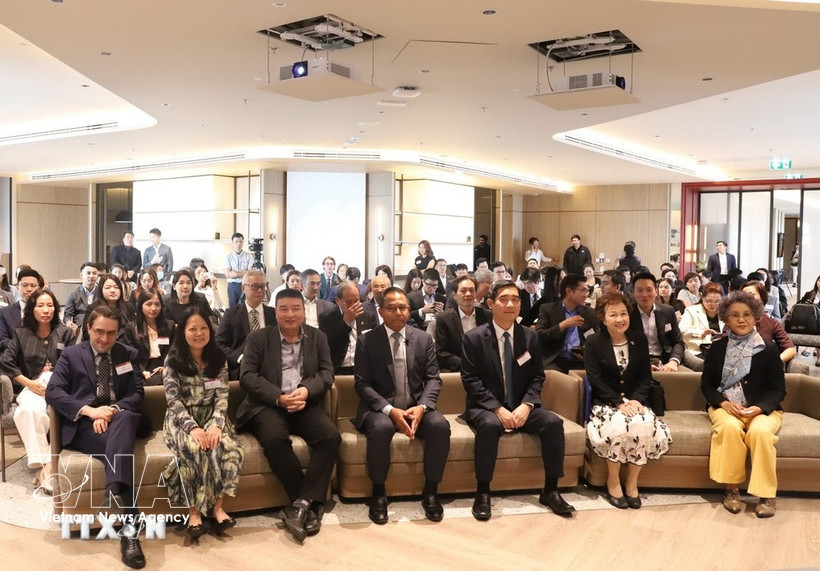
Le Huu Phuc (top row, third from the left), Vietnam's Vietnam’s Trade Counsellor in Thailand, at a Thailand-Vietnam Business Forum in 2025. (Photo: VNA)

Bangkok (VNA) - Vietnam needs “breakthrough pushes” to safeguard national energy security while sustaining rapid and sustainable growth, Le Huu Phuc, Vietnam’s Trade Counsellor in Thailand told the Vietnam News Agency.

He said that when conflict erupted in the Middle East, Thailand swiftly introduced policy responses to mitigate negative impacts and stabilise the macroeconomy.

Measures included suspending fuel exports, freezing petrol prices for 15 days to ease cost-of-living pressures, using the oil fund to subsidise retailers, seeking additional fuel sources, and maintaining government-regulated port and service fees to stabilise production costs and electricity prices. Authorities also encouraged civil servants to work remotely to reduce energy consumption, he noted.

These timely and clearly oriented policies helped stabilise the country’s macroeconomic situation, he asserted.

Phuc noted that the current energy crisis is becoming a catalyst for a comprehensive restructuring of global supply systems. In the short term, countries will prioritise energy autonomy and emergency response capacity rather than solely cost optimisation. Immediate measures may include diversifying supply sources and adopting more flexible fuel strategies, including the temporary return to coal or greater use of biofuels.

In the long term, the global energy market will likely be reshaped around the principle that “security is a competitive advantage”. Energy supply chains will shift from sourcing from the cheapest locations to those that are the safest and greenest. After the 2026 crisis, renewable energy could become a strategy for energy autonomy, with solar, wind and hydropower helping countries avoid maritime chokepoints such as the Strait of Hormuz and the Strait of Malacca.

Drawing lessons from the crisis and Middle East developments, Phuc suggested that Vietnam should pursue breakthrough measures across four key areas.

First, institutional reforms are needed to unlock resources for LNG-fired power and offshore wind projects. LNG power is seen as a baseload replacement for coal but still faces regulatory obstacles, particularly in power purchase agreements. Vietnam should also promptly issue policy frameworks for selecting investors and planning marine spatial use to harness its vast offshore wind potential and reduce reliance on imported fuels.

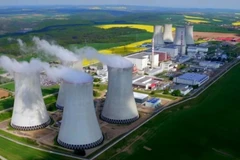
Second, the country should accelerate nuclear power development and battery energy storage systems (BESS). The 2026 crisis exposed risks associated with reliance on a single energy source. Following the intergovernmental agreement with Russia to build the Ninh Thuan I Nuclear Power Plant, Phuc said expediting the project is essential as competition in the sector is expected to intensify. At the same time, Vietnam needs appropriate pricing mechanisms to support electricity storage services to effectively absorb renewable energy, which already accounts for about 47% of installed system capacity.

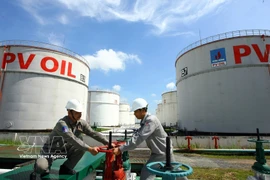
Third, Vietnam should upgrade its power grid, strengthen regional grid connectivity and expand petroleum reserves. Investment in smart grids and advanced dispatch systems will help transmit solar and wind power from the central and southern regions to the north. The country should also expand national crude oil reserves to ensure at least 90 days of supply in the event of major global disruptions.

Fourth, policy responses must remain flexible. The establishment of a task force on energy security under Decision No. 385/QD-TTg dated March 4, 2026 was a sound step, but a rapid price-response mechanism is needed to prevent localised fuel shortages during sharp global price fluctuations.

Phuc also suggested promoting electricity savings across society, shifting from voluntary appeals to economic incentives and regulatory measures, such as rooftop solar self-consumption policies, to turn each household into a small energy producer./.

VNA
See more

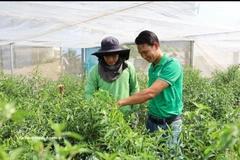
Nguyen Viet Tu (right) and a cooperative technician inspect a bird’s eye chilli field ready for harvest for export to European countries. (Photo: VNA)

Vietnamese herbs gain ground in European market

The Chau Pha Agricultural Production and Services Cooperative model is widely seen as an illustration of a new direction for Vietnam’s agriculture sector, one that combines clean production practices, modern management and proactive engagement with global markets.

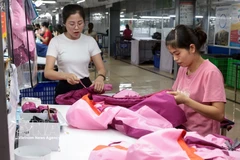
Garment production for export to the EU at the TNG company in Thai Nguyen province (Photo: VNA)

Businesses pivot strategies to sustain export growth momentum

Enterprises are shifting toward reasonably priced, easy-to-consume products such as tra fish, tilapia, canned items and surimi, instead of focusing mainly on high-end products like large-sized shrimp, which are facing weaker demand in some markets.

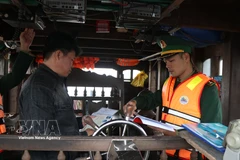
Border guards inspect and verify fishing vessels’ documents and procedural records before departure. (Photo: VNA)

Hue accelerates tech upgrades, strengthens vessel monitoring to combat IUU fishing

During the first quarter, the Department of Agriculture and Environment worked closely with city police and the Border Guard Command to inspect and supervise so-called “three-no” fishing vessels — those lacking registration, licences, or inspection certification — along with boats deemed ineligible for operation in Thuan An, Quang Dien, Vinh Loc, and Chan May–Lang Co.

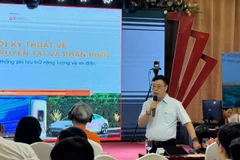
NSMO Chairman Nguyen Duc Cuong speaks at the event (Photo: VNA)

Experts seek to improve power dispatch in new energy era

Electricity demand is expected to rise strongly, while global energy markets remain volatile. In this context, rooftop solar and BESS are emerging as key solutions to improve flexibility and ensure supply, especially during peak periods.

Prime Minister Pham Minh Chinh speaks at the conference. (Photo: VNA)

Enterprises must pioneer in achieving double-digit economic growth from 2026: PM

Reports delivered at the conference showed that Vietnam had about 1 million active enterprises by late 2025, up more than 25% from 2020, contributing roughly 60% of GDP and employing more than 16 million workers. They also account for the bulk of the country’s trade turnover, while Vietnam ranks among the world’s top 15 destinations for foreign direct investment.

Visitors browse the Vietnamese product display booths at the "Vitality of Vietnamese Goods" exhibition and livestream in Hanoi from March 7-9, 2026. (Photo: VNA)

Vietnamese goods promotion: Greater transparency needed

As transparency, traceability and social responsibility increasingly become essential entry requirements, proactive compliance will give Vietnamese enterprises a clear advantage in building trust among international partners.

Trade Counsellor Hoang Duc Nhuan of the Vietnam Trade Office in Algeria speaks at the online export consultancy session on the markets of Algeria, Senegal and Tunisia for more than 40 Vietnamese agencies and enterprises on March 26. (Photo: VNA)

Opportunities for Vietnamese businesses to promote exports to African markets

Vietnamese exporters were advised to seek partners through reputable channels and to use secure payment methods, such as irrevocable letters of credit confirmed by trusted European or American banks, or documentary collection with a deposit of at least 20% of the contract value. Deferred payment arrangements should be avoided.

Prime Minister Pham Minh Chinh speaks at the conference (Photo: VNA)

Prime Minister stresses firms’ role in double-digit growth target

While the Party and State will continue refining institutional framework, mechanisms and policies, Prime Minister Pham Minh Chinh made clear that enterprises must be the main drivers of growth. He urged them to take greater responsibility for rapid and sustainable development, while actively contributing to institutional reform.

Illustrative photo (Photo: deplacementspros.com)

Aviation authority grants Qatar Airways permission for three flights

According to the authority, these flights will not carry domestic passengers on the Hanoi–Ho Chi Minh City leg. Instead, they are intended to transport passengers affected by the exceptional situation in the Middle East, while gradually restoring air transport activities between Qatar and Vietnam, including passengers, cargo and parcels.