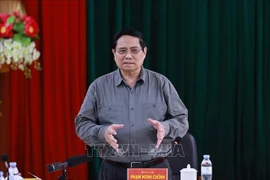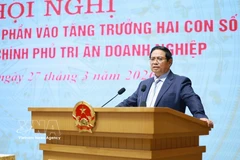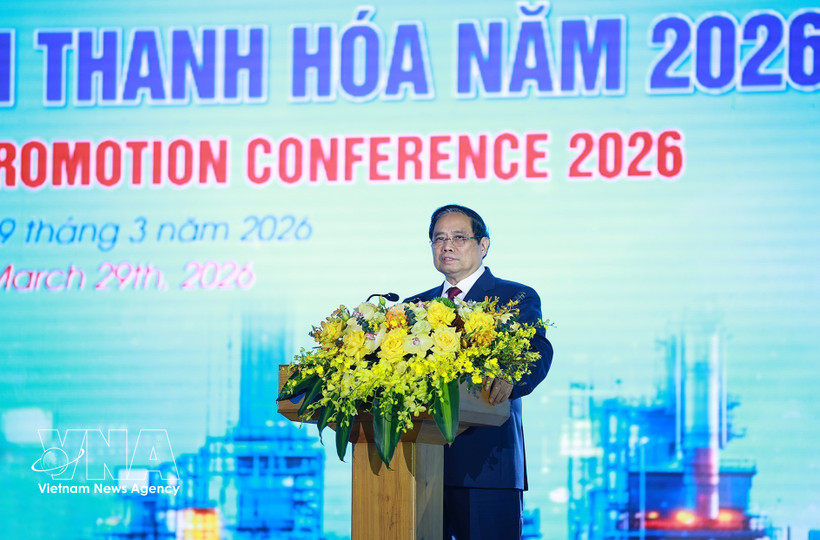
Thanh Hoa (VNA) - Prime Minister Pham Minh Chinh urged businesses to work with Thanh Hoa province to maximise its advantages, contribute to development, and share both benefits and responsibilities, while addressing the Thanh Hoa investment promotion conference held on March 29.
The PM reaffirmed that the Government consistently supports localities and businesses, stressing that businesses’ success is national success, and that the Government shares both the challenges and opportunities faced by enterprises.
He thanked investors for attending the conference, showing their interest, support and sharing with the province’s determination to become a “model province,” as envisioned by President Ho Chi Minh. He highlighted the province’s significant potential, opportunities and competitive advantages, alongside existing challenges.
Amid global uncertainties, he stressed the importance of unity, cooperation, and dialogue to strengthen resilience and build trust. Despite global headwinds, Vietnam has maintained macroeconomic stability, supported growth, controlled inflation, and ensured major economic balances, he said.
The government leader noted that 2026 marks the first year of implementing the Resolution of the14th National Party Congress, opening a new development phase with ambitious targets, including double-digit growth during 2026–2030 and successful implementation of the two centenary goals.
He reiterated four key principles for economic growth outlined by General Secretary To Lam at the second plenum of the Party Central Committee, namely ensuring substantive and sustainable growth rather than sacrificing quality for speed; maintaining macroeconomic stability and controlling inflation; effectively mobilising all resources, prioritising key projects and promoting of public-private partnerships; and ensuring that growth improves people’s living standards and promotes social equity.
To achieve national growth targets, all sectors and localities, including Thanh Hoa, must strive for double-digit growth, he said, stressing that resources stem from vision and thinking, motivation from innovation, and strength from people and businesses.
Underlining several key tasks and priorities for the coming period, the PM stated that ministries, localities, including Thanh Hoa, need to continue to implement more decisively and comprehensively the Resolution of the 14th National Party Congress, the strategic resolutions of the Politburo, and many other resolutions and conclusions.
He also called for continued institutional reform, infrastructure development, and human resource training, particularly to support green and digital transformation, innovation, and the knowledge economy.
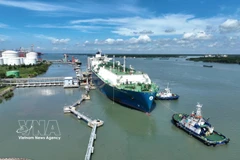
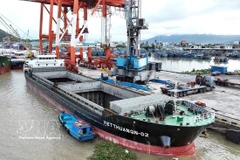
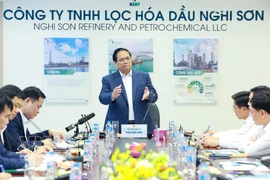
For Thanh Hoa, he urged better governance, long-term planning with a 100-year vision, and a people-centred development approach, while calling for maximising the province’s “four Son” strengths, including further developing Nghi Son Economic Zone, enhancing Sam Son’s tourism appeal, advancing high-tech industries in Lam Son, and strengthening industrial and trade connectivity in Bim Son.
The province should focus on forestry in mountainous areas and expand its marine economy, he added.
PM Chinh also urged Thanh Hoa to strengthen solidarity, unity, improve administrative procedures, combat corruption and waste, expand infrastructure, and invest in human capital, its greatest asset.
For businesses and investors, he called for both leveraging opportunities and embracing a spirit of contribution and sharing, based on the principle of “harmonised interests and shared risks,” with sincere listening, genuine cooperation, and concrete, effective action that delivers real benefits to people.
He reaffirmed the Government’s commitment to standing alongside and supporting localities and businesses, as well as sharing with both their challenges and opportunities.
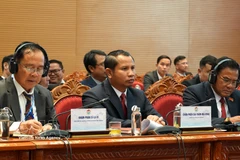
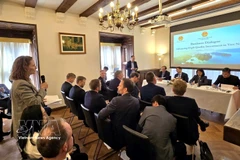
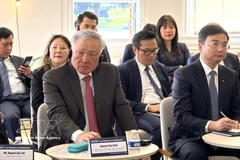
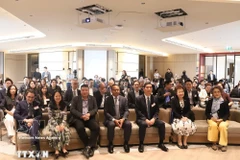
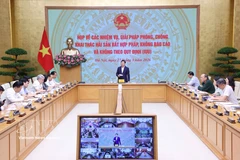
This year’s Thanh Hoa investment promotion conference was attended by leaders of ministries and central agencies, key officials from Thanh Hoa and other localities, as well as representatives of foreign diplomatic missions, investment promotion agencies, investors, businesses, and banks from home and abroad.
Participants were introduced tothe province’s investment potential.
With a natural area of over 11,100 sq.km and a population exceeding 4.3 million, Thanh Hoa is among the largest localities in Vietnam and holds a strategic position in terms of socio-economic development and national defence. Often described as a “mini Vietnam”, it boasts diverse resources and strong growth potential, supported by increasingly well-connected infrastructure spanning road, rail, sea, and air transport.
Besides, the province has strong advantages in agriculture and tourism, with diverse terrain ranging from mountains to coastal areas, and well-known destinations such as Sam Son, Pu Luong, Lam Kinh, the Ho Citadel, and Cam Thuy’s “Sacred Fish” stream. Its workforce of around 2.1 million people, accounting for 56% of the population, provides a solid foundation for growth.
Also at the event, the province announced a list of 173 priority projects for 2026–2030 across six key sectors, with a total expected investment capital of more than 570 trillion VND (approximately 24 billion USD).
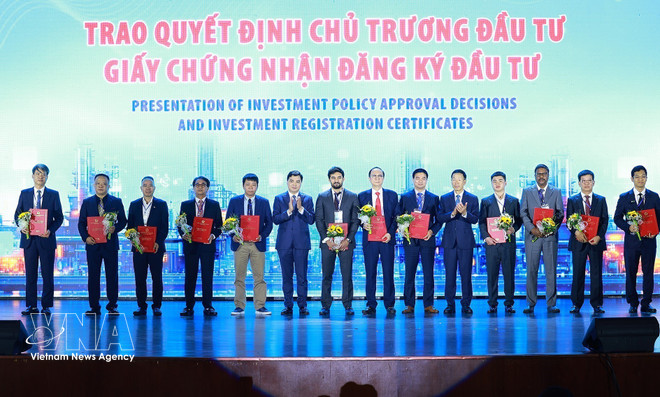
Authorities also granted investment approvals and certificates for 28 projects worth around 30 trillion VND, and signed memoranda of understanding (MoU) for 14 additional projects valued at nearly 73 trillion VND in sectors including transport infrastructure, aviation, industrial parks, logistics, and research and development./.