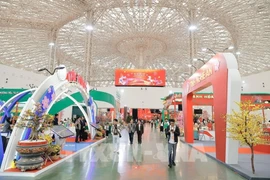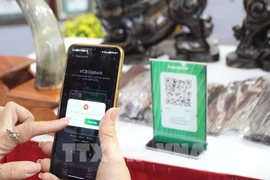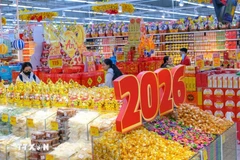
Hanoi (VNA) – The Glorious Spring Fair 2026 is more than a national trade promotion event of strategic significance, reflecting the scale and standing of the economy, but also serves as a focal point linking businesses, markets and supply chains at home with those abroad.
More importantly, it has emerged as a key channel for tapping deeper into the domestic market, creating a large-scale space where supply meets demand, stimulating domestic consumption and strengthening the competitiveness of Vietnamese enterprises. At a time when export markets are fraught with risks and volatility, leveraging trade fairs to activate domestic demand is a practical way to rebalance growth drivers, reinforce traditional engines of expansion and enhance the economy’s resilience. No longer merely a buffer in difficult times, domestic consumption is being repositioned as a central pillar of growth. In that context, a seemingly seasonal event such as the Spring Fair 2026 points to something far larger: how the State is redesigning development momentum from within the economy itself.
For many years, domestic consumption was often mentioned only as a fallback when exports faltered. Moving into 2026, however, policy thinking has shifted decisively. Consumption is no longer seen simply as a compensatory tool but is being reaffirmed as an independent growth driver. With a population of nearly 100 million, a rapidly expanding middle class, high urbanisation rates and a strong shift towards digital consumption, Vietnam has a domestic market large enough to become a self-sustaining source of development. The Spring Fair 2026 therefore goes beyond a seasonal stimulus event, reflecting how the State is gradually rebalancing growth drivers and strengthening engines beyond exports.
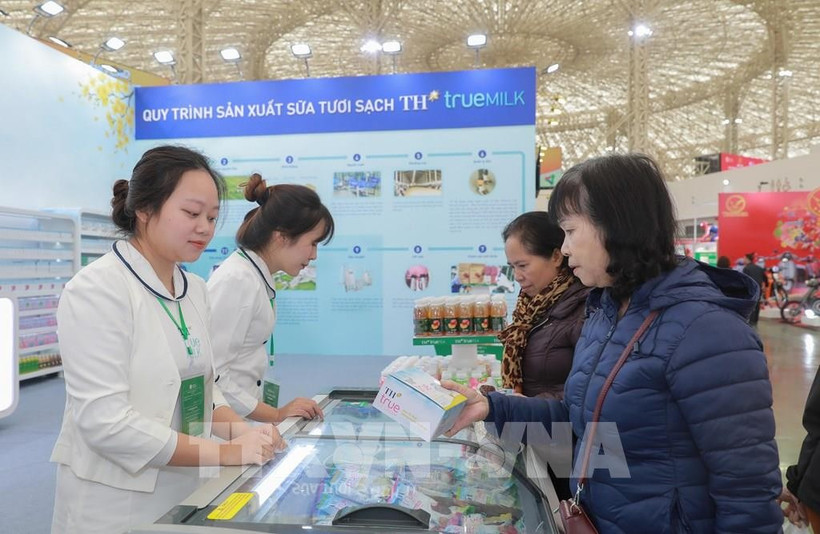
From another angle, the fair is not just a story of demand but also exerts strong pressure on the supply side to restructure. Vietnamese consumers today are no longer focused solely on low prices; instead, they pay increasing attention to origin, quality, green standards, traceability and brand experience. This trend forces domestic enterprises to change fundamentally, from production processes and logistics to packaging, communication and customer engagement. With the participation of thousands of businesses, cooperatives and household producers, the event has become a large-scale market test, in which products that fail to meet new standards are immediately rejected by consumer choice.
In this sense, the fair does not only stimulate demand but also helps filter and restructure domestic supply. Enterprises are compelled to upgrade their competitiveness on home ground, as those that fail to win over domestic consumers will find their prospects in international markets largely symbolic. The domestic market is no longer the final destination for substandard goods but a genuinely competitive arena, where quality benchmarks are rising steadily and the pressure to innovate is becoming increasingly clear.
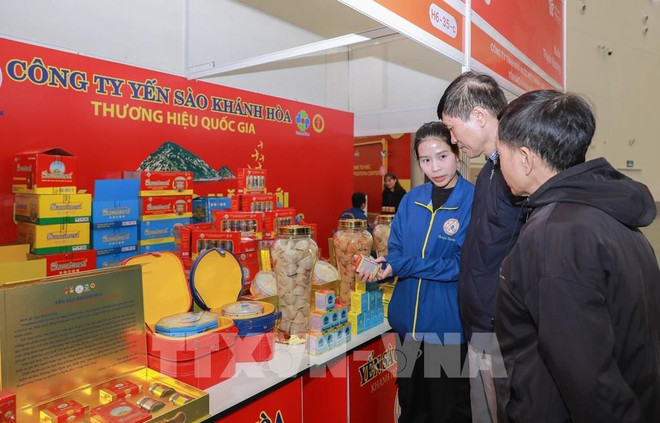
A notable shift in current policy thinking is the recognition that trade promotion is no longer an auxiliary activity but a form of “soft infrastructure” for the economy, alongside logistics, finance and technology. The Spring Fair 2026 does not stand alone; rather, it forms part of a broader ecosystem comprising domestic market development programmes, the “Vietnamese people prioritise Vietnamese goods” campaign, local e-commerce platforms, modern distribution systems and inter-regional supply–demand networks. Within this ecosystem, the fair serves as a direct interface between policy and market life, where macro-level orientations are translated into concrete consumer behaviour.
It is in such spaces that genuine market reactions become visible: what people buy, what they care about, which products are embraced and which distribution models prove effective. This is living data that no statistical report can replace, as it directly reflects consumer confidence, purchasing trends and society’s willingness to spend. On that basis, policy can be adjusted less on assumptions and more on real market signals.
In practice, the true value of the fair lies in fostering a healthy competitive environment, where enterprises compete on quality, brand, experience and credibility, rather than merely on price. At a deeper level, the fair should evolve into a platform for long-term linkages, where businesses forge lasting partnerships with distribution systems, digital platforms and logistics providers, ensuring that the flow of goods continues after the stalls are dismantled. Only then can the fair function as a genuine link in the market’s operating chain, rather than a short-lived consumption event.
Seen more broadly, the fair reflects a quiet but fundamental shift: the reaffirmation and repositioning of the domestic market’s role. This is not the story of a single year, a single fair or a single festive season, but a long-term process requiring persistent institutional building by the State, sustained capability upgrading by enterprises, and the gradual formation of a responsible, discerning and value-conscious consumer culture.
In an increasingly uncertain world, marked by repeated disruptions to global supply chains and unpredictable external shocks, the domestic market’s internal strength represents a strategic safe zone for the economy. And sometimes, the most profound changes begin in the most familiar settings: a spring fair where people shop for the Lunar New Year, while the State quietly recalibrates the drivers of economic growth./.