Hanoi (VNA) – Vietnam’s exports of agro-forestry-fishery products maintained positive growth momentum in the first two months of 2026, supported by recovering demand in major markets. However, complex geopolitical developments, volatile logistics costs and rising trade barriers are creating an urgent need for market diversification and proactive risk management.
Growth momentum spreads across sectors
According to the Ministry of Agriculture and Environment, agro-forestry-fishery export turnover in February was estimated at 4.71 billion USD, down 28.4% from the previous month due to seasonal factors but still up 1.9% year-on-year.
In the first two months, total export value reached approximately 11.3 billion USD, marking a 17.1% increase compared with the same period last year. China, the US and Japan remained Vietnam’s largest export markets, accounting for 22.9%, 18.7% and 7.2% of market share, respectively.
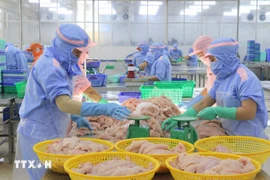
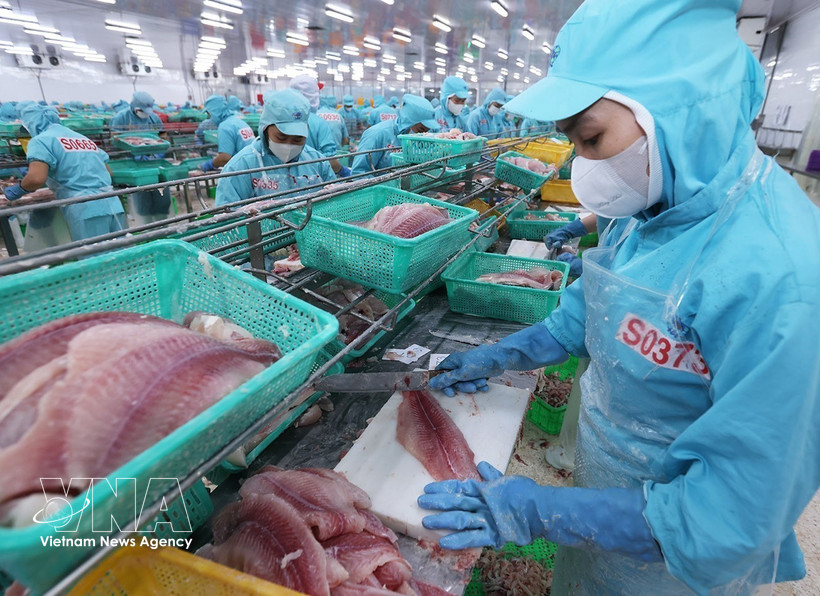
Export structure data shows relatively balanced recovery across commodity groups. Agricultural products continued to lead with 6.09 billion USD, up 17.1%; fishery exports reached 1.76 billion USD, rising 23.3%; and forestry products totalled 2.82 billion USD, up 7.4%.
Notably, smaller sectors recorded remarkable growth. Livestock product exports hit 140.7 million USD, surging 84.3% year-on-year – the fastest pace among all sectors. Exports of agricultural production inputs rose 51.7%, while salt exports soared 69%.
These figures indicate that export recovery is no longer concentrated in traditional key commodities but is expanding across multiple segments of the agricultural value chain.
Growth has been driven by many factors. Demand in major markets has gradually recovered following a period of global tightened consumption, while Vietnamese enterprises have become more proactive in organising contract production, improving product quality and expanding export markets.
Exports face trade and transport headwinds
Deputy Minister of Agriculture and Environment Tran Thanh Nam said the positive results recorded in the first two months signal market recovery, providing a favourable foundation for expanding production and markets and striving toward the 2026 export target of 73–75 billion USD.
Nevertheless, significant risks remain, particularly non-tariff barriers, trade defence measures and complex geopolitical developments that could affect transport, payment systems and global trade flows.
Industry associations warned that geopolitical tensions in the Middle East pose a notable risk. According to the Vietnam Association of Seafood Exporters and Producers (VASEP), fishery xports are especially vulnerable to supply chain disruptions.
Le Hang, VASEP Deputy General Secretary, noted that the Middle East crisis could have impacts at both regional and global levels. Regionally, rising freight and insurance costs may increase import prices and cause temporary shortages of fresh products. Globally, impacts will depend on how long tensions persist. If the situation stabilises quickly, supply chains could recover relatively fast. However, prolonged instability may keep logistics and maritime insurance costs elevated for months.
Recent geopolitical fluctuations are also affecting the fruit and vegetable sector. Dang Phuc Nguyen, General Secretary of the Vietnam Fruit and Vegetable Association, said the Middle East tensions are creating three major pressures – sharply rising transport costs, longer delivery times and increased payment risks.
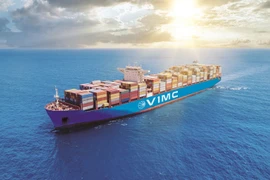
Freight rates for 40-foot containers to major markets such as Europe and the US have risen two to three times compared to normal levels, in some cases exceeding 5,000 USD per FEU. Shipping times on certain routes have extended by 10–15 days as vessels adjust routes, posing risks to product quality and increasing preservation costs for perishable fresh produce, he noted.
Strengthening resilience of export supply chains
To sustain export growth, the Ministry of Agriculture and Environment plans to implement synchronised solutions. Deputy Minister Nam stressed that management directions must move beyond market expansion or price advantages toward proactive forecasting and scenario planning to respond to international trade volatility.
He also called on associations, businesses and banks to strengthen coordination and share information early to enable timely policy responses and avoid disruptions caused by sudden market changes.
Nguyen recommend diversifying transport routes, securing stable freight contracts, prioritising safe payment methods, purchasing war risk insurance and expanding deep processing to reduce dependence on fresh exports. He also urged government support through logistics cost reductions, appropriate credit policies and better utilisation of free trade agreements.
For aquatic product exporters, Hang stressed the need to diversify shipping routes, increase cold-storage reserves and prioritise long-term shipping contracts. Effective transport risk management and insurance will be key to maintaining stable export supply chains amid growing global uncertainty, particularly risks surrounding strategic chokepoints such as the Strait of Hormuz./.
See more
Reference exchange rate unchanged on March 10
With the current trading band of +/- 5%, the ceiling rate applicable for commercial banks during the day is 26,312 VND/USD, and the floor rate 23,806 VND/USD.
Import tariffs on certain fuel products reduced to 0%
Rising tensions in the Middle East, particularly the conflict involving the US, Israel and Iran, have significantly affected the global energy market, especially shipping activity through the Strait of Hormuz – a strategic route for transporting crude oil from the region.
Dong Thap promotes IUU awareness from start of fishing season
Gia Thuan commune, located in the eastern part of the province, is a key fishing locality with 563 fishing vessels, including 423 offshore boats and 140 nearshore vessels, producing an average annual catch of over 42,970 tonnes of seafood.
Pepper exports poised for strong gains despite tightening supply
At this time of the year, farmers in major pepper-growing regions across the country are entering the harvest season for the 2026 crop. With farm-gate prices remaining high, the sector is optimistic that export turnover will continue to grow.
Budget revenue from foreign trade rises 12.3% in Jan–Feb
The customs authority said it will intensify monitoring of revenue sources, tighten control over customs valuation, origin and tax policies, and strengthen risk analysis to prevent tax evasion and revenue losses.
Vietnam Airlines to launch direct Ho Chi Minh City–Phuket route from April 2
Flight VN621 will depart from Ho Chi Minh City at 16:00 and arrive in Phuket at 17:50. On the return leg, flight VN620 will leave Phuket at 18:45 and land in Ho Chi Minh City at 20:55.
YADEA picks Vietnam as electric motorbike production hub in Southeast Asia
Liu Jia, General Director of YADEA Vietnam, said the factory is a key component of YADEA’s global strategy, designed to primarily serve the Vietnamese market in the initial stage, while gradually expanding its capacity to support exports to neighbouring Southeast Asian countries.
Timely regulation keeps fuel market stable as hoarding declines
Since March 8, following the latest price adjustment by the Ministry of Industry and Trade (MoIT) and the Ministry of Finance (MoF), cases of fuel hoarding and queues for stockpiling have declined.
Railway transport company raises fares amid fuel price surge
A VRT representative said the adjustment had been carefully considered to partly share the burden of rising fuel costs while still ensuring service quality as well as safe and stable operations.
Industrial production posts strong growth in first two months
According to the National Statistics Office (NSO) under the Ministry of Finance, the index of industrial production (IIP) in February was estimated to decrease 18.4% from the previous month but increase 1% year on year. Overall, in the January–February period, the IIP rose 10.4% compared with the same period last year.
Nghe An steps up reforms to attract FDI
In 2025, the provincial People’s Committee licensed 25 new FDI projects and approved capital adjustments for 20 others, bringing the total newly registered and additional investment to more than 1 billion USD. Many large-scale projects in the Southeast Nghe An Economic Zone have already become operational, contributing to export growth, state budget revenues and job creation.
Nearly 35,500 new businesses set up in first two months
The enterprises registered combined capital of about 313.7 trillion VND and more than 167,500 employees. Compared with the same period last year, the number of new businesses surged by 70.7%, while registered capital rose by 36.1% and registered labour increased by 19.1%.
Resolution 68: International lessons for private sector development
A common feature in many successful economies is a fundamental shift in the perception of private enterprises. In countries such as Singapore, Germany, Republic of Korea (RoK) and China, private firms are viewed not mainly as entities requiring strict control but as development partners and key forces generating growth, jobs and innovation.
Vietnam steps up cooperation with US businesses to attract international capital
Deputy Minister of Finance Nguyen Duc Chi expressed his hope that with their strengths in technology and international experience, US businesses can contribute significantly to the modernisation of Vietnam’s financial infrastructure and the development of technological solutions for the capital market.
Fuel import tariff proposed to be cut to 0% to stabilise supply
The draft proposes cutting the MFN tariff on unleaded motor gasoline and gasoline blending components such as naphtha and reformate from 10% to 0%. The tariff on diesel fuel, fuel oil, jet fuel and kerosene is also proposed to fall from 7% to 0%.
Rice exports up 5% in volume in first two months of 2026
In the first two months of the year, rice exports reached 1.3 million tonnes valued at 599.3 million USD, up 5% in volume but down 11.2% in value compared with the same period last year.
Reference exchange rate up 2 VND at week’s beginning
The State Bank of Vietnam set the daily reference exchange rate at 25,059 VND/USD on March 9, up 2 VND from the last working day of the previous week.
Vietnam’s overseas investment rises 2.3-fold in first two months
During the period, 36 new overseas projects were granted investment certificates with total registered capital from Vietnamese investors reaching 532.4 million USD, up 2.3 times compared to the same period last year. In addition, three projects adjusted their capital with an additional 7.8 million USD, 1.5 times higher than a year earlier.
Vietnam’s banking brand value surges to 14.7 billion USD in 2026
According to Brand Finance’s Banking 500 2026, Vietnam is represented by 13 banking brands in the global rankings, seven of which demonstrate notable double digit-growth over the past year, reflecting a progressive financial ecosystem.
Vietnam records strong increase in fuel imports in two months
Statistics of Vietnam Customs showed that Vietnam spent more than 1.44 billion USD importing 2.18 million tonnes of petroleum products in the first two months of this year, representing a sharp increase of 31.4% and 43%, respectively, over the same period last year.