HCM City curbs pollution through transition to green transport

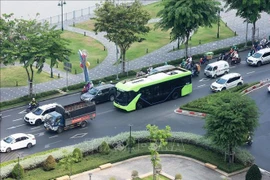
Together with metro expansion, HCM City will continue to enlarge its electric and green bus network, targeting a public transport share of 15–20% of travel demand.

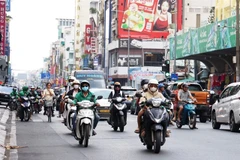
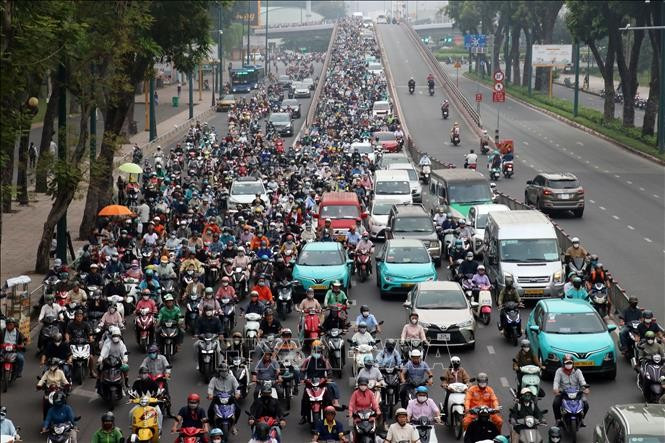
Electric vehicles are increasingly seen on roads in Ho Chi Minh City. (Photo: VNA)

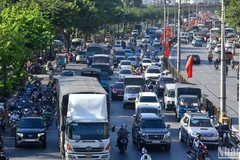
HCM City (VNA) – Amid rapid urbanisation and a rising vehicle density, Ho Chi Minh City has identified transport as one of the major emission sources that requires priority control.

In recent years, the city has stepped up a transition towards cleaner, greener modes of transport, viewing this as a key solution to cutting emissions, improving air quality and safeguarding public health.

Vice Chairman of the municipal People’s Committee Bui Minh Thạnh said scientific analyses show that diesel-powered vehicles are among the main sources of fine particulate matter (PM2.5), nitrogen oxides (NOx) and sulphur oxides (SOx), which directly affect public health and the urban environment. The city is therefore focusing on several core directions to reduce pollution.

These include reviewing and updating emission standards, tightening vehicle supervision and strengthening environmental discipline in transport activities. Businesses are encouraged to upgrade engines, install exhaust treatment systems, adopt cleaner fuels and use internationally compliant emission-reduction solutions.
tphcm-xe-dien-17122025-02.jpg
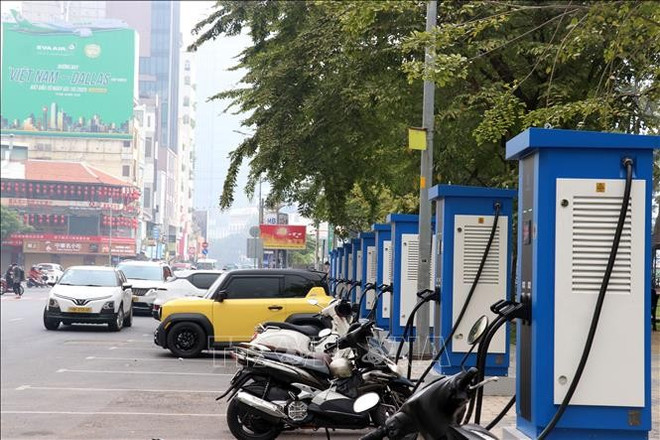
Ho Chi Minh City is developing charging stations and battery swapping points for electric vehicles. (Photo: VNA)

At the same time, the city is restructuring transport infrastructure, prioritising low-emission vehicles, optimising routes and applying smart management technologies. It is also mobilising social resources and promoting cooperation with neighbouring southeastern localities to roll out inter-provincial emission-control programmes, while advancing public–private partnership (PPP) models in environmental technology investment.

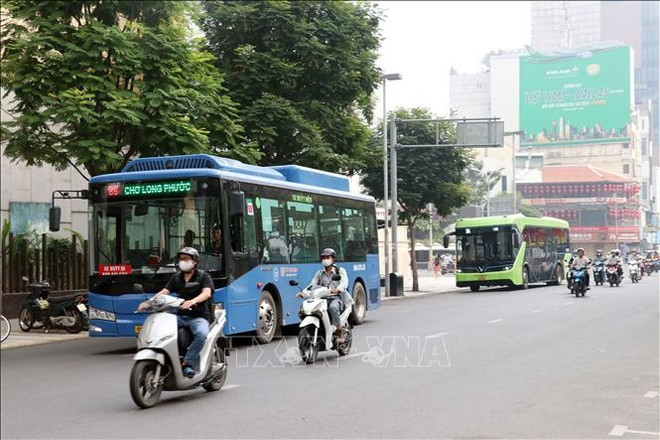
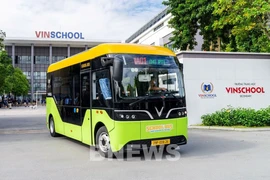
The green transport transition has already produced encouraging results. The city’s bus network comprises 176 routes with a fleet of 2,386 buses, of which 627 are electric (26.3%) and 451 run on compressed natural gas (CNG), accounting for 17.9%.

In the taxi sector, HCM City has 18,613 vehicles, including 13,124 electric taxis, or about 71%. Nearly 89,000 ride-hailing motorbikes are in operation, around 28% of them electric. The city also has 39,566 electric cars, about 25,000 of which are used for transport services, alongside 86,978 electric motorbikes.

According to the municipal Department of Construction, these figures show that the shift to green vehicles is gaining momentum, delivering tangible benefits in reducing emissions and noise. Many transport firms have proactively invested in and deployed electric taxis and electric ride-hailing motorbikes.
tphcm-xe-dien-17122025-03.jpg
The city’s bus network comprises 176 routes with 2,386 buses, of which 627 are electric (26.3%) and 451 run on compressed natural gas (CNG), accounting for 17.9%. (Photo: VNA)

Alongside vehicle conversion, the city has paid special attention to charging and battery-swapping infrastructure. At present, there are five charging stations for electric buses with 56 ultra-fast chargers.

The city also has around 1,000 electric car charging stations, 300 fast chargers for electric motorbikes, and 50 battery-swapping points.

In the next phase, the southern metropolis plans to expand battery-swapping cabinets for electric motorbikes and add at least 1,500 fast chargers for electric cars in key areas, helping shorten charging times and accelerate the shift to green transport.

A strategic solution to transport-related pollution is developing high-capacity public transport, especially the urban railway system. Since the beginning of this year, Metro Line No.1 (Ben Thanh–Suoi Tien) has served more than 15 million passengers, easing congestion and improving air quality in central areas and the eastern gateway.

Under the urban railway development plan linked to National Assembly Resolution No. 188/2025/QH15, the city aims to basically complete six metro lines by 2030, encouraging a shift away from private vehicles. Together with metro expansion, HCM City will continue to enlarge its electric and green bus network, targeting a public transport share of 15–20% of travel demand./.
VNA

See more

The German Agency for International Cooperation (GIZ)'s Managing Director Thorsten Schäfer-Gümbel speaks at the working session with the Vietnamese-German University. (Photo: VNA)

Vietnam, Germany step up collaboration on energy transition, green hydrogen

Schäfer-Gümbel praised the strong commitment of Vietnamese partners to sustainable energy goals. He noted that the long-standing development cooperation between Germany and Vietnam is evolving, with energy transition emerging as a strategic area of collaboration in addressing global challenges.

Cat Ba langur is an extremely rare primate species found exclusively in the humid tropical forests of Cat Ba island (Photo: VNA)

Belgian TV spotlight: Vietnam's wild nature reborn

Through the lens of “Le Jardin Extraordinaire”, Vietnam was portrayed not simply as a travel destination but as a still-emerging realm of discovery: a nation whose nature, though heavily wounded in the past, demonstrates extraordinary powers of recovery, quietly upholding its pristine essence against the pressures of time.

The macaque, scientifically known as Macaca arctoides. (Photo: VNA)

Quang Tri receives endangered stump-tailed macaque

The Cam Lo-Dong Ha forest protection unit in the central province of Quang Tri has received a rare stump-tailed macaque, a species listed as endangered, precious and rare in the Vietnam Red Data Book.

At a ceremony to donate 100,000 trees to the Naval Region 4 (Photo: HANE)

Tree planting programme spreads green momentum in islands

The Ho Chi Minh City Association for Conservation of Nature and Environment (HANE) on January 11 announced 10 outstanding green programmes and activities carried out in 2025, including a programme to plant 1 million trees in Vietnam’s island areas.

Lam Dong releases hundreds of wild animals into the wild. (Photo: VNA)

Lam Dong releases hundreds of wild animals back into the wild

According to the Ta Dung National Park Management Board, the park has for years served as a trusted destination for authorities and residents to hand over and release wildlife. Such actions not only contribute to biodiversity conservation but also help reduce illegal hunting and captivity of wild animals.

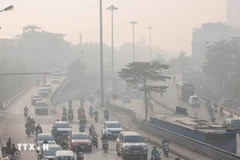
According to the Hanoi Department of Agriculture and Environment, air quality index (AQI) readings have at times reached poor and very poor levels. (Photo: VNA)

Hanoi targets 20% reduction in PM2.5 levels

Hanoi has affirmed its commitment not to trade environmental protection for economic growth. The city is moving to establish low-emission zones (LEZs) as a core measure to control emissions and promote green, sustainable urban development.

A waste collection area. (Photo: VNA)

Ca Mau approves investment policy for waste-to-energy plant

The waste-to-energy plant is planned for construction in Dat Moi commune, covering a total area of about 20 hectares. It will have a waste treatment capacity of approximately 600 tonnes of household waste per day and a power generation capacity of 6MW.