Nationwide mandatory management of emission quotas to be launched from 2028

Representatives of energy, coal – mineral, cement, and building materials enterprises said that the implementation of emission quota allocation must strike a balance between emission reduction targets and the maintenance of growth momentum.

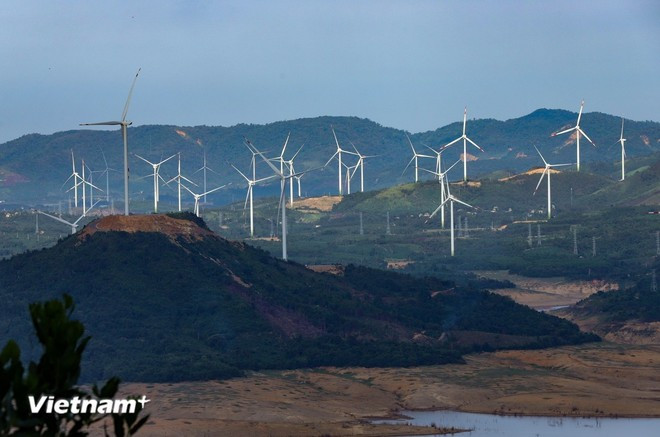
Enterprises expressed a desire for flexible internal quota coordination mechanisms, along with the early operation of a transparent carbon credit market. (Illustrative photo: VNA)

Hanoi (VNA) – The management of emission quotas will be officially and mandatorily implemented nationwide across all sectors and enterprises from 2028, Deputy Prime Minister Tran Hong Ha said while chairing a meeting in Hanoi on December 24.

Reporting at the meeting on the approval of the total greenhouse gas emission quotas for the 2025–2026 period, Deputy Minister of Agriculture and Environment Le Cong Thanh said that the 2022–2024 period was heavily affected by the COVID-19 pandemic and post-COVID impacts, which disrupted production chains and resulted in very low production figures at many facilities. If data from this period were rigidly applied to set future quotas, enterprises could lack sufficient room for production and recovery.

Therefore, the ministry has worked with associations, corporations, and relevant ministries and sectors to develop a quota adjustment coefficient. This coefficient is based on three factors: growth targets, emission reduction targets, and the technological capacity of facilities.

Compared with the projected total emissions of plants in 2025–2026, the ministry proposed that the total quotas allocated to thermal power plants be 1.6–2% lower, to iron and steel (crude steel) production facilities 3.8–4.4% lower, and to cement (clinker) production facilities 4.0–4.5% lower.

Deputy Minister of Industry and Trade Nguyen Sinh Nhat Tan proposed the establishment of an independent measurement and verification mechanism to ensure the accuracy of emission data, noting that ministries can only appraise processes and cannot precisely verify figures self-reported by enterprises.

Representatives of energy, coal – mineral, cement, and building materials enterprises said that the implementation of emission quota allocation must strike a balance between emission reduction targets and the maintenance of growth momentum.

They proposed shifting the quota allocation method from an absolute approach to emission intensity per unit of product, in order to avoid constraining enterprises that are expanding production and to encourage investment in clean technologies. In addition, enterprises expressed a desire for flexible internal quota coordination mechanisms, along with the early operation of a transparent carbon credit market.
conference-emission-quotas-vna.jpg
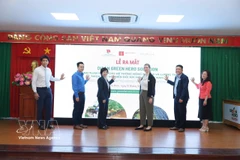
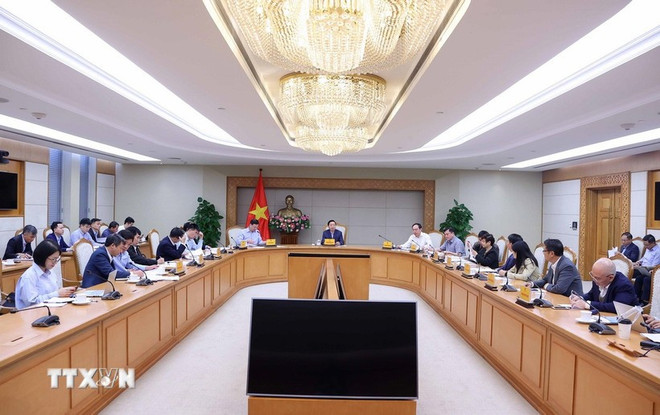
The meeting on the approval of the total greenhouse gas emission quotas for 2025–2026 held in Hanoi of December 24. (Photo: VNA)

Concluding the meeting, Deputy PM Ha noted that this marks the first time Vietnam has implemented emission quota allocation. The determination of total quotas is based on data on the average output of each facility over the years 2022, 2023 and 2024.

Ha stressed the importance of piloting the allocation of greenhouse gas emission quotas as a crucial stepping stone for completing the management mechanism before nationwide mandatory application.

He said that the pilot phase is not limited to quota figures alone, but is a comprehensive process encompassing the refinement of methods for measurement, accounting, statistics, reporting, and verification, as well as legal and technical issues. These methods must be grounded in a solid scientific basis and aligned with international standards such as the United Nations Framework Convention on Climate Change (UNFCCC).

This is closely linked to Vietnam’s responsibilities and commitments under its Nationally Determined Contribution (NDC), affirmed the Deputy PM.

Regarding the mandatory implementation roadmap, the Deputy PM directed that the period from now until 2027 will focus on piloting in order to comprehensively finalise mechanisms and policies. From 2028, emission quota management will be officially and mandatorily implemented nationwide across all sectors and enterprises.

In particular, he called for the addition of sanctions against violations and data falsification, as well as economic instruments to encourage emission reduction./.

VNA

See more

Illustrative image (Photo: nhandan.vn)

20 trailblazing companies in national green ESG rankings honoured

In 2025-2026, the “For a Green National Environment” programme will pivot around six tasks that merge expertise with broad social outreach, including targeted communications, "Journey to Net Zero" conferences and trainings, ESG surveys and announcements, a "National Green Ambassador" contest, a "Green Fashion" design competition, and the rollout of "National Green Station" models focused on zero-waste living.

Air pollution in Hanoi. (Photo: VNA)

Hanoi to launch 5,000 public electric bicycles

In a move to reduce air pollution and promote green mobility, Hanoi has approved a plan to deploy 5,000 public electric bicycles, alongside restrictions on petrol- and diesel-powered vehicles in the city’s central area.

Official heritage plaque i sinstalled on the 12 recognised Shan Tuyet tea trees in Dong Phuc commune. (Photo: VNA)

Thai Nguyen: 12 ancient Shan Tuyet tea trees win national heritage status

The recognition honours the biological, cultural and historical values of these centuries-old Shan Tuyet tea trees – natural treasures deeply woven into the livelihoods, traditions and identity of local ethnic communities. The title affirms the community’s commitment to preserving and promoting the value of this iconic local tea variety.

Sarus cranes at Tram Chim National Park (Photo: VNA)

Return of sarus cranes: Hope takes wing in Dong Thap wetland

Beneath the wide Mekong Delta sky, Tram Chim National Park is racing against time, pouring heart and science into a decade-long (2022–2032) plan to rescue the Eastern sarus crane – an elegant, scarlet-headed bird listed as endangered on the International Union for the Conservation of Nature (IUCN) Red List and a living emblem of both the park and all of Dong Thap province

French Ambassador Olivier Brochet speaks at the press conference in Hanoi on December 11 to mark the 10th anniversary of the Paris Agreement on climate change and highlighting the COP30 outcomes. (Photo: VNA)

International community ready to support Vietnam in energy transition, climate response

In a video message to the press conference, UN Resident Coordinator in Vietnam Pauline Tamesis said the UN is ready to support Vietnam in building a pipeline of projects capable of absorbing financing mobilised under the Political Declaration on establishing the Just Energy Transition Partnership (JETP), as well as from global climate finance sources, including the Green Climate Fund and the Loss and Damage Fund.

Forest rangers in Son La province apply technological devices and software to forest management, monitoring, and protection. (Photo: nhandan.vn)

Digital technology application enhances forest management, protection

With a total forest area of over 14 million hectares, including more than 10 million hectares of natural forests, forests exist in all 34 provinces and cities across the country. Given the large area and limited workforce, applying digital solutions in forest management and protection has become a top priority for the forestry sector.

Sunda pangolins (Manis javanica), also known as the Javan pangolin, are listed in Group IB – critically endangered and strictly protected from all commercial exploitation (Photo: VNA)

Quang Ngai releases rare pangolin back into nature

Initial verification showed that the animal weighed 3.7kg and measured over 60cm. It was identified as a Sunda pangolin (Manis javanica), also known as the Javan pangolin, listed in Group IB – critically endangered and strictly protected from all commercial exploitation.

Residents of Tuyen Quang province take part in the One Billion Trees Programme. (Photo: VNA)

Tree-planting programme exceeds one-billion-tree goal

The total comprises 573.9 million scattered trees and 865.2 million trees grown in concentrated plantations, equivalent to 429,125 hectares of forest. Provinces posting the strongest results include Phu Tho with 177.9 million trees, Lao Cai with 108.8 million, and An Giang with 98.5 million.