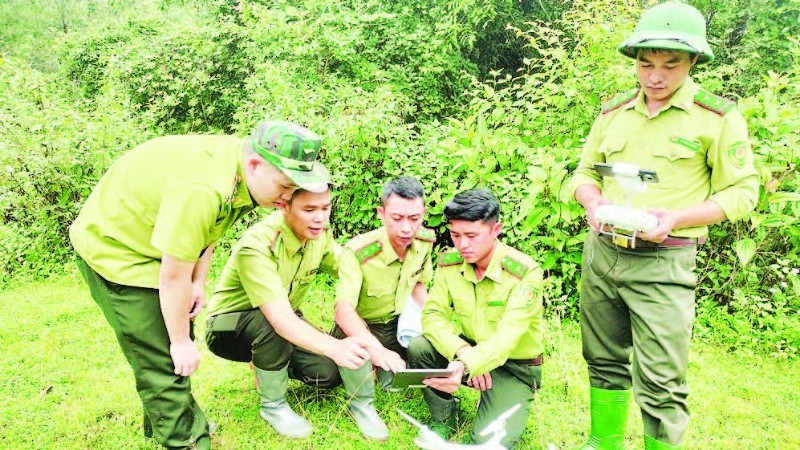
Hanoi (VNA) – Digital transformation and the use of scientific and technological advances are considered a “key solution” to improving the quality of forest management, monitoring, and protection in the new context, following the implementation of the Politburo’s Resolution 57 on development of science and technology, innovation and digital transformation.
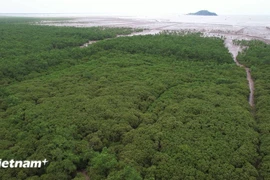
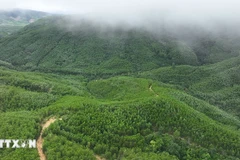
With a total forest area of over 14 million hectares, including more than 10 million hectares of natural forests, forests exist in all 34 provinces and cities across the country. Given the large area and limited workforce, applying digital solutions in forest management and protection has become a top priority for the forestry sector.
Recognising the importance of digital technology, since 2000, the sector has proactively studied and applied remote sensing images of varying resolutions from satellites such as NOAA, MODIS, LANDSAT, SENTINEL, SPOT5, and VNREDSAT-1, enhancing the efficiency and transparency of forest surveys and inventories.
In addition, applying technological solutions has enabled forest rangers to detect and handle violations of the Forestry Law more effectively. For example, in former Ha Giang province (now part of Tuyen Quang province) in 2024, the use of FRMS, QGIS, and MAPINFO software helped rangers detect four forestry violations, eight fewer than in 2023, resulting in fines totaling 65 million VND (2,465 USD). In Lao Cai province, GIS technology and remote sensing images helped detect and handle 86 forest-related violations in the first half of 2024.
According to Nguyen Huu Thien, Deputy Director of the Vietnam Forestry Administration under the Ministry of Agriculture and Environment, implementing Resolution 57 has provided strong momentum for an extensive digital transformation across the forestry sector, positively impacting forest management, protection, and development. Management methods have shifted markedly from manual, traditional approaches to modern practices, with digital technology, Big Data, and artificial intelligence (AI) enhancing rangers’ ability to monitor, analyse forest data, and make timely, accurate decisions.
In addition, standardising and interconnecting databases with other sectors has enhanced transparency and efficiency in state management coordination. The organisational capacity and professional expertise of staff have gradually improved, fostering a digital mindset and work methods suited to the context of digital transformation. Notably, the establishment of a supportive policy framework has facilitated the participation of domestic and international businesses, research organisations, and partners in investment and technology transfer, contributing to the sustainable, modern, and climate-resilient development of the forestry sector.
Alongside the benefits of digital transformation, the forestry sector has faced several challenges. Monitoring equipment such as GPS devices, drones, and LIDAR systems is not yet fully or consistently deployed, and harsh weather conditions in many forest areas affect the durability of these tools. High-quality remote sensing imagery from satellites is not widely available, complicating forest status analysis. Furthermore, funding for digital technology applications, particularly remote sensing, remains insufficient and unstable, while investment in specialised software, database maintenance, and ranger training is still uneven.
To address these challenges and further strengthen the use of digital solutions in forest management and protection, Thien stated that the agency will focus on upgrading and completing IT infrastructure and equipment nationwide. Priority will be given to server systems, network connections, and terminal devices at forest management units, alongside expanding the use of GIS platforms, satellite imagery, drones, and AI for forest surveys, monitoring, fire prevention, and international commitments. The sector will also develop digital skills through training and capacity-building programmes for its workforce./.
See more
Banking sector accelerates green transition towards net-zero goals
According to the State Bank of Vietnam (SBV), by the end of the third quarter, outstanding green credit reached approximately 742.8 trillion VND (28.17 billion USD), up 5.5% compared to the second quarter and 9.3% from the end of 2024.
Climate-tech sector sees surge in venture capital investment
According to the CT-FE 2025 report, from 2015 to 2024, a total of 78 climate-tech enterprises in Vietnam raised nearly 205 million USD with 217 deals. In 2024 alone, the raised amount reached almost 100 million USD.
Quang Ngai releases rare pangolin back into nature
Initial verification showed that the animal weighed 3.7kg and measured over 60cm. It was identified as a Sunda pangolin (Manis javanica), also known as the Javan pangolin, listed in Group IB – critically endangered and strictly protected from all commercial exploitation.
Exploring “miniature world” of Pu Huong Biosphere Reserve
The Pu Huong Nature Reserve is one of the three special-use forests forming the core zone of the Western Nghe An Biosphere Reserve, which was granted the world status by UNESCO in 2007.
Tree-planting programme exceeds one-billion-tree goal
The total comprises 573.9 million scattered trees and 865.2 million trees grown in concentrated plantations, equivalent to 429,125 hectares of forest. Provinces posting the strongest results include Phu Tho with 177.9 million trees, Lao Cai with 108.8 million, and An Giang with 98.5 million.
Quang Ninh establishes Co To – Tran Island marine conservation area
Covering a total area of 18,414 hectares, the conservation area includes 13,230 hectares of functional zones (strictly protected zone, ecological restoration zone, and service-administration zone) and 5,184 hectares of buffer zone.
Lam Dong: Severe flooding causes major disruptions, National Highway 1A temporarily closed
Preliminary reports from local authorities indicated that around 1,705 homes had been inundated as of late afternoon, with floodwaters continuing to rise. Over 1,000 households, severely affected by deep flooding, were urgently evacuated to safe places.
Nghe An: Endangered Indochinese box turtle released back into nature
The Indochinese box turtle is listed in the Vietnam Red Data Book and classified as critically endangered in the International Union for the Conservation of Nature (IUCN) Red List.
Hanoi takes urgent measures to curb air pollution
The city requires the enhanced application of advanced technologies and remote monitoring systems, including satellite remote sensing, drones, and AI-integrated traffic cameras, to monitor, detect, and strictly address the illegal burning of garbage, straw, and agricultural by-products.
Vietnam among countries hit hardest by monsoon rains: WMO
Devastating rainfall has triggered catastrophic flooding in parts of South and Southeast Asia, claiming hundreds of lives, displacing entire communities and causing massive economic disruption.
International cooperation to promote sustainable growth and realize Net Zero goals in Vietnam
Climate response policies of Vietnam: A firm commitment to a green future
Climate change has become one of the most pressing challenges of the 21st century, directly threatening food security, water resources, socio-economic stability and even the survival of many nations.
Rare wild animals released into the wild in Nghe An
A pygmy slow loris has been handed over to authorities by a resident of Con Say hamlet, Quynh Anh commune, who had found the animal while working in the fields.
Dong Thap boosts conservation, ecotourism development at Tram Chim National Park
The Tram Chim National Park in the Mekong Delta province of Dong Thap, one of the few remaining inland wetlands of the former Dong Thap Muoi region, plays a vital role in conserving biodiversity and developing sustainable ecotourism.
World Bank delegation surveys Can Tho urban resilience project
The project is jointly financed by the WB with up to 250 million USD and a 10-million-USD non-refundable grant from the Swiss State Secretariat for Economic Affairs (SECO), along with counterpart funding from the Vietnamese Government. Its goal is to build a climate-resilient and sustainable city that can drive socio-economic growth across the Mekong Delta, mitigate flood vulnerability in central Can Tho, and improve inter- and intra-regional transport connectivity.
Typhoon Koto weakens, changes direction, continues to move slowly
In the next days, the typhoon will continue to move slowly westward, then possibly turn west-southwest at about 5km/h, continuing to weaken.
Vietnam seeks World Bank green credit to boost low-emission rice production
In 2024, the World Bank committed a 350 million USD loan to the Vietnamese Government to implement the one-million-hectare project which associated with green growth in the Mekong Delta.
Lam Dong province’s coastal localities brace for Storm Koto
Local authorities have activated round-the-clock duty operations, continuously updated storm warnings and flood information and intensified inspections of riverside and seaside areas, low-lying zones, and locations at high risk of landslides and deep flooding.
VPA General Staff directs urgent response to Storm Koto
Military Regions 4, 5 and 7 were tasked with directing provincial military commands to advise local authorities, review response plans, and coordinate with relevant departments and sectors to identify disaster-prone areas, including locations at risk of flash floods, landslides, major dykes, embankments and reservoirs, and flood-prone zones, particularly those heavily affected by recent rains.
New storm forecast to hit flood-struck south-central Vietnam
Forecasts indicate that between the night of November 25 and the morning of November 26, the tropical depression will enter the East Sea.