Climate-tech sector sees surge in venture capital investment

According to the CT-FE 2025 report, from 2015 to 2024, a total of 78 climate-tech enterprises in Vietnam raised nearly 205 million USD with 217 deals. In 2024 alone, the raised amount reached almost 100 million USD.

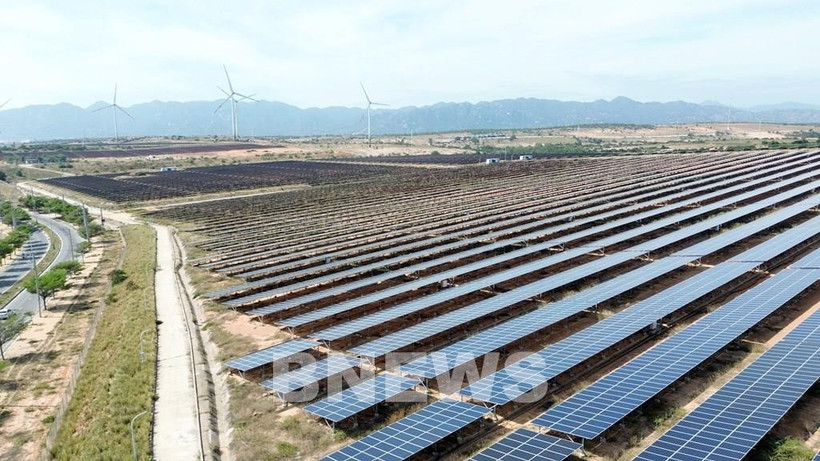
A solar power plant in Khanh Hoa province (Photo: VNA)

HCM City (VNA) – Investment in Vietnam’s climate-tech sector posted exceptional growth in 2024, with venture capital (VC) in this field accounting for 22.3% of total domestic VC activities, nearly double the global average of 12%, according to the Vietnam Climate Tech Startup Investment Ecosystem Report 2025 (CT-FE 2025).

The report has been jointly released by New Energy Nexus Vietnam, RMIT University and the Advancing Innovation, Growth & Leadership for Enterprises (AGILE) project.

According to the CT-FE 2025 report, from 2015 to 2024, a total of 78 climate-tech enterprises in Vietnam raised nearly 205 million USD with 217 deals. In 2024 alone, the raised amount reached almost 100 million USD.

However, the investment landscape remains heavily shaped by large-scale transactions. This is reflected in the Series A deal worth 70 million USD secured by the Investment Cooperation and Technology JSC (TECHCOOP), which accounted for 71% of total climate-tech capital in 2024. This indicates that the climate-tech ecosystem continues to rely on milestone transactions rather than broad-based market growth, and also reflects the early-stage nature of Vietnam’s emerging climate-innovation economy.

Another notable shift highlighted in the report is the way new energy policies are reshaping Vietnam’s investment landscape, driving a fivefold rise in capital for energy-transition projects.

The adoption of the 2024 Law on Electricity and Decree No. 135/2024/ND-CP on mechanisms and policies encouraging self-produced, self-consumed rooftop solar power has triggered a wave of new investment activities, lifting the value of energy-transition deals to 15.5 million USD in 2024, five times higher than in 2023. This marks one of the most significant investment surges driven by supportive policy frameworks.

The report also shows that the success rate of climate-tech enterprises moving beyond the post-seed stage has dropped to 11.11%, compared with 32.2% across the broader tech sector. Meanwhile, the number of impact investors participating in Vietnam’s climate-tech space increased from just one in 2020 to ten in 2024, accompanied by stricter requirements on impact measurement, gender equality and Health – Safety – Environment Standards (HSES).

Grant funding continues to play a key role as a primary early-stage capital source for climate-tech start-ups amid limited participation from domestic VC funds. Ho Chi Minh City remains the largest fundraising hub, followed by Hanoi and Da Nang.

According to Thao Tran, Country Director of New Energy Nexus Vietnam, the fact that a single large deal accounts for over 70% of total VC investment indicates that innovation is taking place, but the supporting ecosystem remains underdeveloped.

Organisations such as New Energy Nexus play a vital role in strengthening this ecosystem by providing capacity-building for founders before fundraising, enabling access to grants and long-term capital, and offering essential data and insights to help domestic investors make informed decisions.

Notably, the CT-FE 2025 report also introduces, for the first time, a four-tier ecosystem map that clearly defines the roles of climate-tech enterprises, support organisations, capital providers and local authorities—an important step toward clarifying “who does what” in Vietnam’s climate-innovation landscape./.

VNA

See more

Forest rangers in Son La province apply technological devices and software to forest management, monitoring, and protection. (Photo: nhandan.vn)

Digital technology application enhances forest management, protection

With a total forest area of over 14 million hectares, including more than 10 million hectares of natural forests, forests exist in all 34 provinces and cities across the country. Given the large area and limited workforce, applying digital solutions in forest management and protection has become a top priority for the forestry sector.

Sunda pangolins (Manis javanica), also known as the Javan pangolin, are listed in Group IB – critically endangered and strictly protected from all commercial exploitation (Photo: VNA)

Quang Ngai releases rare pangolin back into nature

Initial verification showed that the animal weighed 3.7kg and measured over 60cm. It was identified as a Sunda pangolin (Manis javanica), also known as the Javan pangolin, listed in Group IB – critically endangered and strictly protected from all commercial exploitation.

Residents of Tuyen Quang province take part in the One Billion Trees Programme. (Photo: VNA)

Tree-planting programme exceeds one-billion-tree goal

The total comprises 573.9 million scattered trees and 865.2 million trees grown in concentrated plantations, equivalent to 429,125 hectares of forest. Provinces posting the strongest results include Phu Tho with 177.9 million trees, Lao Cai with 108.8 million, and An Giang with 98.5 million.

Construction activity is one of the causes of air pollution in Hanoi. (Photo: VNA)

Hanoi takes urgent measures to curb air pollution

The city requires the enhanced application of advanced technologies and remote monitoring systems, including satellite remote sensing, drones, and AI-integrated traffic cameras, to monitor, detect, and strictly address the illegal burning of garbage, straw, and agricultural by-products.

The World Bank delegation holds working session with Can Tho city People's Committee and relevant units (Photo: VNA)

World Bank delegation surveys Can Tho urban resilience project

The project is jointly financed by the WB with up to 250 million USD and a 10-million-USD non-refundable grant from the Swiss State Secretariat for Economic Affairs (SECO), along with counterpart funding from the Vietnamese Government. Its goal is to build a climate-resilient and sustainable city that can drive socio-economic growth across the Mekong Delta, mitigate flood vulnerability in central Can Tho, and improve inter- and intra-regional transport connectivity.

The direction of Storm Koto as of 04:00 on November 27. (Photo: VNA)

Lam Dong province’s coastal localities brace for Storm Koto

Local authorities have activated round-the-clock duty operations, continuously updated storm warnings and flood information and intensified inspections of riverside and seaside areas, low-lying zones, and locations at high risk of landslides and deep flooding.

Border guard officers at Ky Ha Port Border Gate are assisting residents in securing their boats. (Photo: VNA)

VPA General Staff directs urgent response to Storm Koto

Military Regions 4, 5 and 7 were tasked with directing provincial military commands to advise local authorities, review response plans, and coordinate with relevant departments and sectors to identify disaster-prone areas, including locations at risk of flash floods, landslides, major dykes, embankments and reservoirs, and flood-prone zones, particularly those heavily affected by recent rains.

In 2024–2025, the project has implement seven pilot models in Can Tho city and the provinces of Vinh Long, Dong Thap, and An Giang. (Photo: VNA)

One-million-hectare high-quality, low-emission rice project changes mindset of producers

A project on sustainable development of one million hectares of high-quality, low-emission rice cultivation associated with green growth in the Mekong Delta by 2030 has so far helped shift the awareness and mindset of rice producers toward greater responsibility and toward adopting production trends aligned with global orientations for “green development.”