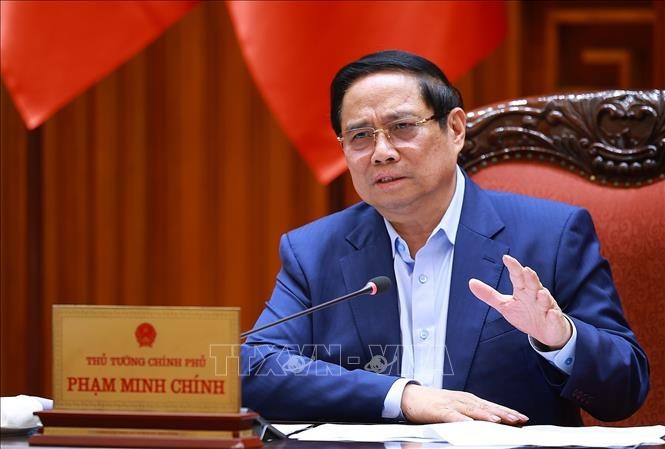
PM pushes comprehensive financing for Mekong Delta climate response

Land subsidence, landslides, flooding, drought, and saltwater intrusion have directly affected the livelihoods and daily lives of people in the Mekong Delta that accounts for 12.8% of the country’s area and nearly 18% of its population, and contributes 95% of the nation’s rice exports, 60% of its aquatic exports, and 65% of its fruit exports.
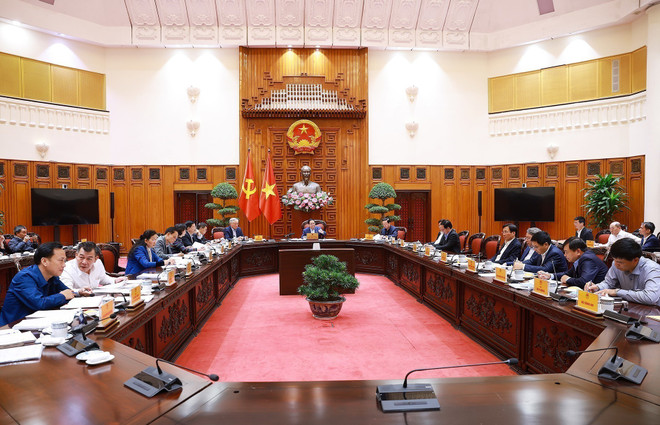
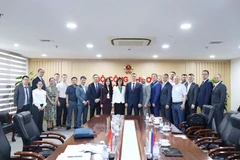
Prime Minister Pham Minh Chinh speaks at the meeting of the Government Party Committee’s Standing Board and permanent Cabinet members on December 5 (Photo: VNA)

Hanoi (VNA) - Prime Minister Pham Minh Chinh on December 5 called for mechanisms and policies to diversify funding sources, especially through public–private partnerships, to tackle land subsidence, landslides, flooding, drought, and saltwater intrusion in the Mekong Delta, noting that these efforts demand significant resources.

The mobilisation must be based on the principle of “harmonised interests and shared risks,” aiming for non-state resources to account for around 35%, PM Chinh affirmed while chairing a meeting of the Government Party Committee’s Standing Board and permanent Cabinet members to review the scheme on preventing subsidence, erosion, flooding, drought and saltwater intrusion in the Mekong Delta to 2035, with a vision to 2050. The meeting also looked into a report, to be submitted the Politburo, on progress in addressing outstanding issues related to Ho Chi Minh City’s flood-control efforts and other projects concerning urban environmental protection and air-pollution prevention.

The PM, who is a Politburo member, Secretary of the Government Party Committee, noted that, given the Mekong Delta’s strategic position and the real challenges unfolding there, the Party Central Committee, the Politburo, the National Assembly and the Government have given special attention to the prevention work.

Numerous resolutions, decisions and directives have been issued, along with major resource investments for the Delta’s development, he elaborated.

The above-said issues have directly affected the livelihoods and daily lives of people in the Mekong Delta that accounts for 12.8% of the country’s area and nearly 18% of its population, and contributes 95% of the nation’s rice exports, 60% of its aquatic exports, and 65% of its fruit exports.

pham-minh-chinh-2.jpg
Prime Minister Pham Minh Chinh speaks at the meeting of the Government Party Committee’s Standing Board and permanent Cabinet members on December 5 (Photo: VNA)

Emphasising the principle of flexible, effective and nature-based climate adaptation, the leader requested that all feedback from the Government Party Committee’s Standing Board and attending delegates be thoroughly considered, and the documents to be submitted to the Politburo be quickly finalised as required.

Highlighting the critical role of science and technology, especially new technologies, PM Chinh called for maximising effective solutions already in place; expanding non-structural measures alongside structural ones; and aligning population planning, production organisation and economic restructuring with the region’s conditions. He also stressed the need for transport solutions that adapt to the Delta’s riverine landscape, and for clear prioritisation to ensure resources are allocated effectively.

The Government leader requested strong engagement from ministries and agencies, particularly those directly involved such as the Ministry of Construction, Ministry of Finance, and Ministry of Science and Technology, as well as research institutions, experts and scientists at home and abroad, and local Party committees and authorities across the Mekong Delta, so as to soon finalise the scheme for submission to the Politburo.

The PM requested the completion of the report on progress in addressing several outstanding issues, including HCM City’s flood-control project. He directed relevant bodies to consider, if necessary, developing a separate scheme on environmental protection, quality management, pollution prevention and air-quality improvement in major urban centres, especially Hanoi and HCM City, for submission to the Politburo. He emphasised that any proposals must include feasible, practical and effective mechanisms, policies and solutions./.
VNA

See more

Delegates join group discussions at the ongoing 14th National Party Congress (Photo: VNA)

14th National Party Congress: Delegates eye reforms in new era

During the discussions, Prime Minister Pham Minh Chinh summed up key lessons drawn from the Government’s management during the previous term, stressing the need to turn Party resolutions into laws and renewing growth drivers for the next development phase.

PM Pham Minh Chinh visits the press centre serving the 14th National Party Congress (Photo: VNA)

PM urges media to spotlight key outcomes of 14th Party Congress

During a visit to the press centre amid a break in proceedings, PM Pham Minh Chinh met with reporters and inquired about their working conditions. He described the press as a hardworking and vital force, so that all possible support should be offered to them, including adequate infrastructure, reliable internet connectivity, and a conducive work environment to enable timely, comprehensive, accurate, diverse, and engaging coverage.

Andrey Klimov, member of the Presidium of the Supreme Council of the United Russia Party (UR), grants an interview to the Vietnam News Agency. (Photo: VNA)

14th National Party Congress: Russian political party expresses confidence in future of comprehensive cooperation

Andrey Klimov, member of the Presidium of the Supreme Council of the United Russia Party (UR), emphasised that the Communist Party of Vietnam (CPV) holds a vital role in every aspect of national life. Therefore, the 14th National Congress will not only set the main course for Vietnam’s development but also influence the country’s governance style and administrative approach.

☕ Afternoon briefing on January 20

☕ Afternoon briefing on January 20

The 14th National Congress of the Communist Party of Vietnam (CPV) solemnly opened at the National Convention Centre in Hanoi on January 20 morning.

A panoramic view of the opening session of the 14th National Congress of the Communist Party of Vietnam. (Photo: VNA)

Political parties, int'l organisations, friends, OV send congratulatory messages to 14th National Party Congress

These messages constitute a significant source of encouragement and support for Vietnam’s renewal process initiated and led by the CPV. They also vividly reflect the increasingly deep and substantive relations of friendship and cooperation between the CPV and political parties, organisations and friends around the world, as well as the growing attachment of overseas Vietnamese communities to their homeland.

Vietnam - An exemplary model of development for Cuba: Cuban journalist

Vietnam - An exemplary model of development for Cuba: Cuban journalist

Wennys Díaz Ballaga, a special correspondent of Granma - the official newspaper of the Communist Party of Cuba - has highly praised the professional organisation of the 14th National Congress of the Communist Party of Vietnam, affirming that Vietnam’s socio-economic development model serves as an important reference for Cuba and other socialist countries.

Russia’s financial and economic news portal at https://1prime.ru/news/ reported that the congress will focus on discussions and approve Vietnam's socio-economic development strategy through 2030. (Photo: screenshot)

14th Party National Congress draws international attention

The international media stressed that the 14th National Congress of the CPV is not only a major political event for the country but also marks the beginning of a new development period, shaping Vietnam’s vision and motivation for the decades ahead.

Ivo Sieber, former Swiss Ambassador to Vietnam, speaks at an event in Zurich. (Photo: VNA)

14th National Party Congress comes at pivotal moment for Vietnam: Swiss expert

On Vietnam–Switzerland relations, which were established in 1971 and upgraded to a comprehensive partnership in January 2025, Ivo Sieber, a member of the Swiss–Vietnamese Economic Forum (SVEF) and former Swiss Ambassador to the country, expressed confidence that, as the two countries mark the 55th anniversary of diplomatic ties this year, existing links and cooperation will be further strengthened.

Nguyen Hai Nam (far right) attends the second Congress of the Union of Vietnamese Associations in Europe. (Photo: VNA)

14th National Party Congress: New momentum from reform, integration, OV resources

The 14th National Party Congress is expected to continue to expand and further specify policies aimed at attracting overseas Vietnamese, particularly the Vietnamese community in France—one of the largest and longest-established communities in Europe, numbering around 350,000 people and exceeding 600,000 when including French citizens of Vietnamese origin.

Tourists in Hue city. (Photo: VNA)

Hue advances heritage city vision, global cultural tourism profile

By 2030, Hue aims to become a distinctive heritage city of Vietnam, while emerging as one of Southeast Asia’s leading and unique centres for culture, tourism and specialised healthcare. It also aspires to be among the country’s major hubs for science and technology, as well as for high-quality, multi-disciplinary education and training.