Hanoi pilots early air quality forecasting system

The system can forecast air quality trends over time and across locations, helping authorities guide and implement pollution control measures.

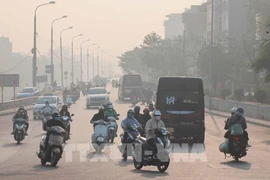
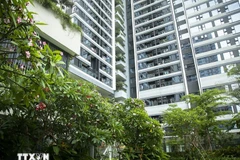
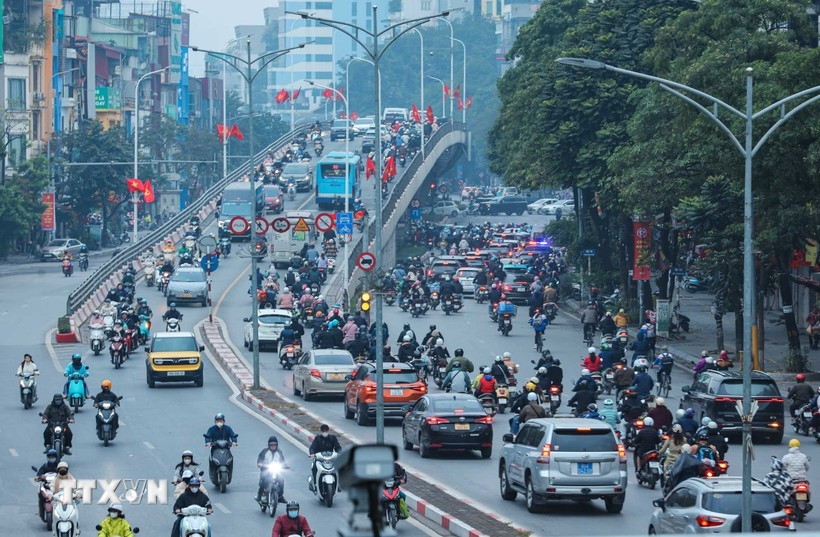
HanoiAir can forecast air quality trends over time and across locations, helping authorities guide and implement pollution control measures. - Illustrative image (Photo: VNA)

Hanoi (VNA) – Air quality in some areas of Hanoi on January 8 was at unhealthy levels, prompting warnings for residents, especially the elderly, children, and those with underlying conditions such as cardiovascular or respiratory diseases, to limit outdoor activities, according to readings from Hanoi’s early air quality forecasting system (HanoiAir).

HanoiAir is an early air quality forecasting system developed experimentally by the municipal Department of Agriculture and Environment in collaboration with the National Centre for Hydro-Meteorological Forecasting and the University of Engineering and Technology under the Vietnam National University – Hanoi (VNU-Hanoi).

The system can forecast air quality trends over time and across locations, helping authorities guide and implement pollution control measures.

In early January, Hanoi’s air quality has been deteriorating. Forecasts indicate that the city’s average air quality index (AQI) from January 9–13 will rise compared to last week, with a peak of 114 on January 10 and 139 on January 11, reaching unhealthy-for-sensitive-groups levels. The southern, southwestern, and northwestern areas of the capital city are expected to be the most affected.

These figures highlight the real risk of worsening air pollution without early warning systems and timely response mechanisms, especially as Hanoi continues to expand infrastructure and upgrade urban areas.

Apart from providing information, Hanoi’s early air quality forecasting system serves as a tool to trigger concrete management actions. Based on the forecasts, the municipal Department of Agriculture and Environment has issued guidance urging relevant agencies, localities, and units to implement urgent measures to curb pollution sources.

Vu Xuan Tung, Deputy Director of the municipal Department of Agriculture and Environment, said the early air quality forecasting system is not merely for “reference” but serves as a crucial tool for practical management and decision-making.

According to the department, winter–spring air pollution episodes develop rapidly and are strongly influenced by adverse weather conditions. Without early forecasts, authorities risk being reactive, reducing the effectiveness of pollution control measures.

Tung said HanoiAir is an important step for the capital city in shifting from reactive responses to scenario-based management. He added that based on the forecasts, the municipal Department of Agriculture and Environment will coordinate with relevant agencies and local authorities to proactively implement urgent tasks under Directive No. 19 off the municipal People’s Committee, ensuring continuous and sustained actions rather than short-term measures.

According to the Hanoi Department of Agriculture and Environment, AQI readings have at times reached poor and very poor levels. Key pollution sources include transport, industrial and construction activities, along with the burning of straw and household waste.

Hanoi has affirmed its commitment not to trade environmental protection for economic growth. The city is moving to establish low-emission zones (LEZs) as a core measure to control emissions and promote green, sustainable urban development, in line with Resolution No. 57/2025/NQ-HDND of the municipal People's Council and the 2024 Capital Law./.

source
See more

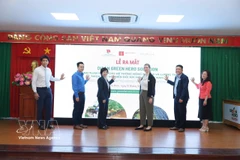
Delegates launch the Green Hero Solution project in Ho Chi Minh City on March 12, 2026. (Photo: VNA)

Vietnam, Denmark cooperate to pilot circular food model

Under the “Green Hero Solution” project, organic food waste will be collected from partner organisations and businesses and processed into compost. The compost will then be used at two Food Bank community gardens, where fresh vegetables will be grown to support disadvantaged households.

Deputy Prime Minister Tran Hong Ha meets with UNDP Resident Representative Ramla Khalidi and WHO Representative in Vietnam Angela Pratt in Hanoi on March 11. (Photo: VNA)

Vietnam steps up partnership with UNDP, WHO in tackling air pollution

Highlighting Vietnam’s close partnership with the two UN agencies, Deputy PM Ha highly appreciated their important contributions to the country’s development over the years, particularly in policy consultation, institutional reform and promoting sustainable development initiatives.

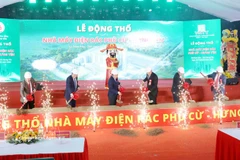
The groundbreaking ceremony for the Phu Cu waste-to-energy plant project in Doan Dao commune, Hung Yen province, on March 6 (Photo: VNA)

Hung Yen breaks ground on 4 trillion VND waste-to-energy plant

With a population of about 3.5 million, Hung Yen generates around 1,850 – 2,000 tonnes of household waste each day, along with about 1,000 tonnes of waste from production and business establishments, posing a major challenge for the locality.

A cycling convoy from the former Binh Duong province (now part of Ho Chi Minh City) parades through the streets to raise awareness in support of Earth Hour 2025. (Photo: VNA)

Earth Hour 2026 launch event rescheduled

The launch ceremony of a nationwide campaign that calls on all citizens to use energy economically and efficiently in response to Earth Hour 2026 will be held on the morning of Saturday, March 21, instead of March 7 as initially planned.

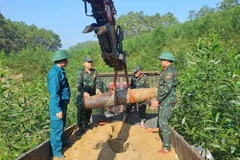
Nghe An neutralises 350kg unexploded wartime bomb (Photo: VNA)

Nghe An authorities safely dispose of 350kg wartime bomb

After inspection, military engineers identified the object as an MK-82 high-explosive bomb, measuring 20cm in diameter and 155cm in length, weighing about 350kg and still fitted with an intact detonator. The bomb was believed to be left over from the war.

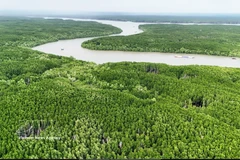
Vietnam expands coastal forests to bolster green growth

Vietnam expands coastal forests to bolster green growth

Restoring and developing forests as part of the 2026–2030 coastal forest protection and development project is still a big job. The plan aims to plant 5,088 hectares — including 3,236 hectares of mangroves and 1,852 hectares on soil and sandy land — and to enrich, restore, and improve 1,514 hectares of existing forests, with 683 hectares of mangroves and 831 hectares on soil and sand.

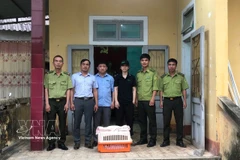
The People’s Committee of Dakrong commune in the central province of Quang Tri, in coordination with the Dakrong Forest Protection Station hand over a small-clawed otter to the Cuc Phuong National Park and the Wildlife Rescue Centre in Vietnam (Photo: VNA)

Quang Tri hands over rare otter to Cuc Phuong National Park

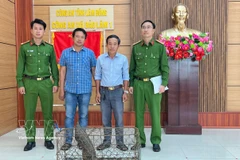
The People’s Committee of Dakrong commune in the central province of Quang Tri, in coordination with the Dakrong Forest Protection Station, on February 26 handed over a small-clawed otter to the Cuc Phuong National Park and the Wildlife Rescue Centre in Vietnam for further care and rehabilitation.

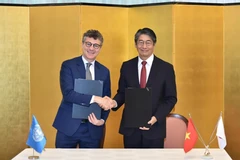
UNESCO Representative to Vietnam Jonathan Wallace Baker and Japanese Ambassador Ito Naoki at the signing ceremony (Photo: baoquocte.vn)

UNESCO, Japan sign deal to bolster Vietnam’s disaster early warning

Climate change adaptation remains a top priority in Vietnam’s development strategy and national security outlook through 2050. Vietnam will maintain close cooperation with Japan, UNESCO and other partners to guarantee the project’s effectiveness and advance common goals.