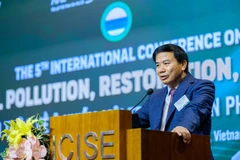
Da Nang (VNS/VNA) - Vietnam has joined international conventions, treaties and global partnerships to realise the goals of the Kunming Biodiversity Framework, aiming to halt biodiversity loss and restore ecosystems, according to Deputy Minister of Agriculture and Environment Nguyen Quoc Tri.
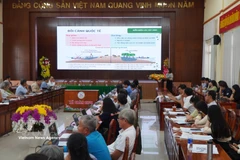
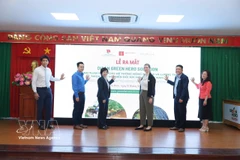
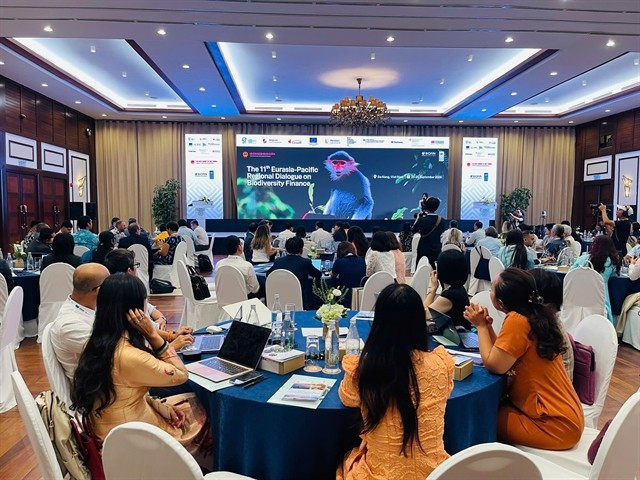
Trị made the statement at the 11th Eurasia-Pacific Regional Dialogue on Biodiversity Finance, which started in Da Nang on September 23.
The three-day dialogue attracted more than 120 biodiversity finance experts and Government representatives from Europe, Asia and the Pacific. It is one of the region’s largest-ever exchanges on biodiversity finance, organised by the United Nations Development Programme (UNDP)’s Biodiversity Finance Initiative (BIOFIN) and the Government of Vietnam.
The Eurasia-Pacific Regional Dialogue represents the first time more than 40 countries in the region have come together to explore investment-ready solutions to protect biodiversity since the UN Biodiversity Conference of the Parties (COP16) in Cali, Colombia last year.
Achievements
Speaking at the dialogue, the deputy minister confirmed that Vietnam has been a member of several international biodiversity conventions since the 1980s, and is also participating in the BIOFIN Initiative.
“Vietnam continues to consider sustainable development and nature conservation as a top priority in its national development strategy,” he said.
This viewpoint is upheld in the Government’s resolution on sustainable development, which states that sustainable development is a requirement for the country’s growth strategy and a responsibility shared by all levels, the business community and society as a whole.
The resolution also clearly states the need to develop all three pillars, namely economy, society and environment, as well as promote green growth models, a circular economy and the sustainable management of natural resources.
This spirit is reflected in Vietnam’s priority strategies, such as the National Green Growth Strategy for 2021–2030, the National Environmental Protection Strategy until 2030 and especially the National Biodiversity Strategy until 2030.
“The strategy recognises biodiversity as important natural capital for green economic development,” Tri said.
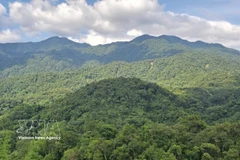
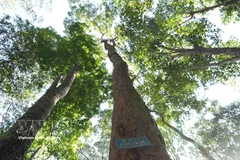
He noted that in recent years, Vietnam has achieved great results in biodiversity conservation. Forest cover has been steadily maintained at 42%, many critical ecosystems have been restored and the area of protected zones has expanded, including nine Ramsar sites, 11 UNESCO-recognised biosphere reserves, 15 ASEAN Heritage Parks and several other areas of international significance.
A payment policy for forest environmental services has created a sustainable source of revenue, currently contributing over 3 trillion VND (113.6 million USD) annually to conservation efforts and community livelihoods.
Vietnam is also gradually developing and implementing new financial tools such as carbon credits, biodiversity credits and natural disaster risk insurance as well as establishing conservation funds.
“Alongside these achievements, we also frankly acknowledge that the financial gap for conservation remains very large compared to actual needs. Pressures from socio-economic development, rapid urbanisation, increasingly severe climate change and natural disasters pose significant challenges in efficiently using resources,” said Tri.
In the next few years, Vietnam plans to continue improving institutions, policies and legal frameworks to build resources for nature conservation efforts.
This includes promoting payments for wetlands and marine ecosystem services, integrating nature conservation goals into socio-economic development strategies, expanding public-private partnerships along with international and regional cooperation and enhancing the participation of communities and businesses in biodiversity conservation.
Decisive moment
UNDP Resident Representative in Vietnam Ramla Khalidi said: “Vietnam is among the world’s most biodiversity-rich countries. Protecting this natural wealth is essential, not only for ecosystems, but also for food security, jobs and resilience.”
According to Khalidi, the strength of BIOFIN lies in its systems approach: aligning policies, incentives and markets so that economies grow by protecting nature, not by depleting it.
“We meet at a decisive moment. The Kunming–Montreal Global Biodiversity Framework sets bold global targets. Yet the world still faces a biodiversity finance gap of more than 700 billion USD every year,” she said.
Change is possible, and BIOFIN is charting that path. BIOFIN has already mobilised over 1.6 billion USD for nature worldwide, and momentum is growing, she added.
The shift is real in Vietnam. BIOFIN is helping transform marine conservation from an exclusively State-led model to inclusive co-management with communities, cooperatives and the private sector.
In Hon Yen, part of community tourism revenue now goes directly to coral reef protection. In Binh Thuan, local fishing groups have gained a formal role in governing their resources. New pilot projects are opening the way for non-State actors to co-manage marine protected areas.
“These efforts prove that conservation can be financed and managed through shared responsibility, with lasting benefits for ecosystems and communities alike,” said Khalidi.
Biodiversity finance is not only about mobilising money, but is also about systems change, according to the UNDP representative. This involves aligning policies, incentives and markets so that economies grow by protecting nature, not depleting it.
“Through BIOFIN and beyond, we can turn commitments into action and finance into real results for people and the planet,” she said./.
VNA