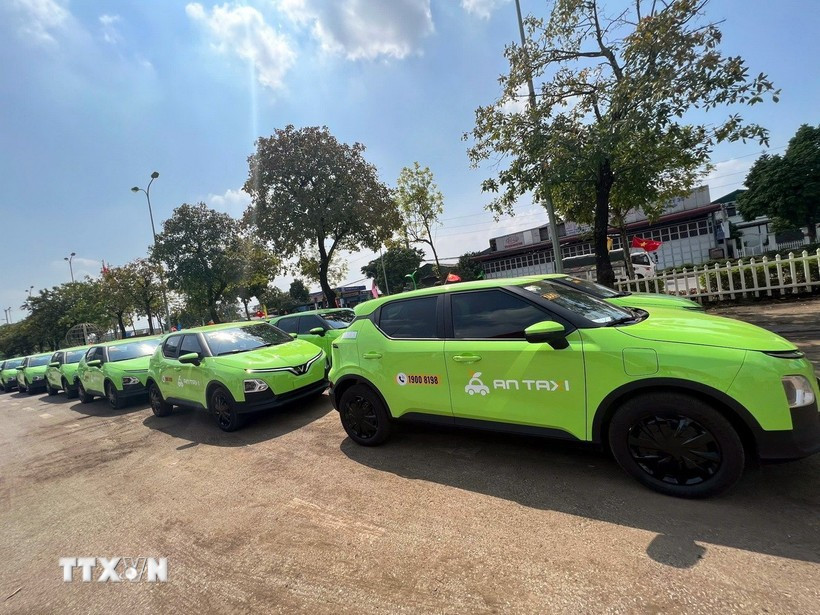
Hanoi (VNA) – Hanoi aims to convert 100% of its petrol- and diesel-powered taxis to electric and green-energy vehicles by 2030 under a plan issued by the municipal People’s Committee on February 27.
The roadmap outlines specific targets for 2026–2030. The share of taxis using electric and green energy is expected to reach 63–64% in 2026, 68–70% in 2027, 74–77% in 2028, 88–96% in 2029, and 100% by 2030.
Between 2026 and 2030, the city will finalise mechanisms and policies to support taxi operators in switching from fossil fuels to clean energy. Communications campaigns will be intensified to build public consensus, while the construction of charging stations at taxi parking areas will be accelerated.
After 2030, Hanoi will focus on maintaining stable operations of electric and green energy-fueled taxis, prioritising access to charging infrastructure, pick-up and drop-off points, and traffic arrangements suited to clean-energy vehicles.
Relevant departments will review and adjust regulations on charging station planning, power grid connectivity, parking and stopping points, and the application of management technologies in line with technological advances and practical demand. The goal is to optimise operational efficiency while ensuring safe, convenient services consistent with the capital’s sustainable urban transport strategy.
To ensure effective implementation, the municipal People’s Committee has outlined key tasks, including finalising policies to support the transition in tandem with the rollout of low-emission zones.
The city will submit to the municipal People’s Council a resolution on incentives for converting road vehicles to clean energy and measures to restrict high-emission vehicles, which will include mechanisms specifically encouraging the shift to electric and green taxis.
Proposed support policies feature partial interest rate subsidies on commercial bank loans for taxi firms and clean-energy infrastructure developers investing in electric vehicle conversion. Eligible entities will also be able to access preferential loans from the city’s Development Investment Fund and other sources in accordance with regulations.
In addition, Hanoi plans incentives on vehicle registration fees, including reductions or exemptions for first-time registration and number plate issuance for electric and green taxis, with higher support for vehicles converted from fossil fuels. Parking fees at public car parks may be reduced for electric taxis, while investors in charging infrastructure will be eligible for preferential loans and site clearance assistance.
The city will allocate annual budget resources for green transport incentives and simplify procedures to help operators and infrastructure developers access support capital.
Support policies will be linked to the implementation of low-emission zones, gradually restricting and moving towards banning substandard fossil-fuel vehicles in these areas. Hanoi will also study the deployment of a smart traffic monitoring system connected to vehicle inspection and emissions databases.
The capital has proposed competent authorities extend the current 100% registration fee exemption for electric and green automobiles, particularly for taxi operators.
A synchronised charging network will be developed in line with urban and transport planning, prioritising central areas, ring roads, airports, railway stations, bus terminals and major transport hubs. Existing parking lots and petrol stations will be encouraged to integrate charging facilities, while land will be reserved for charging stations and taxi stops in new projects.
Communications campaigns and dialogue forums will be stepped up to address difficulties faced by taxi operators and ensure a smooth transition to a fully green taxi fleet by 2030./.