China, Japan to sign MoU with Thailand’s Eastern Economic Corridor

The Thai Eastern Economic Corridor (EEC) Office is scheduled to sign a Memorandum of Understanding (MoU) with the China Development Bank (CDB) and the Japan Bank for International Cooperation (JBIC) for financial support of investment projects next week, according to Thailand’s media.
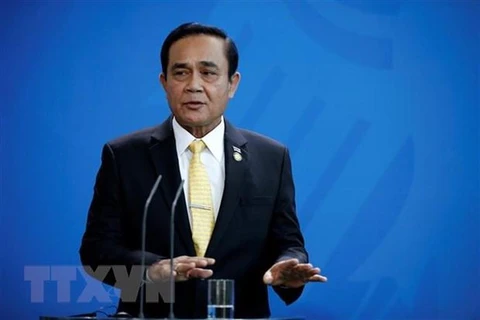
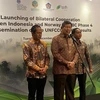
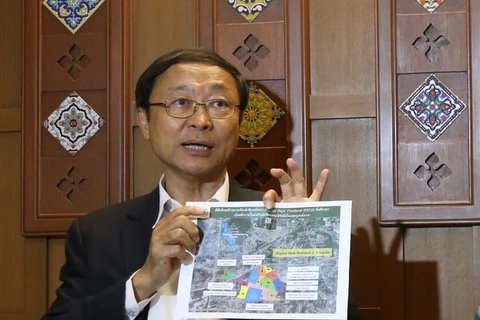
China, Japan to sign MoU with Thailand’s Eastern Economic Corridor ảnh 1Thailand's Deputy Prime Minister Prajin Juntong and other officials attend the Smart City Thailand Takeoff event (Photo: www.bangkokpost.com)
Bangkok (VNA) – The Thai EasternEconomic Corridor (EEC) Office is scheduled to sign a Memorandum ofUnderstanding (MoU) with the China Development Bank (CDB) and the Japan Bankfor International Cooperation (JBIC) for financial support of investmentprojects next week, according to Thailand’s media.

Nathporn Chatusripitak, spokesman of DeputyPrime Minister Somkid Jatusripitak, said the cabinet on May 14 approved thedraft MoU that is due to be signed by the three parties on May 21 inBeijing. 

The CDB is a state-owned bank focusing onproviding loans and investment for infrastructure projects and otherdevelopment ones in China.

It also supports overseas development projectsin response to the government policy for sustainable growth and Chinesecompanies’ active overseas expansion.

The JBIC is a financial institution aiming tosupport the development of the Japanese and international economies.-VNA
VNA
See more

Malaysia considers establishing strategic petroleum reserve

Malaysia considers establishing strategic petroleum reserve

Malaysia, which was previously a net exporter, has now become a net importer due to declining domestic production and rising consumption, with demand estimated at around 800,000 barrels per day compared to production of about 400,000 barrels per day.

Indonesia to halt diesel imports from July

Indonesia to halt diesel imports from July

The move is part of the Indonesian Government’s efforts to strengthen national energy independence by utilising palm oil as an alternative fuel, said Agriculture Minister Andi Amran Sulaiman.

Malaysia’s growing microplastics crisis is largely self-inflicted, driven by domestic waste, weak recycling practices and everyday plastic use, said experts. (Photo: New Straits Times)

Malaysia seeks solutions to microplastic crisis

Microplastics originating from domestic waste and wastewater are increasingly entering the food chain, posing serious threats to seafood safety and the livelihoods of coastal communities.

The new mass emergency alert system SG Alert, which will be used during emergencies such as major fires, chemical or terror incidents, seen on an Apple and Android device on Apr 17, 2026. (Photo: CNA)

Singapore launches new national emergency alert system

SG Alert in Singapore uses cell broadcast technology, enabling alerts to be delivered within seconds without requiring mobile data or collecting personal information. Unlike conventional SMS, which may be delayed during network congestion or depend on internet connectivity, the system ensures fast and reliable message delivery. Alerts can be sent islandwide or targeted to specific affected areas.

Malaysia establishes ‘war room’ to ensure water security

Malaysia establishes ‘war room’ to ensure water security

The establishment of the war room reflects the Malaysian government’s commitment to shift from a reactive approach to a more proactive, data-driven one in managing national water challenges, particularly amid increasingly unpredictable weather conditions caused by global climate change

Indonesia diversifies supply sources to ensure energy security

Indonesia diversifies supply sources to ensure energy security

Indonesia is facing significant supply pressure as crude oil consumption reaches approximately 1.6 million barrels per day, much lower than the domestic production at only around 600,000 barrels per day, forcing the country to rely heavily on imports.