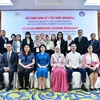
The communications campaign “Joining hands to reduce plastic waste” calling for reduction of single-use plastic bags (Screen shot)
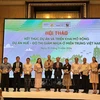
 Hanoi (VNA) – Plastic waste has long been an alarming problem, Nguyen Dinh Tho, Director of the Institute of Strategy and Policy on Natural Resources and Environment, stressed at a press conference on October 7 to launch an information portal and communications campaign “Joining hands to reduce plastic waste”.
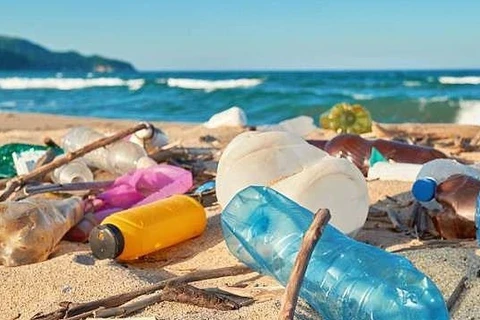
Over the past few decades, plastic pollution has always been one of the most serious global threats. One of the main contributors to the problem is nylon bags and single-use plastic products. This problem is extremely serious in developing countries, including Vietnam - where the plastic waste classification and treatment system is limited while plastic bag is a free item that is widely abused.
From this alarming situation, Tho said that his institute, in collaboration with domestic and international organisations, has built a portal about the communications campaign at https://chungtaygiamnhua.com, calling for the community to join hands to reduce plastic waste in Vietnam.
The campaign is part of the activities within the pilot project “Initiative to establish a supermarket alliance to reduce the consumption of single-use plastic bags in Vietnam” (Plastic Alliance).
It is an initiative of the project “Rethinking Plastics – Circular Economy Solutions to Marine Litter” funded by the European Union and the German Ministry for Economic Cooperation and Development, supporting a transition towards a circular economy for plastics to reduce plastic waste discharged into the sea.
Fanny Quertamp, Senior Specialist of the "Rethinking Plastics" project, affirmed that, within the framework of the project, the EU and the German ministry will stand by the side of Vietnam in efforts to reduce ocean plastic waste by encouraging supermarkets and consumers to change their habits in order to reduce the use of single-use plastic bags.
The campaign has been implemented from October with various forms of communications expected to bring about the most effective influences to promote changes in behaviours of the whole society.
Currently, the institute is receiving support from stakeholders for the campaign such as Vietnam Packaging Recycling Organisation (PRO Vietnam), World Wildlife Fund Vietnam (WWF Vietnam), Sustainable Trade Initiative (IDH), Embassy of the Netherlands in Vietnam, and Touch Vietnam.
Nguyen Thi Dieu Thuy, Director of WWF Vietnam's Plastic Waste Reduction Programme, emphasised that tackling plastic pollution requires an integrated, responsible approach and coordinated action between countries, international organisations, managers, consumers and businesses.
Therefore, within the framework of cooperation in implementing this campaign, WWF Vietnam sets out the goal of continuing to raise public awareness about reducing plastic waste while promoting good business practices and sustainable consumption of plastic products in daily life.
Meanwhile, Jahanzeb Khan, Vice President of PRO Vietnam and CEO of Suntory Pepsico, stressed the need to promote the reduction, reuse and recycling of plastic waste in Vietnam. In that context, PRO Vietnam is an organisation that supports the process of collecting and recycling product packaging in a more accessible and sustainable way.
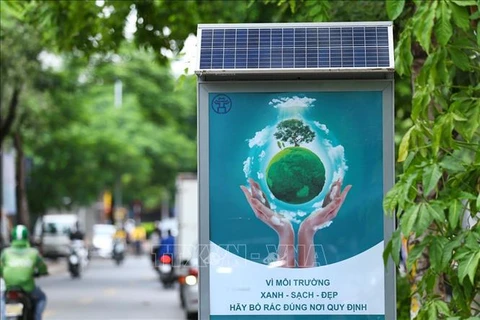
Joining together in this meaningful campaign, PRO Vietnam hopes to contribute to raising public awareness for a green, clean and beautiful Vietnam, emphasised Jahanzeb Khan.
Vietnam is said to be the world's fourth-largest marine plastic polluter after China, Indonesia and the Philippines. Each year, the country reportedly dumps an estimate of 300,000 – 700,000 tonnes of plastic waste into the ocean per year, accounting for 6 percent of the world's marine plastics.
The country is striving to use 100 percent of environmentally-friendly plastic bags and packaging at shopping malls and supermarkets by 2025, according to a project on strengthening management of plastic waste in Vietnam approved in July.
Other goals include to collect, reuse, recycle and treat 85 percent of plastic waste; to reduce the volume of plastic waste dumped to ocean by half; and to have 100 percent of tourism complexes, hotels and other lodging facilities not use non-biodegradable plastic bags and single-use plastic products by 2025.
Additionally, the project will gradually cut the production and consumption of non-biodegradable plastic bags and single-use plastic products in daily life; while raising awareness among organisations, enterprises and the community about the harmful effects of single-use plastic products to the environment, ecosystem and human health, and encouraging consumers to shift away from single-use and non-biodegradable plastics to eco-friendly alternatives./.