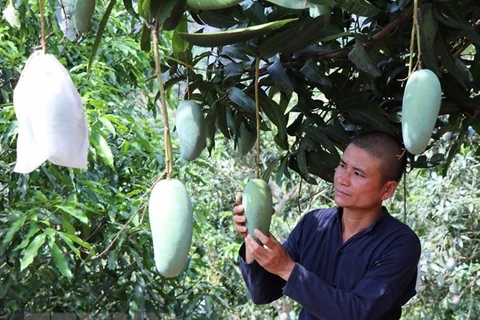
A farmer harvests clean vegetables in a garden run by Vuong Huy High-Tech Vegetables and Fruits Company in Xa Bang Commune in Ba Ria-Vung Tau province's Chau Duc district (Photo: VNA)
 HCM City (VNA) - Vietnamese companies need to invest in advanced technologies to meet the rising demand for high-quality goods in the domestic market as well as to expand exports, Nguyen Thien Nhan, Secretary of the Party's Committee of Ho Chi Minh City, has said.
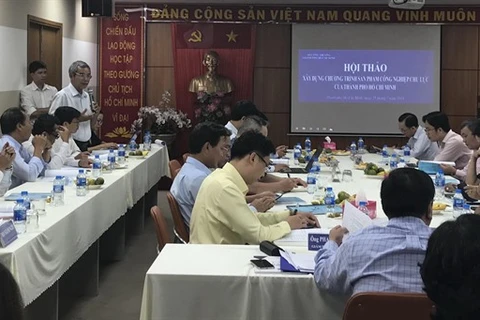
He made the remark at a conference reviewing the 10-year-old “Vietnamese people give priority to using Vietnamese goods” campaign on April 20.
He said the campaign offers favourable conditions to domestic firms to increase their market share and expand exports in the context of global integration that poses fierce competition.
”The campaign encourages consumers to use locally made goods. It is also a driving force for domestic firms to improve the quality and design of products to gain trust and popularity,” he said.
The use of Vietnamese-made goods is not just about economics but also about national pride, he added.
City authorities need to take drastic measures to combat poor quality and fakes to protect high-quality Vietnamese products, he said.
According to the campaign steering committee, poor quality and counterfeit goods are illegally distributed in the market, destroying brand reputations and affecting businesses and the economy.
Oversight of the market and prices needs to be strengthened to fight low quality and counterfeits, it said.
He made the remark at a conference reviewing the 10-year-old “Vietnamese people give priority to using Vietnamese goods” campaign on April 20.
He said the campaign offers favourable conditions to domestic firms to increase their market share and expand exports in the context of global integration that poses fierce competition.
”The campaign encourages consumers to use locally made goods. It is also a driving force for domestic firms to improve the quality and design of products to gain trust and popularity,” he said.
The use of Vietnamese-made goods is not just about economics but also about national pride, he added.
City authorities need to take drastic measures to combat poor quality and fakes to protect high-quality Vietnamese products, he said.
According to the campaign steering committee, poor quality and counterfeit goods are illegally distributed in the market, destroying brand reputations and affecting businesses and the economy.
Oversight of the market and prices needs to be strengthened to fight low quality and counterfeits, it said.
Tran Tan Loi, deputy head of the steering committee, said the campaign has created a great change in the mindsets and habits of State agencies, enterprises and households, which have begun to give priority to using local products.
The campaign ties in with the city’s market stabilisation programme for four groups of products - food and foodstuffs, dairy, essential drugs, and school supplies, Loi said.
For the programme, only made-in-Vietnam goods are chosen, he said.
“The campaign has helped increase local firms’ awareness of the importance of exploring local markets and improving competitiveness.”
In recent years, many Vietnamese-made products have received the Vietnamese High-Quality Goods certificate and local firms have managed to increase both their share in the local market and expand exports, he added.-VNA
The campaign ties in with the city’s market stabilisation programme for four groups of products - food and foodstuffs, dairy, essential drugs, and school supplies, Loi said.
For the programme, only made-in-Vietnam goods are chosen, he said.
“The campaign has helped increase local firms’ awareness of the importance of exploring local markets and improving competitiveness.”
In recent years, many Vietnamese-made products have received the Vietnamese High-Quality Goods certificate and local firms have managed to increase both their share in the local market and expand exports, he added.-VNA
VNA