Conference discusses ways to control non-infectious diseases

The Ministry of Health and the World Health Organisation on September 12 held a conference to discuss the relation between non-communicable diseases (NCD) and sustainable development of Vietnam.
Conference discusses ways to control non-infectious diseases ảnh 1At the conference (Source: qdnd.com.vn)

Hanoi (VNA) – The Ministry of Health and the World Health Organisation on September 12 held a conference to discuss the relation between non-communicable diseases (NCD) and sustainable development of Vietnam, which drew 150 Vietnamese and foreign delegates.

According to Deputy Minister of Health Nguyen Thanh Long, Vietnam is facing a growing burden of fatalities from NCDs, primarily cardiovascular diseases, cancers, diabetes and chronic respiratory diseases, which accounted for 73 percent of the total deaths.

Meanwhile, NCDs are also the reason behind 40 percent of deaths among under-70-year-old people, he added, attributing the fact to the unhealthy lifestyle of the majority of Vietnamese people.

The latest survey on NCD risk factors by the Health Ministry’s Preventive Medicine Department on nearly 3,800 people aged between 18 and 69 years in Vietnam in 2015 revealed that 43.8 percent of the country’s adult population consume alcohol.

More than 77 percent of adult males and 11 percent of women said that they had consumed at least six units of alcohol in the previous 30 days. More than 44 percent of men and 1.2 percent of women said that they had engaged in heavy episodic drinking.

The survey found that the general smoking rate among Vietnamese aged 15 years and above was 22.5 percent. The percentage of males who currently smoke tobacco was very high at 45.3 percent, while female smoking was at 1.1 percent.

Overweight and obesity rate was 15.6 percent in Vietnam. Vietnamese on average consumed 9.4 grams of salt daily, nearly double the WHO recommendation level of below 5 grams of salt daily, the survey said.

It added that nearly one third, or 28.1 percent, of Vietnamese people did not participate in physical exercise. As a result, nearly 19 percent of Vietnamese people had high blood pressure problems. The rate was higher in males at 23.1 percent and 14.9 percent in females.

Long pointed to inadequate investment in the control of NCD in Vietnam, proposing that the country should strengthen cooperation among ministries and sectors, while increasing preventive services and forming health promotion fund to provide sustainable resources for NCD control and prevention.

Speaking at the event, UN Resident Coordinator in Vietnam Pratiba Mehta said that while Vietnam has gained great achievements in fulfilling Millennium Development Goals, especially in lengthening people’s longevity,

the country is facing challenges in NCD, which requires the country to make inter-sectoral efforts as well as measures to control and supervise the diseases.-VNA


VNA

See more

Male plastic surgery: Why masculine aesthetics require a different approach

Male plastic surgery: Why masculine aesthetics require a different approach

Plastic surgery has long been associated with procedures for women, but men also seek treatment for abdominal fat, enlarged breasts and age-related changes around the eyes and face. The American Society of Plastic Surgeons (ASPS) includes liposuction, gynecomastia surgery and eyelid surgery among procedures performed on male patients.

A speaker delivers presentations at the conference (Photo published by VNA)

Vietnam, Denmark expand cooperation in high-tech healthcare

Ambassador Nguyen Le Thanh called on Vietnamese and Danish partners to identify priority areas and promote research and training programmes, knowledge transfer and technology application in line with Politburo's Resolution No. 57-NQ/TW on breakthroughs in science – technology development, innovation and national digital transformation.

Ho Chi Minh City has favourable conditions for developing the ecosystem, including a large population, diverse healthcare needs and an extensive public and private medical network. (Illustrative photo: VNA)

Ho Chi Minh City develops multi-tier elderly care network amid population ageing

Dr. Huynh Minh Chin, Deputy Director of the department, said rising elderly care needs are putting pressure on traditional family-based care, as older people increasingly face multiple chronic illnesses, mobility problems, malnutrition, dementia and depression, requiring continuous support and closer coordination among hospitals, grassroots healthcare facilities, families and social support institutions.

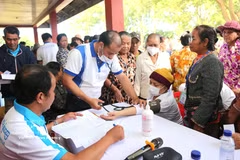
Local residents in Mondulkiri province, Cambodia, receive free medical check-ups and health consultation. (Photo: VNA)

Free medical examinations provided to remote communities in Cambodia

Vietnamese Ambassador Nguyen Minh Vu said the programme has been jointly organised by the embassy and the hospital annually in various Cambodian localities to provide healthcare support to disadvantaged households and contribute to the Cambodian Government’s efforts to improve public health. The initiative also reflects close cooperation in healthcare and the strong bonds between the people of Vietnam and Cambodia.

With the assistance of robotic-assisted laparoscopic surgery, doctors successfully perform a complex operation (Photo: VNA)

Vietnam advances towards high-quality, specialised healthcare

Recent developments in Hanoi and other localities highlight efforts to develop specialised treatment, standardise professional practices and apply artificial intelligence (AI) and advanced medical techniques, towards a more modern healthcare system.

Collecting a sample from a pediatric patient for influenza testing (Photo: VNA)

Ho Chi Minh City acute respiratory infections surge over 64%

According to the Ho Chi Minh City Centre for Disease Control (HCDC), influenza viruses are are among the fastest-rising pathogens, with 151 positive samples in a single week. Influenza A is the dominant strain, with A/H1N1pdm09 in 116 samples, or nearly 77%.