Consumers change shopping habits amid COVID-19 pandemic

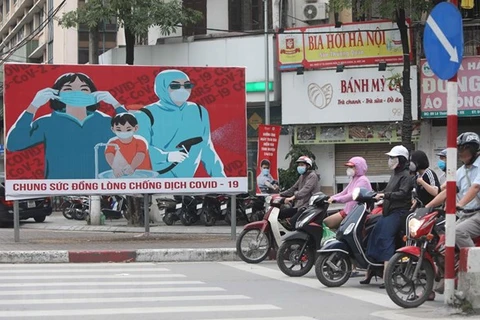
Consumer habits have changed greatly during the COVID-19 pandemic, opening up opportunities for businesses that can capitalise on the changes, a recent survey has found.
Consumers change shopping habits amid COVID-19 pandemic ảnh 1Customers at a supermarket (Photo: VNA)

HCM City (VNS/VNA) -
Consumer habits have changedgreatly during the COVID-19 pandemic, opening up opportunities for businessesthat can capitalise on the changes, a recent survey has found.

The survey on the impact of COVID-19 on consumer and businesssentiment in Vietnam was conducted by the Mobile Marketing Association,SurveySensum and Adtima. It shows that the pandemic has changed Vietnameselifestyles, shopping methods, and social interaction.

Consumers have shifted to health and hygiene-focusedlifestyles, with these categories seeing the biggest jump in purchases, whilenonessential and less healthy products experienced a decline in purchases.

Online shopping has risen significantly, with a number ofshoppers using apps to order from nearby stores up by 18 percent. Those who hadgroceries delivered at home were up by 14 percent, shopping online by 9percent, and credit card use by 3 percent.

The lockdown during April gave a rise to new digitalcategories. YouTube, TV and home activities have gained the most duringCOVID-19.

Some 38 percent of the surveyed consumers said they had triede-learning apps online for the first time in the past month, while 23 percentand 21 percent of consumers tried online grocery shopping and movie streamingservices, respectively, for the first time.

Asked about what they want from brands, 61 percent of polledconsumers said they wanted products and services that promise health andwell-being, and 56 percent wanted safe products and services.

To meet this expectation, brands should show how they can behelpful and informative, and should offer a positive perspective and notexploit the pandemic to promote their brands.

According to the survey, consumption of personal hygieneproducts, vitamins, herbal products, and fruits and vegetables has been on therise.

Regarding shopping methods, online groceries will continue onthe rise as well as e-commerce in general.

As for online activities, there has been an increase inonline media, including streaming, online games and social media. Inparticular, consumers are actively searching for health-related information.

In general, the survey pointed out that there will be twogreat opportunities.

Firstly, there has been a rise of social commerce andconversational commerce, or sales through interactive chat and messagingchannels with customers in the online environment.

Brands can start focusing on social commerce andconversational commerce for the future and can achieve two to three times theimpact by leveraging conversational commerce if they make good use of the trend.

COVID-19's effect on consumption and purchase behaviour willbe long-lasting, and brands need to brace for the new digital normal in thepost-pandemic period.

Secondly, brands should look at the crisis as an opportunityto innovate.

The 2008-2009 crisis provided a lesson in experience.According to Gartner’s research, innovative business groups spent an increaseof 3.9 percent for R&D activities. As a result, they achieved a 14 percentincrease in revenue before tax.

In contrast, slowly adapting business groups decided to cutcosts and stop innovation. As a result, their pre-tax revenue only increased by0 to 1 percent.

Therefore, MMA experts believe that brands need to focus oninnovation, keeping in mind the behavioural changes caused by COVID-19, andreinvent supply chains to digitally serve consumers and deliver to their doorstep.

Phan Bich Tam, country manager for the Mobile MarketingAssociation for Vietnam, Myanmar and Cambodia, said: "We firmly believethat what is changing consumer behaviour, especially interaction in the onlineenvironment, is a big step in digital transformation. Businesses see onlinejourney for ‘branding or selling’ as an important part of their journey toconquer customers and take the leading position.”/.
VNA

See more

Students practice microcontroller programming at the Vietnam-Korea College of Technology in Bac Ninh province (Photo: VNA)

Vietnam – one of most attractive destinations for leading US semiconductor companies: expert

Vietnam has built a solid semiconductor and electronics industry before joining ITSI, attracting major US semiconductor companies. Intel Products Vietnam is one of Intel's largest assembly and testing facilities worldwide, while chip design companies such as Synopsys, Cadence, Marvell and Qualcomm have established engineering and research centres in the Southeast Asian country.

Lawmakers on August 9 discuss a draft law amending and supplementing a number of articles of the Law on the State Bank of Vietnam, the Law on Anti-Money Laundering and the Law on Credit Institutions. (Photo: VNA)

Lawmakers discuss measures to ensure banking system safety, support digital economy

The draft law sets out provisions to control conflicts of interest when commercial banks act as agents managing collateral for corporate bonds. In this regard, Deputy Le Van The of Ninh Binh province said he supported the move, noting that it could provide a more professional approach to collateral management and help strengthen investor confidence if properly regulated.

A company in Da Nang operates a customer relationship management system supported by AI chatbots. (Photo: VNA)

AI drives rise of sleepless enterprises in Vietnam

The concept of a sleepless enterprise does not necessarily mean making employees stay on the job all the time. Instead, it's about building intelligent systems that can respond to customers, process transactions, monitor operations, analyse data and flag risks continuously.

Head of the Vietnam Trade Office in Australia Tran Thi Thanh My (Photo: VNA)

Vietnam, Australia eye 20 bln USD trade target

The head of the Vietnam Trade Office in Australia hoped that the visit by Party General Secretary and State President To Lam will mark a new milestone, opening the door for firms on both sides to forge stronger links and launch concrete cooperation agendas, helping hit that 20 billion USD trade goal sooner rather than later.

Phu Quoc pepper products, granted three stars under the OCOP programme in An Giang province, are displayed at an exhibition of outstanding OCOP products from the Mekong Delta. (Photo: VNA)

Phu Quoc leverages OCOP programme to take local specialities global

Better known as one of Vietnam’s premier island destinations, Phu Quoc is leveraging its “One Commune, One Product” (OCOP) programme to transform traditional specialities into internationally recognised products, integrating local agriculture, food processing and tourism to promote sustainable economic growth.

Production at an FDI enterprise in Tay Ninh province. (Photo: VNA)

FTA Index 2025 to be unveiled later this month

The index is designed to provide valuable information not only for State management agencies but also as an important reference for businesses, foreign investors, and industry associations in planning investment and business activities in Vietnam.

Air Premia, a carrier of the Republic of Korea, will resume flights between Incheon and Ho Chi Minh City from November 5. (Photo: The Courtesy of Air Premia)

Air Premia to resume Incheon–Ho Chi Minh City route from November

Flights will depart Incheon International Airport at 6:40 pm (RoK time) and arrive at Tan Son Nhat International Airport in Ho Chi Minh City at 11 pm (Vietnam time). Return flights will leave Ho Chi Minh City at 12:30 am on Mondays, Tuesdays, Thursdays, Fridays and Sundays, landing in Incheon at 7:40 am.

Production at Viet Hai High-Tech Structure Production Company Limited in Vung Ang Economic Zone. Ha Tinh province aims to develop Vung Ang Economic Zone into a regional centre for industry, energy, seaports and logistics (Photo: VNA)

Revised master plan of Vung Ang EZ approved

The adjustment aims to create a more rational development framework to maximise the zone’s potential and advantages while providing a legal foundation for construction management and ensuring sustainable development.

Illustrative image (Photo: VNA)

Vietnam looks to domestic market to sustain wood industry growth

Vietnam’s wood sector has long been a top foreign-currency earner. Exports of wood and wooden products neared 17.3 billion USD in 2025, reaching more than 160 countries and territories and clearing the high bars set by the US, the European Union and Japan.

Delegates at the event (Photo: VNA)

Vietnam remains key market for Polish food producers

The campaign promotes selected European Union agricultural and food products, including fresh, chilled and frozen beef and pork, fresh apples, apple juice and dried apples, targeting consumers, importers, distributors, retailers and the hospitality sector.

Wei Xiaoli, a representative of Shandong Jindafeng Machinery Co., Ltd., in an interview granted to the Vietnam News Agency. (Photo: VNA)

Chinese firms see strong potential for agricultural mechanisation cooperation with Vietnam

Business representatives said mechanisation not only helps reduce reliance on manual labour but also improves production efficiency, shortens planting and harvesting times, reduces post-harvest losses and enhances the quality of agricultural products. For rice-producing countries like Vietnam, they noted, accelerating mechanisation is an inevitable trend to strengthen the competitiveness of the agricultural sector.