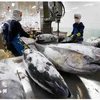
Illustrative image (Photo: VNA)
 Hanoi, (VNA) – The domestic market is expected to see considerable changes in 2019 as the Comprehensive and Progressive Agreement for Trans-Pacific Partnership (CPTPP) became effective as from January 14, according to market watchers.
In 2019, the import tax of agricultural products, milk and wine from CPTPP member countries will be reduced in line with the set roadmap.
From November 14, import taxes applied for grape wine and champagne from Canada will be reduced from the current 56 percent to 41 percent and 36 percent in early 2020.
Except for Canadian lobster and salmon, Vietnam will erase all import tax for fisheries products such as frozen crab and fish from Canada and Australia, while cutting tax for Canadian salmon from 18 percent to zero percent, and that for Canadian lobster from 35 percent to 15 percent.
Last year, many foreign food businesses, including those from Japan, Australia and Chile, introduced fresh and processed aquatic products as well as fruit, children’s food and vegetable to Vietnam to seek distribution channels.
Le Van May, CEO of Lotus Group, a Japanese nappy, formula milk and food distributor, said that Japanese firms will continue introducing more food products to Vietnam to optimize the opportunities in the market.
Nakajima Hayato from Japan’s Middis Inc. said that since 2017, the firm has cooperated with three Vietnamese businesses to introduce the milk trademark Bean Stalk to Vietnam. The company will increase the sale of the product in Vietnam when the CPTPP takes effects, he said.
Meanwhile, a representative from Oitaken, a Japanese provider of Kosui pears, said that the company will also supply more products to Vietnamese consumers.
Seeking measures to improve the quality of domestic products, Nguyen Viet Dung, a National Assembly deputy from Ho Chi Minh City, held that investment in agriculture should be carefully calculated as similar products from CPTPP markets are very competitive.
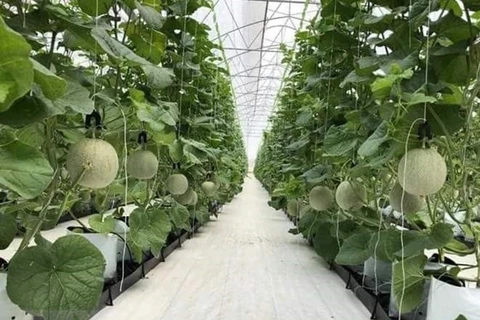
He stressed the need to develop large-scale production facilities to help the application of technology, thus enhancing the competitiveness of domestic products.
Trinh Quoc Dung, Executive Director of Vinamilk group said that if Vietnamese firms do not make careful preparations, they will lose right in the domestic market.
In the context of strong competition from foreign firms, restructuring themselves to reduce costs and improve the quality of their products is the only way for Vietnamese breeding companies, meat processing and milk businesses, he stated.
Dung held that products that are internationally competitive in the domestic market will have easier access to foreign markets.-VNA
VNA